Who Was Chingiz Aitmatov? The Kyrgyz Literary Icon PM Modi Quoted At SCO Summit
Prime Minister Narendra Modi invoked Kyrgyzstan’s legendary writer Chingiz Aitmatov during his SCO Summit address in Bishkek, praising his message of unity. But who was Aitmatov? A celebrated Kyrgyz-Russian author and diplomat, he brought Central Asian culture to global literature through works like ‘Jamila’ and ‘The Day Lasts More Than a Hundred Years’, becoming a national cultural icon.

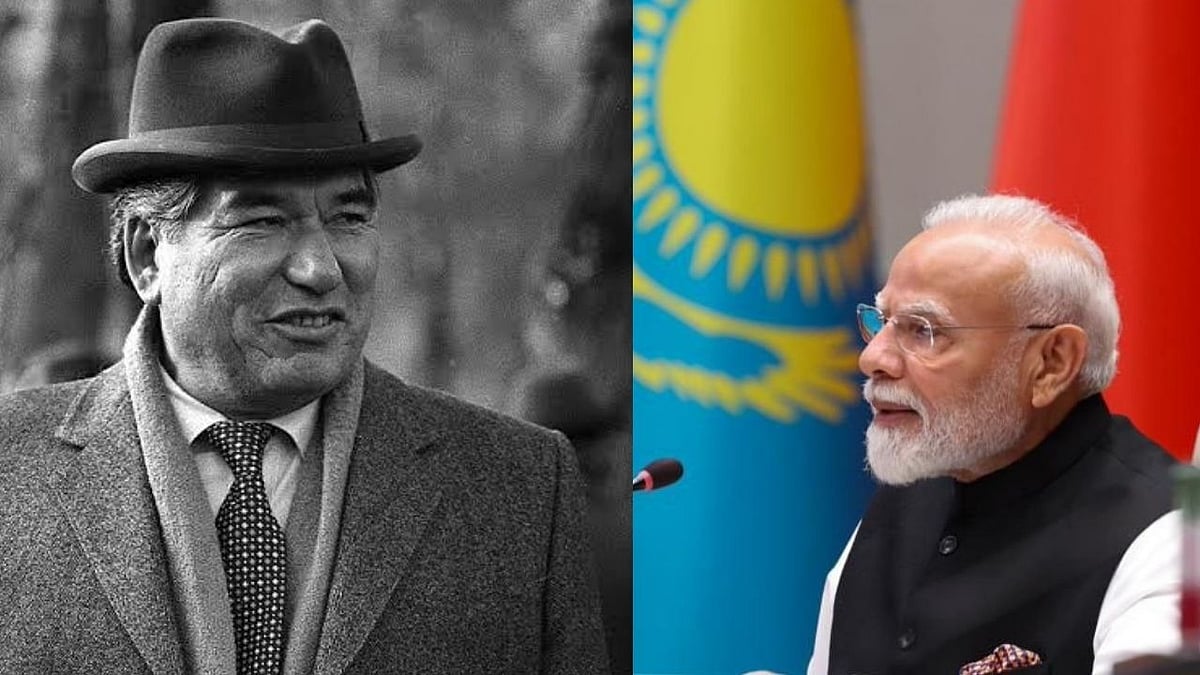
Prime Minister Narendra Modi invoked the words of one of Kyrgyzstan’s most celebrated literary figures, Chingiz Aitmatov, during his address at the 26th Shanghai Cooperation Organisation (SCO) Summit in Bishkek on Tuesday, September 1. Speaking about the importance of unity amid the grouping’s diversity, Modi recalled Aitmatov’s profound observation that people often pay greater attention to what divides them than to what brings them together.
“Our diversity is our identity and our shared purpose is our strength,” Modi said.
The reference was more than a literary flourish. Delivered in Aitmatov’s homeland, it served as a cultural tribute to Kyrgyzstan while strengthening Modi’s larger message for the SCO that its members should focus on shared interests, practical cooperation and people-to-people ties.
But who exactly was the man whose words Modi chose to invoke at a major international summit?
Chingiz Aitmatov: The Writer Who Put Kyrgyzstan on the World Literary Map
Chingiz Torekulovich Aitmatov was a Kyrgyz and Russian writer, journalist and diplomat who became one of Central Asia’s most influential literary figures.
Born on December 12, 1928, in the village of Sheker in what is now Kyrgyzstan, Aitmatov grew up at a time when traditional Kyrgyz culture was undergoing profound changes under Soviet rule.
His writing would later bring these two worlds together. Drawing heavily on Kyrgyz folklore, legends and oral traditions while writing in both Kyrgyz and Russian, Aitmatov created stories that explored universal questions of love, identity, morality, memory and the relationship between individuals and society.
His works were eventually translated into scores of languages, giving readers around the world a window into Central Asian life and culture.
A Childhood Shaped by Stalin-Era Repression
Aitmatov’s early life was marked by political upheaval.
His father, Torekul Aitmatov, was a Communist Party official who was arrested and executed during Stalin’s purges in the late 1930s. The experience left a deep mark on the young Aitmatov and later influenced his understanding of memory, political repression and the human cost of authoritarianism.
Before establishing himself as a writer, Aitmatov worked in several occupations, including as a shepherd and tax collector. He eventually studied at the Gorky Literature Institute in Moscow, setting the stage for his literary career.
‘Jamila’ Made Him an International Name
Aitmatov began publishing in the 1950s, but international recognition came with his 1958 novella ‘Jamila’.
The story, centred on a young Kyrgyz woman who falls in love with a wounded soldier, challenged traditional expectations surrounding women and marriage while portraying love as a deeply personal choice.
The work became internationally acclaimed and established Aitmatov as a major literary voice.
He went on to write several celebrated works, including ‘The First Teacher’, ‘Farewell, Gulsary!’, ‘The White Ship’, ‘The Day Lasts More Than a Hundred Years’ and ‘The Scaffold’.
His Stories Went Beyond Kyrgyzstan
Although many of Aitmatov’s stories were rooted in Kyrgyz landscapes, traditions and folklore, his themes were universal.
He wrote about love and friendship, the consequences of war, generational conflict, the tension between tradition and modernity, environmental destruction and the struggle of individuals against oppressive systems.
That combination helped his work travel far beyond Central Asia.
Aitmatov's fiction frequently placed ordinary people against enormous social and historical forces, making his characters vehicles for questions about what it means to remain human amid political, cultural and technological change.
From Literature to Diplomacy
Aitmatov was not confined to the literary world.
He worked as a journalist and held senior positions within the Soviet literary establishment. He was also involved in politics and public life, eventually moving into diplomacy.
He served as an adviser to Soviet leader Mikhail Gorbachev and later represented Kyrgyzstan as a diplomat, including serving as ambassador to several European countries.
His career therefore crossed literature, politics and international diplomacy making his legacy particularly fitting for a reference at a summit bringing together countries with vastly different political systems, cultures and histories.
Why Did PM Modi Invoke Aitmatov at the SCO Summit?
Modi's choice of Aitmatov carried a clear diplomatic and symbolic message.
The SCO is a diverse grouping comprising countries with different political systems, strategic interests and historical relationships. Its members include India, China, Russia, Central Asian states, Iran, Pakistan and Belarus.
Given the situation, Modi used Aitmatov’s message about concentrating on what unites people rather than what divides them to underline the need for greater cooperation.
He linked the idea to India's broader vision for the SCO moving from shared geography to shared opportunities, from vision to concrete outcomes, and from government-driven cooperation to people-driven partnerships.
The reference also gave the speech a distinctly Kyrgyz character. By invoking one of the country's most revered cultural figures on his home soil, Modi connected his diplomatic message with the host nation's literary and cultural heritage.
Aitmatov’s Legacy Lives Beyond His Books
Aitmatov died on June 10, 2008, in Nuremberg, Germany, at the age of 79. But his influence has continued across Kyrgyzstan, Central Asia and the wider Russian- and Turkic-speaking world.
ALSO READ
For Kyrgyzstan, he remains far more than a celebrated author. He is a national cultural symbol whose works helped introduce the country's history, traditions and worldview to an international audience.
And decades after his most influential works were published, Aitmatov's ideas remain relevant to questions of conflict, coexistence and human connection.
That is precisely why, in Bishkek on Tuesday, Modi turned to the words of Kyrgyzstan's literary giant while making a case for a more united and people-centred SCO.
RECENT STORIES
-
-
-
-
-