West Asia War Escalates: Iran Rejects Proposed 45-Day Ceasefire, Says 'No Concessions On Hormuz, Uranium'
Iran has firmly rejected any concessions on the Strait of Hormuz and its enriched uranium stockpile in exchange for a proposed 45-day ceasefire, according to local reports. The response comes amid escalating tensions after Donald Trump issued a deadline warning Tehran to reopen the key oil route, raising fears of further conflict in the region.

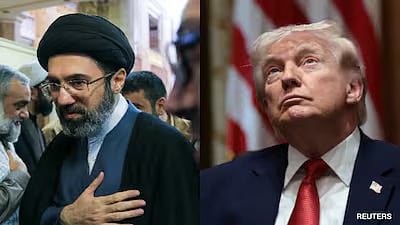
A sharp escalation in rhetoric and strategic posturing has intensified tensions in West Asia, with Iran refusing to control over the Strait of Hormuz or its enriched uranium stockpile, even as US President Donald Trump issued a provocative deadline and threat of military action.
Iran Rejects Ceasefire Terms
Tehran has firmly declined proposals tied to a 45-day ceasefire, making it clear that it will not compromise on two critical fronts control of the Strait of Hormuz and its enriched uranium reserves, according to Iran News 24.
The Strait of Hormuz, a crucial global oil transit chokepoint, remains central to Iran’s strategic leverage in the region.
Trump Sets Deadline, Issues Threat
In a dramatic escalation, Trump called on Iran to reopen the Strait of Hormuz by “Tuesday, 8:00 P.M. Eastern Time!” (01:00 BST Wednesday).
In an expletive-filled statement, he warned of potential military action targeting Iranian infrastructure, declaring that “Tuesday will be Power Plant Day, and Bridge Day, all wrapped up in one, in Iran. There will be nothing like it!!!”
Iranian Navy Signals ‘Irreversible Changes’
Amid the rising tensions, the Iranian Navy has asserted that the status of the Strait of Hormuz has fundamentally changed and will not return to its previous state particularly for adversaries like the United States and Israel.
State broadcaster Press TV reported that Iranian naval command highlighted a “new reality” in the region, where external powers can no longer exert unchecked influence in Iran’s maritime domain.
IRGC Hints At New Regional Order
According to Press TV, the Islamic Revolutionary Guard Corps (IRGC) Navy, in a post on X, indicated that preparations are underway for an “announced plan” aimed at establishing a new order in the Persian Gulf.
The remarks suggest a broader strategic shift, with Tehran seeking to redefine power dynamics in the Gulf region amid ongoing hostilities.
Rising Uncertainty In Global Energy Corridor
With the Strait of Hormuz handling a significant share of global oil shipments, any disruption or prolonged standoff could have far-reaching consequences for energy markets and geopolitical stability.
As both sides harden their positions, the situation remains volatile, with the potential for further escalation looming large.
RECENT STORIES
-
-
-
-
-