US President Donald Trump Slaps 50% Tariff On Canada, Readies New Levies On Dozens Of Nations
US President Donald Trump imposed 50% tariffs on most Canadian goods, saying Canada unfairly discriminated against American automobiles, alcohol and dairy products. The White House said the duties will affect products including wine, hockey sticks and cement, while excluding energy, fish, critical minerals and potash. Prime Minister Mark Carney said Canada remains ready for talks.

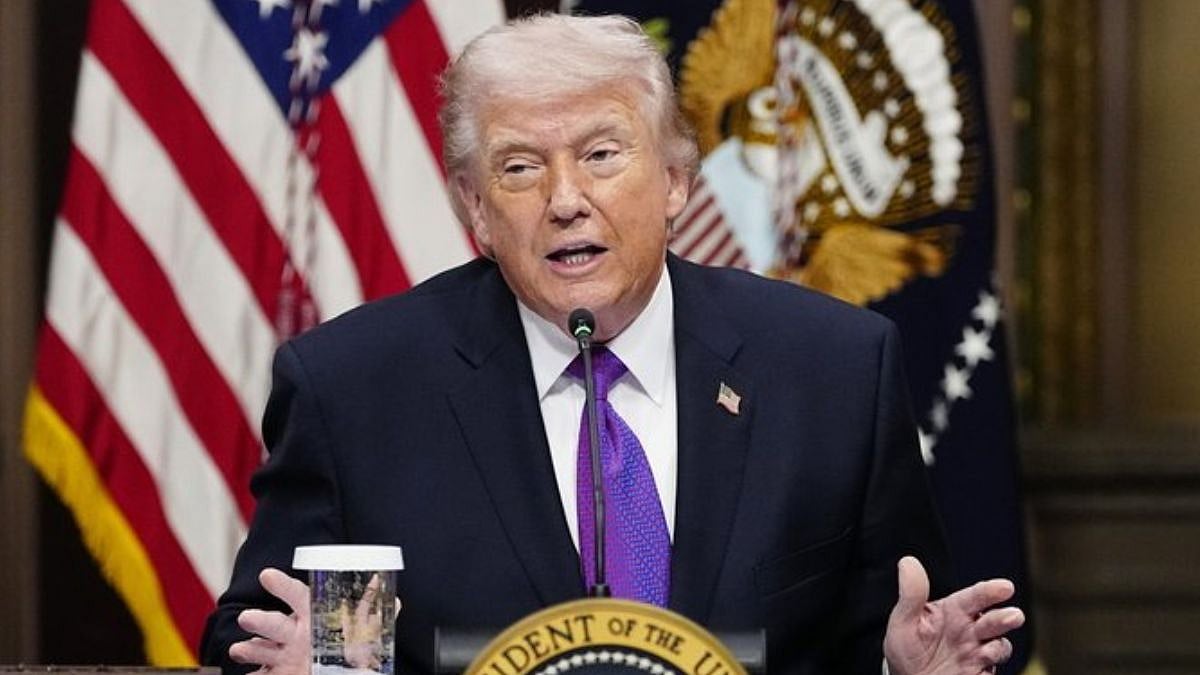
US President Donald Trump Slaps 50% Tariff On Canada, Readies New Levies On Dozens Of Nations | X
US President Donald Trump on Monday imposed 50% tariffs on most Canadian goods, declaring that Canada had unfairly discriminated against American automobiles, alcohol and dairy products. Trump is poised to impose fresh tariffs on dozens of countries, including India, as soon as this week, the Financial Times reported on Tuesday, with his temporary 10% global tariff scheduled to expire on Friday.
The Financial Times said the most immediate new duties are expected to be on a par with the 10% tariffs currently in place. However, the administration is also working on other investigations that could provide the legal authority to impose higher duties.
US Trade Representative Jamieson Greer, in an interview with The New York Times, said the US tariff policy had been "wildly successful" and that the Trump administration was planning new measures to replace those struck down by the Supreme Court.
Greer said the administration had changed 70 years of US trade policy within the past year and that the new measures had reduced the trade deficit while encouraging businesses to reshore manufacturing. “They are. Yeah. I think we've been wildly successful,” Greer said when asked whether the tariff regime was delivering results.
The tariffs will affect a wide range of Canadian products, the White House said, including wine, hockey sticks and cement. They also cover goods previously protected from import taxes under the United States-Mexico-Canada (USMCA) agreement.
The new tariffs on Canadian goods will exclude energy products, fish, critical minerals and potash. They will also exempt products already subject to national security tariffs, including steel and aluminium.
The steep tariffs are likely to trigger a fresh wave of economic uncertainty, with the risk of higher inflation and further straining relations between the two countries, whose economies had long been closely integrated before Trump's return to the White House.
Canadian Prime Minister Mark Carney said in a statement that his government had made comprehensive proposals to resolve trade disputes with Washington, asserting that Trump's previous tariffs violated a trade pact between the two countries.
"This trade dispute has raised costs for families, particularly in the US," he said. "Canada stands ready to engage intensively to address outstanding issues with the US to the mutual benefit of our citizens."
The White House said the tariffs would take effect in 30 days, leaving room for possible negotiations between the two countries.
Greer said the administration had acted swiftly because it viewed America's widening trade deficit as an economic emergency requiring decisive action.
"At the end of the day, we are winning in changing the trade policy. We're winning in getting the trade deficit down. We're winning in reshoring. We're winning in wages. We're winning on all these things. So I'm happy with where we are and where we're going," he said.
According to The New York Times, the Trump administration is working to recreate the tariffs struck down by the Supreme Court through levies targeting countries that rely on forced labour in manufacturing and those with surplus production.
Greer argued that broad tariffs had enabled the US to negotiate new trade arrangements with several partners. He said the tariff policy was driven purely by economic considerations rather than foreign policy.
"This is not a foreign policy shop. This is an economics shop here. And so when I look at someone like the European Union that blocks American agricultural goods for specious, nonscientific reasons, that's a problem. Friend or foe, that's an issue," he said in response to a question about the administration's tough stance towards traditional allies.
Greer said the administration's approach had helped the US negotiate trade deals with the United Kingdom, the European Union, Indonesia, India and Japan.
He said the Supreme Court had struck down a significant portion of the administration's tariff programme but insisted he had no regrets about the overall strategy.
"No, I don't have any. Well, I regret that the Supreme Court went the wrong way. But I mean, that's their fault. That's not ours," Greer said when asked whether he regretted the administration's legal strategy on tariffs.
He said the administration was already pursuing alternative legal avenues to preserve its trade agenda and remained committed to fundamentally reshaping decades of US trade policy.
"We're not really about going out and changing the world. We're trying to change the terms of trade," he said.
"It does mean, to the extent we have to take measures in other countries, we will. But it's less that we're anti any particular country and more we are just pro-America," Greer added.
RECENT STORIES
-
-
-
-
-