Spain PM Pedro Sánchez Calls Snap General Election For November 29 Amid Housing Crisis
Spanish Prime Minister Pedro Sánchez has called a snap general election for November 29, 2026, after his minority government suffered parliamentary setbacks over housing reforms. The vote follows growing protests over rising rents and affordability. Polls currently put the opposition People’s Party ahead, with far-right Vox third, potentially influencing the next government formation.

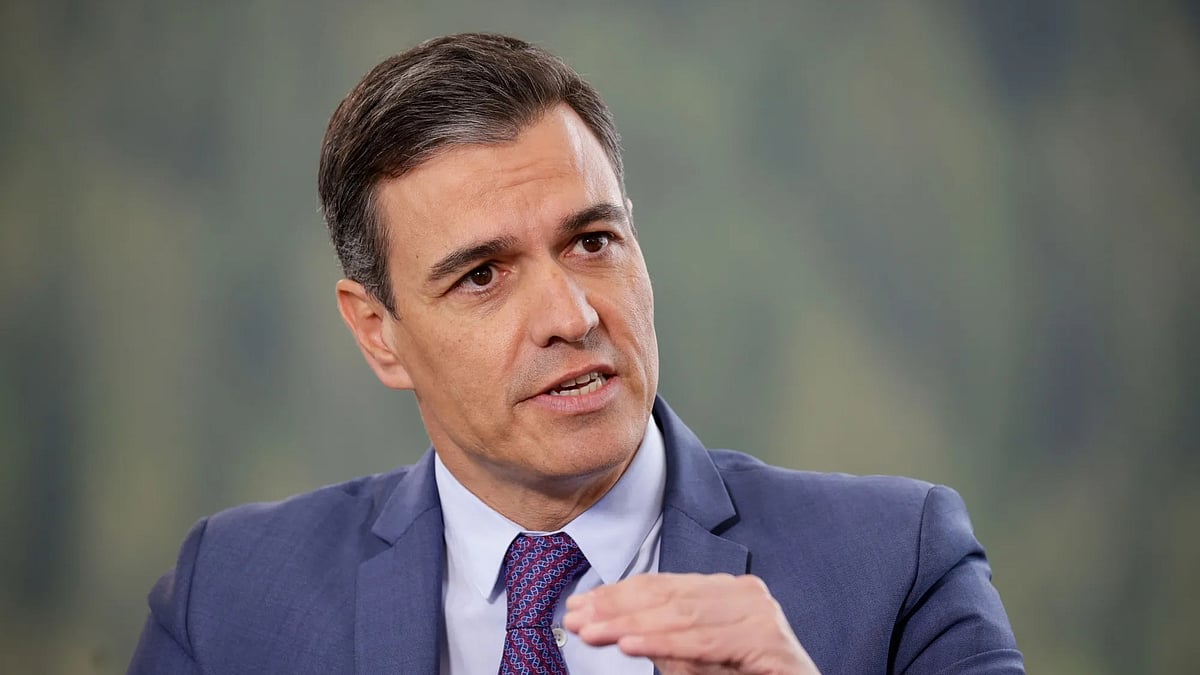
Spanish Prime Minister Pedro Sánchez on Monday, October 5, announced a snap general election in Spain, with voters set to go to the polls on November 29, 2026.
In a televised address from the Moncloa Palace, Sánchez said the early election was necessary after his minority left-wing government repeatedly struggled to secure parliamentary support for key legislation.
The announcement came days after parliament rejected two emergency royal decree laws aimed at protecting tenants and tackling the country’s worsening housing crisis. The measures were defeated with votes from the opposition People’s Party (PP), Vox and Catalan independence party Junts, according to CNN.
Housing Crisis Puts Pressure On Government
The housing crisis has emerged as one of the biggest political challenges facing Sánchez’s government, with nationwide protests intensifying over rising rents and housing affordability.
Demonstrations gained momentum following the eviction of an 87-year-old woman in Madrid whose rent had reportedly increased sharply, far beyond what she could afford on her pension. Hundreds of protesters have since camped at Madrid’s Puerta del Sol, while larger demonstrations have taken place in other parts of the country, BBC reported.
Sánchez has sought to make housing a central issue for his government, arguing that stronger measures are needed to protect tenants and address inequality.
Minority Government Faces Repeated Setbacks
Sánchez’s Socialist Party (PSOE) governs in a minority coalition with Sumar and does not have enough seats to pass legislation without support from other parties.
The government has consequently faced repeated parliamentary setbacks since taking office. The latest defeat over housing-related measures added to pressure on Sánchez to seek a fresh mandate.
Spain’s next general election was not otherwise expected until summer 2027, making the November vote an early test of Sánchez’s political standing.
The government has also faced pressure over corruption investigations involving figures linked to the Socialist Party, while migration and the situation in Spain’s North African exclave of Ceuta have added to the political challenges.
Sánchez Warns Of Far-Right Rise
In his address, Sánchez acknowledged that his government had “made mistakes” and had not achieved everything it had promised.
He nevertheless argued that Spain needed a broader progressive majority to overcome what he described as resistance from powerful elites, reduce inequality and push through reforms, particularly on housing.
Sánchez also framed the election as a choice between continuing progressive policies and the possibility of a “far-right wave”, warning that a right-wing government could roll back rights and freedoms.
PP Leads Polls, Vox In Strong Position
Opinion polls currently place the centre-right People’s Party ahead of Sánchez’s Socialists.
According to recent polling cited by Politico, the PP is polling at around 32–34%, while the PSOE is at approximately 26%. Far-right Vox is in third place with around 18%, with smaller left-wing parties trailing behind.
The PP is widely expected to emerge as the largest party after the election. However, it would likely require support from Vox to form a government.
Such an arrangement would be politically significant, as it could mark the first entry of a far-right party into Spain’s national government since the end of the Franco dictatorship, Politico reported.
ALSO READ
Feijóo Welcomes Early Election
Opposition leader Alberto Núñez Feijóo, who heads the PP, welcomed Sánchez’s decision to call an early election, saying Spanish voters would finally have the opportunity to decide the country’s political future.
The formal process for the election is set to begin with an extraordinary Council of Ministers meeting to initiate the dissolution of the Cortes.
Sánchez, who has previously managed to recover from difficult political situations, appears to be betting that the housing crisis and concerns over inequality can consolidate progressive voters and help his coalition outperform current polling projections.
The November 29 election will therefore determine whether Sánchez can secure a stronger mandate or whether Spain shifts towards a PP-led government potentially dependent on Vox.
RECENT STORIES
-
-
-
-
-