President, Judiciary Head & Guardian Council Jurist To Temporarily Lead Iran: Reports
Iranian President Masoud Pezeshkian, head of judiciary, and one jurist of the Guardian Council to temporarily assume duties of leadership in Iran after Supreme Leader Khamenei's death, international media outlets reported.

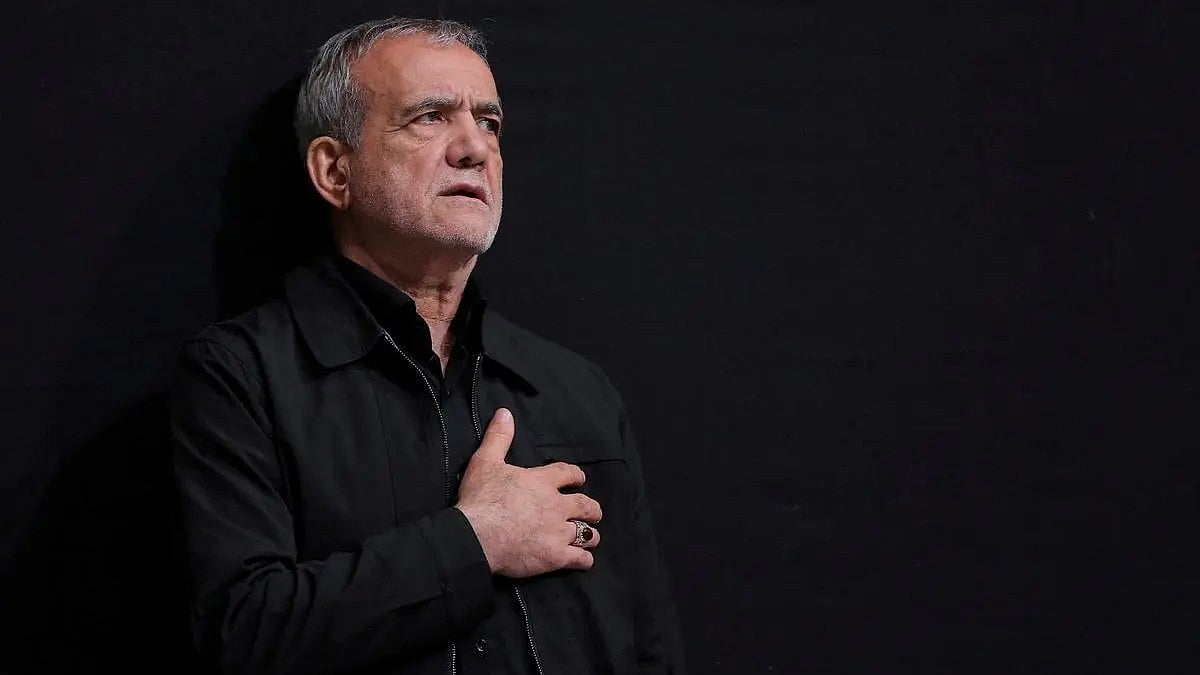
Iranian President Masoud Pezeshkian |
Iranian President Masoud Pezeshkian, head of judiciary, and one jurist of the Guardian Council to temporarily assume duties of leadership in Iran after Supreme Leader Khamenei's death, Iran’s Fars News reported.
Nationwide Mourning Declared
Iran has entered a 40-day period of mourning, state media confirmed, following Khamenei’s reported killing in ongoing US-Israeli strikes. In addition to the national mourning period, President Pezeshkian announced seven days of public holidays.
The president condemned the killing as “a great crime,” vowing that the country would remain steadfast during what he described as a historic and painful moment.
Senior Officials Among Those Killed
Reports indicate that several top security officials were also killed in the strikes. Members of Khamenei’s family including his daughter, son-in-law and grandson were also reported dead.
The deaths represent one of the most significant blows to Iran’s ruling establishment since the 1979 Islamic Revolution, raising concerns about stability at the highest levels of power.
How Iran Chooses a Supreme Leader
The process of selecting a new supreme leader falls to the Assembly of Experts, an 88-member clerical body responsible for appointing and theoretically removing the country’s top authority.
Members of the Assembly are elected every eight years, but candidates must first be approved by the Guardian Council, Iran’s constitutional oversight body. The vetting process has historically led to the disqualification of numerous contenders, including former president Hassan Rouhani, who was barred from standing in the March 2024 Assembly elections.
Uncertainty Over Succession
While the Assembly of Experts is tasked with choosing the next supreme leader, succession in Iran’s theocratic system is often complex and politically sensitive. The decision carries enormous implications for domestic governance, foreign policy and regional stability.
As the country observes mourning ceremonies, attention is increasingly turning to how and when a permanent successor will be named a choice that will shape Iran’s future trajectory.
RECENT STORIES
-
-
-
-
-