Nepal Flash Flood: Chitwan Authorities Bury Unidentified Bodies Amid Morgue Space Crisis, Preserve DNA Samples For Future Identification | Video
Nepal authorities are burying unidentified bodies recovered from the Trishuli and Narayani rivers after devastating floods killed hundreds and left thousands missing. DNA samples, identification tags, GPS mapping and concrete markers are being used to ensure bodies can later be identified and returned to families.

Nepal Flash Flood: Chitwan Authorities Bury Unidentified Bodies Amid Morgue Space Crisis, Preserve DNA Samples For Future Identification | Video | X
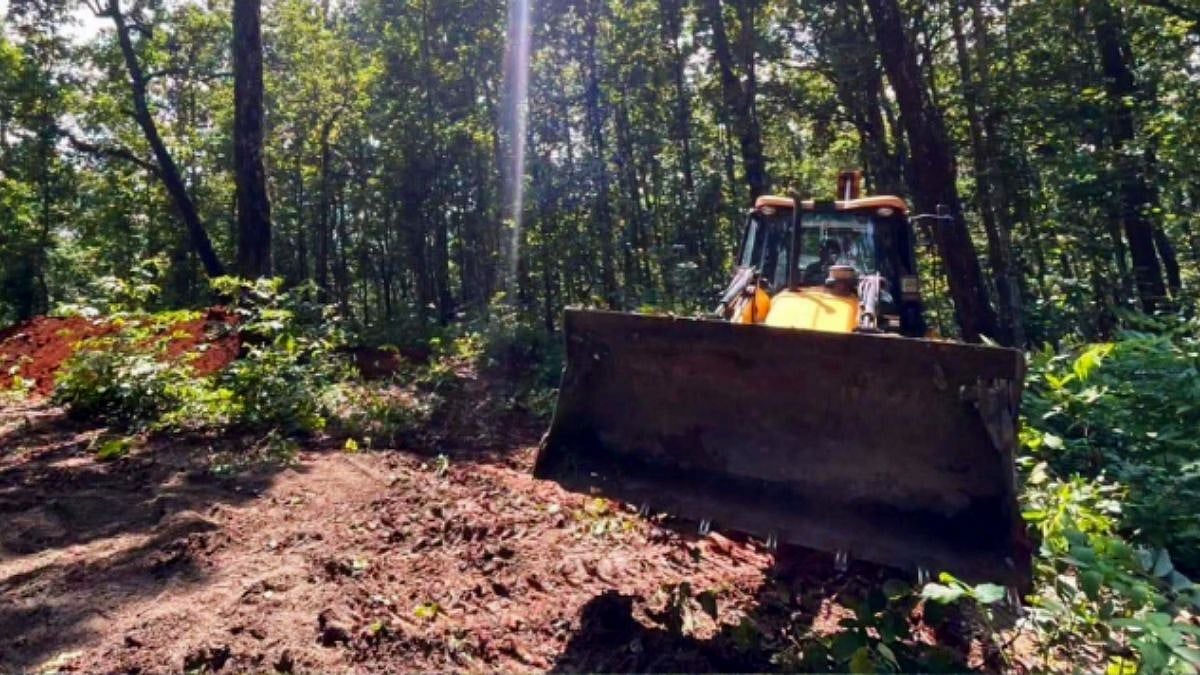
Chitwan: Authorities in Nepal have begun burying unidentified bodies recovered from the Trishuli and Narayani riverbanks in a forest area in Chitwan, as morgues face a shortage of space following devastating flash floods that have left hundreds dead and thousands missing.
The bodies are being buried only after DNA samples are collected and identification records are prepared, allowing authorities to retrieve and hand them over to families if a match is established later.
A Nepali official at the site said the procedure was being carried out in accordance with international guidelines and stressed that the burial process would preserve the identity of each body.
"Especially in our current situation, all the bodies we have retrieved along the Trishuli and Narayani river banks, from Fisling to Ghumghatte and Triveni, have been collected. Six of these bodies have already been handed over to their respective families," the official said.
"As for the remaining bodies, since we were unable to freeze them, we are following international ICRC protocols. Under these guidelines, we are safely placing them in the ground," he added.
The official said each body would be placed separately in a trench, with identification tags attached to a remaining limb such as a hand or foot. Each body would be assigned a unique code, which would also be displayed on a marker above the burial site.
"When placing each body, we will attach an indelible identification tag to a remaining limb, such as a hand or a foot. This tag will bear a unique code--for instance, BHF-01, BHF-02, and so on sequentially," he said.
Authorities are also documenting the burial process through photographs and video recordings and are mapping the precise location of the graves using GPS coordinates. The site is being fenced and secured.
The official said DNA samples had been collected from all unidentified bodies. Families of missing persons can provide DNA samples at their respective district hospitals, which will then be compared with samples collected from the deceased.
"We have collected DNA samples from all the unidentified dead bodies. We have taken DNA from each of them. For those who are missing, their relatives can have their DNA samples collected from the respective district hospital," the official said.
"After the DNA collection, the samples collected here and the DNA sampling of the concerned relatives will be matched. Once matched, they can come and claim the safely kept body," he added.
The burial process is designed to ensure that bodies can be located and recovered after identification. Concrete markers carrying the same identification numbers will be placed near the corresponding burial locations.
"When all the bodies are covered with soil from above, we won't know where to dig later. Therefore, directly above each body, we will construct a concrete structure with a stand and numbering," the official said.
He clarified that the concrete marker would be positioned beside the body rather than directly above it, while carrying the same identification number assigned during burial.
"If relatives come to inquire and the DNA matches, this visible stand with the number will help identify and retrieve the body," he said.
ALSO READ
Authorities are continuing recovery operations along the riverbanks. The official said three bodies were still lying near the riverbank while disaster relief teams continued their work.
"Currently, three bodies remain near the riverbank. Our disaster relief team is also at the riverbank, and work is ongoing continuously every day," he said.
Handling the recovered bodies, many of which have decomposed, is also being carried out with precautions. Personnel are using personal protective equipment, gloves and masks to reduce health risks.
The official said three trenches had been prepared in the forest area and that care was taken to avoid damaging Sal trees during excavation. He said the burial arrangements were intended to manage the bodies safely while preventing odour and other problems.
The large-scale recovery operation comes as Nepal continues to deal with the aftermath of the floods. According to Nepal Police, 788 bodies had been recovered as of 3 pm on Sunday.
Chitwan reported the highest number of deaths at 264, followed by Nawalparasi East with 194, Nawalparasi West with 120, Gorkha with 58, Nuwakot with 52, Dhading with 50, Tanahun with 37 and Rasuwa with 13.
Nepal's National Disaster Risk Reduction and Management Authority said 2,502 people remained missing as of 1 pm, with rescue operations continuing across affected areas.
Unidentified bodies are being kept at 21 hospitals across the country as authorities work to establish identities. Among those reported missing are workers from hydropower projects, foreign nationals and Nepali citizens travelling with foreign groups.
Authorities have deployed nearly 20,000 security personnel for rescue and relief operations. Ground forces have carried out 8,730 rescues, while helicopter crews have conducted 363 flights and airlifted 3,081 people, including 236 foreigners.
The recovery, identification and burial process is expected to continue as authorities work to locate missing people and reunite identified victims with their families.
(Except for the headline, this article has not been edited by FPJ's editorial team and is auto-generated from an agency feed.)
RECENT STORIES
-
-
-
-
-