From Female Prime Ministers To 4% On the Ballot: Bangladesh's Women Face Political Squeeze
In Bangladesh’s parliamentary polls, women make up less than 4% of candidates despite the country’s history of female PMs. Dr Manisha Chakraborty, a grassroots candidate in Barisal, faces long odds amid a resurgence of Islamist forces seeking to curb women’s public role. As hardliners reassert influence, women’s political marginalisation raises concerns about nation’s democratic future.

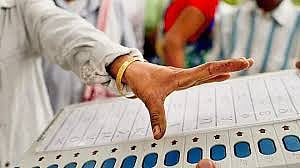
From Female Prime Ministers To 4% On the Ballot: Bangladesh's Women Face Political Squeeze | File Pic
Dhaka: Dr Manisha Chakraborty of the Bangladesh Samajtantrik Dal (Bangladesh Socialist Party) is resting after a week of hectic electioneering in Barisal, a river port close to the Bay of Bengal, where she lives and works. Despite the fact that Bangladesh has had two women prime ministers, Chakraborty is a rarity. Of the 1,981 candidates contesting 300 directly elected parliamentary seats, only 76 — less than four per cent — are women.
“Some of my opponents want us women to exit public space; others are known to be corrupt. All that we want is a better life for the poor,” Chakraborty, better known in her city as the ‘doctor of the poor’, told a street meeting on Monday, hours before campaigning officially ended for the nationwide polls to be held on Thursday. She is unlikely to win the election, pitted against heavyweights from the BNP and Jamaat, but a large number of poor people in her constituency have paid out of their own pockets to put her up as a candidate.
“I support her. She may be a woman and a Hindu, but she is a good person and wants the best for us,” said Irshad Ali, a tempo driver. Jamaat, which has not fielded any women candidates, has said in the past that women should not be trusted with leadership roles. Ironically, Jamaat has been part of a coalition government led by Khaleda Zia. Islamists who now decry women’s participation in politics have also, in the past, worked with Sheikh Hasina when she ruled Bangladesh for 15 long years.
However, led by Jamaat, Bangladesh has witnessed a visible resurgence of Islamist groups that seek to curtail women’s participation in public life. “Over the last two decades, even as we tried to make Bangladesh a culturally more vibrant and liberal place, other forces were also at work. After the August 2024 uprising, they managed to get a free hand and have now encroached on spaces that women freely enjoyed in public life,” said F M Shahin, a Bangladeshi filmmaker who made Jashore Road, a film on the liberation war.
ALSO READ
“Women who smoke, speak up or refuse to cover their heads are being frowned upon, and this is very un-Bangladeshi,” he added. After years of suppression, hardline actors have re-emerged with new confidence, pressuring organisers of religious commemorations and public events to exclude women, and demanding restrictions on activities ranging from cultural programmes to women’s football matches. Some analysts argue women may not be sidelined entirely, as Bangladesh’s export-led economic boom over the past two decades has pushed women’s participation on the shop floor to 45 per cent.
Others point out that many of these women still depend on Islamic charities to educate their children and care for elderly family members. As Bangladesh seeks to redefine itself after a turbulent year, the marginalisation of women raises uncomfortable questions about the nature of its democratic transition. For a country once symbolised by female leadership, the absence of women from the ballot is more than an anomaly. It is a warning.
RECENT STORIES
-
-
-
-
-