China's Economic Transformation Through Innovation, Green Energy And Reforms Creates New Global Opportunities
China's shift towards high-quality economic growth, driven by innovation, green energy, expanding consumption and reforms, is creating global opportunities. Consul General Qin Jie highlights China's economic resilience, technological progress and commitment to stronger international partnerships.

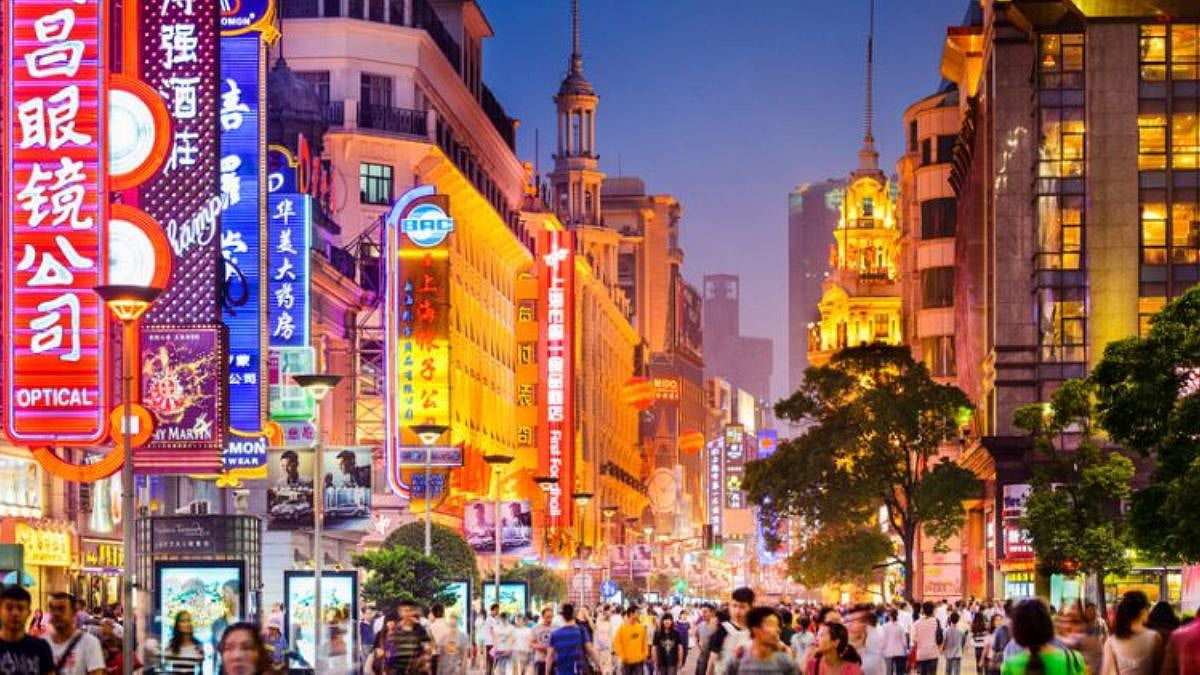
China's Economic Transformation Through Innovation, Green Energy And Reforms Creates New Global Opportunities | File photo
In the past two decades, some western media have been telling selfcontradictory stories about China’s economic development. It is described to “collapse” and “peak” as well as to “squeeze” and “shock”. Such narratives simply tell people that China’s economy has been growing weaker and stronger. The truth is, led by the Communist Party of China (CPC), China has been transforming its economy from high-speed to high-quality growth. With its GDP reaching 4.6% y-o-y in the first three quarters of 2026, and successful convening of the CPC’s fifth plenary session of the 20th Central Committee (The Fifth Plenum), China will continue to bring more opportunities for the world.
The Fifth Plenum summarized the CPC’s experience and achievement in persistently advancing full and rigorous Party self-governance, such as turning the blade inward to confront internal problems, zero tolerance towards corruption, and achieving self-improvement, self-innovation, and self-enhancement. By adhering to the people’s supervision and attaching great importance to party building, the CPC has led effective state and social governance in China, bringing long-time peace, stability and prosperity. By grasping the major trends in global development, and responding to the fundamental demands of the people, the CPC has also demonstrated its capacity and willingness to contribute more to better socioeconomic governance around the world. The CPC-led Chinese modernization will bring inclusive, innovative, certain, and resilient growth.
Inclusiveness & innovation
At its 19th National Congress in 2017, the CPC officially set the tone for China to transit from high-speed to highquality development. This means that compared with China Opportunity 1.0, which had been primarily about China’s attraction as a fastgrowing large market and the “world’s factory” for cheap goods, China has been functioning as a “factory to the factories” and central organizing hub for global innovation and sci-tech.
The 2.0 version is broadening access to advanced technologies by providing a two-way flow of resources and factors to narrow development gaps between the developed and developing economies. For instance, China endorses opensource and inclusive AI to benefit the global community. From the 5,300-hectare precision agriculture projects in a province of Mozambique, supported by China’s BeiDou plus drone technology, to the ASEAN AI Multilingual Translation Center boosting inter-civilizational exchanges, such joint programs represent China’s pursuit of “AI+” for good and for all.
Green transition is another defining feature of China’s contribution. In 2025, its new energy vehicle output exceeded 16 million units. By the end of Sept. this year, its combined installed capacity of wind and solar power broke through the 2- billion-kilowatt mark, marking a historic new stage in renewable energy sector.
China’s renewable energy revolution has accelerated worldwide decarbonization, in that China’s engineering capacity and domestic innovation brought global solar photovoltaic costs down by more than 80% and wind generation costs down by 60% over the past decade.
Certainty & resilience
China’s strong and steady growth provides invaluable certainty and predictability to a world threatened not only by geopolitical volatility and fragmentation, but also serious socioeconomic challenges like deglobalization and tariff wars. China Opportunity 2.0 helps to drive global growth by higher efficiency in organizing industrial and supply chains, and empowering emerging economies through stronger partnership. According to World Bank and IMF, over the past 10 years China has remained the largest growth engine and contributed about 30% to global growth. Guided by President Xi’s Four Global Initiatives (Development, Security, Civilization, and Governance), China firmly keeps its peaceful and inclusive development policy by deepening structural reform, strengthening business environment and accelerating high-level opening up.
The significance of China Opportunity 2.0 will still be its resilience and steady growth as the world’s 2ndlargest economy, providing greater confidence for global businesses in their long-term investment and development. In 2025, China passed its first fundamental law on the non-public sector to ensure fair competition, improve financing access and strengthen legal protections for private enterprises. China has also fully removed foreign investment access restrictions in the manufacturing sector and further shortened its negative list for foreign investment.
Expanding market
Driven by high-quality growth, China’s middleincome population will cross 800 million in the next decade, making the country a super-large market for the world. Currently, the consumption story of Chinese people has seen rapid changes: from being told overwhelmingly around shopping-bags to increasingly being measured via concerts, movies, games, sports, travels, cultural experiences, beauty and health services, smart devices, etc.
In the first three quarters of 2026, China’s total retail sales of goods and services rose 2.6% y-on-y. Retail sales of services grew 5%, 4 percentage points faster than sales of goods. Domestic consumption contributed nearly half of China’s economic growth, driving GDP growth up by 2.1 percentage points. Besides, China’s business and trade policies have been helping the Global South countries to have easy access to the Chinese market. A typical example is China’s implementation of a historic, comprehensive zero-tariff policy for 53 African countries that maintain diplomatic relations with China.
With the CPC’s effective state-and-social governance, China’s huge domestic market, complete industrial system, competitive talent pool and sci-tech strengths will continue to play a key role in driving the world economy towards growth. China stands ready to join hands with all partners including India, to inject positive energy into a disturbed and uncertain global landscape.
Qin Jie is Consul General of the People’s Republic of China in Mumbai
RECENT STORIES
-
-
-
-
-