Bangladesh NCP Leader Says 'Will Cut Off 7 Sisters' In Fiery Anti-India Speech
Addressing a gathering at Dhaka’s Central Shaheed Minar, Abdullah stated that Bangladesh could extend support to forces working against India, implying that such moves could lead to the fragmentation of India’s northeastern states. His remarks reportedly drew loud applause from sections of the audience.

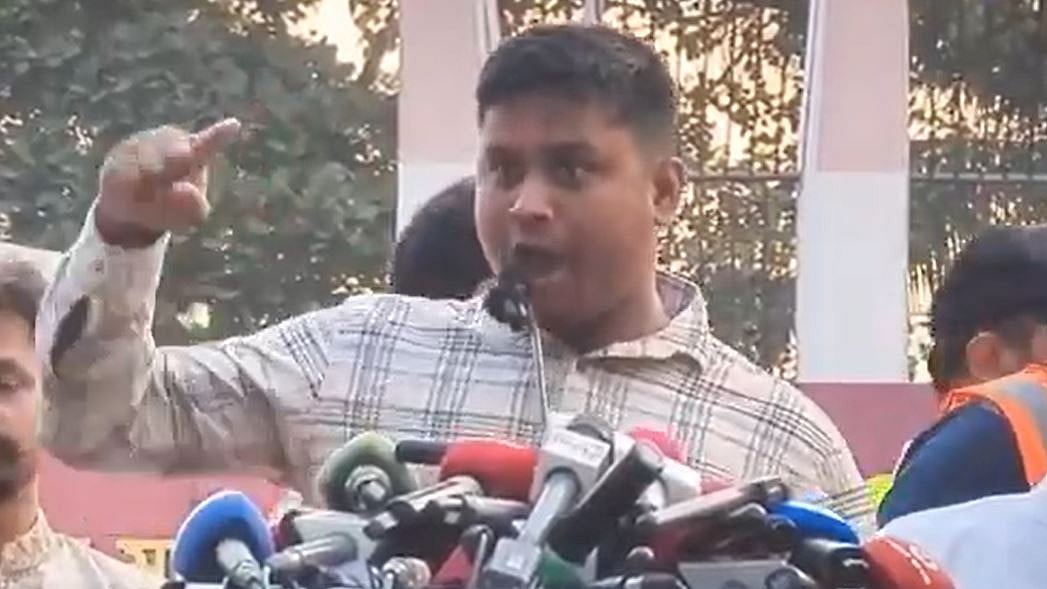
Hasnat Abdullah, a leader of Bangladesh’s National Citizen Party (NCP), has made remarks indicating that Dhaka could provide refuge to groups opposed to India, including separatist outfits, threatening to divide India’s northeastern region, often referred to as the “Seven Sisters.”
The region includes Arunachal Pradesh, Assam, Manipur, Meghalaya, Mizoram, Nagaland and Tripura. Of these, Assam, Meghalaya, Tripura and Mizoram share a direct border with Bangladesh, highlighting the strategic sensitivity of the area.
Addressing a gathering at Dhaka’s Central Shaheed Minar, Abdullah stated that Bangladesh could extend support to forces working against India, implying that such moves could lead to the fragmentation of India’s northeastern states. His remarks reportedly drew loud applause from sections of the audience.
According to local media, Abdullah warned India against actions he said undermine Bangladesh’s sovereignty, democratic rights and human dignity. He stated that if such actions continued, Bangladesh would be compelled to respond, cautioning that any instability in the country would have repercussions beyond its borders.
He also accused India of sustained interference in Bangladesh’s internal affairs, claiming that even more than 50 years after independence, the country continues to face pressure from what he described as “predatory forces” seeking to exert control.
India has long maintained that militant and separatist groups operating in the Northeast previously used Bangladeshi territory as safe havens, transit routes and operational bases, particularly in the late 1990s and early 2000s.
During that period, Indian intelligence agencies linked organisations such as the National Liberation Front of Tripura (NLFT) and the All Tripura Tiger Force (ATTF) to training camps and support networks operating across the border.
RECENT STORIES
-
-
-
-
-