Age of Overthinking: How Modern Investors Are Getting Lost In Endless Information
The constant stream of news, expert views, and portfolio updates is triggering emotional decisions that cost long-term wealth

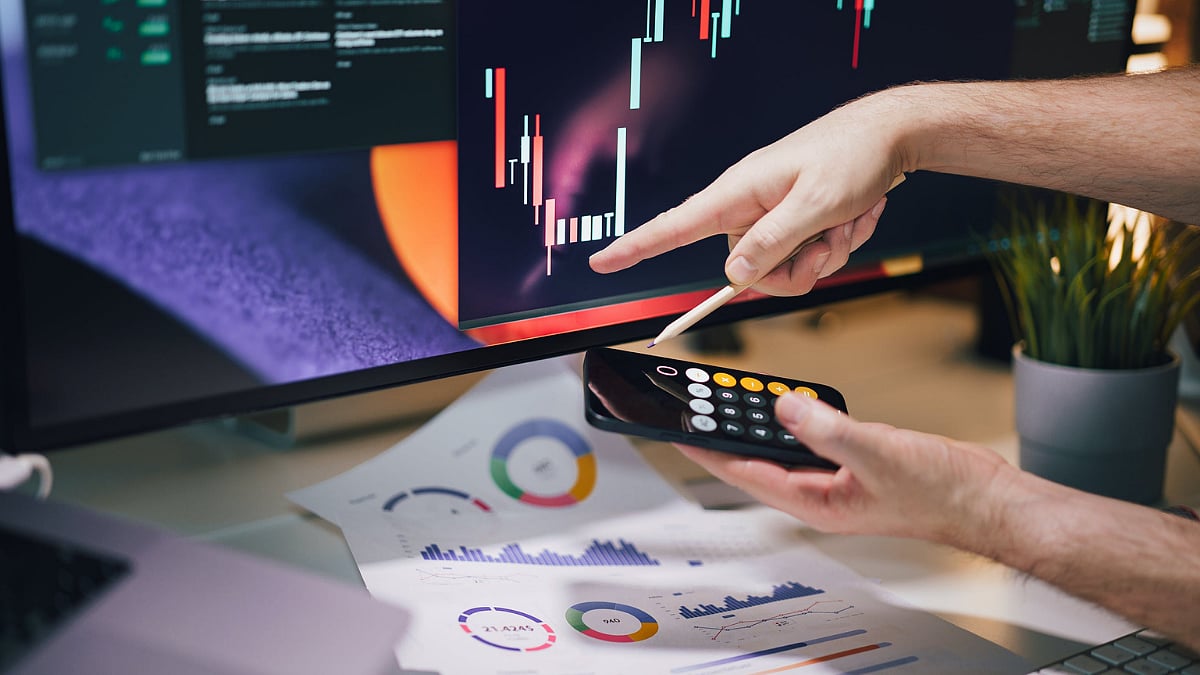
We live in a time when information is everywhere — on our phones, in our inbox, on social media, inside trading apps, and even in WhatsApp groups that claim to know tomorrow’s stock market direction today.
Ironically, this explosion of information has not made investors smarter.
It has made many more confused, more anxious, and more prone to mistakes.
Welcome to the age of overthinking, where access to more data has not led to better decisions — only faster, more impulsive ones.
New investor problem
Earlier, investors struggled due to lack of information.
Today, they struggle because they have too much of it.
Every day the market moves, 200 explanations appear online.
Every correction comes with 50 expert predictions.
Every rally creates 100 stories of someone doubling their money.
This constant overload creates mental pressure: “Am I missing something? Should I change my fund? Is my SIP in the wrong scheme?”
Investing used to be about patience. Now it feels like a 24x7 psychological battle.
Cost of overthinking
Globally, investor behaviour is now tracked through DALBAR and Morningstar studies. The conclusion is shocking but consistent:
The average investor earns far less than the market — not because of bad investments, but because of bad decisions.
In India too, AMFI data shows that SIP investors who simply do nothing and stay invested earn 2–4% higher returns than those who frequently switch, redeem, or change strategies.
Overthinking leads to:
Excessive checking of NAVs
Panic selling
Constant switching between funds
Stopping SIPs during volatility
Buying the “hot” sector after it has already peaked
The more you react, the less you earn.
Case study
A young professional, Karan, started SIPs in 2017. He consumed every market update, every influencer video, every “top stocks to buy now” list. Between 2017 and 2024, he switched funds eight times.
He exited markets during COVID crash, re-entered late, then exited again in 2022 during fear of recession. His 7-year return: 6.8% CAGR
Meanwhile his colleague Mehul, who ignored the news, invested quietly in two diversified funds and never touched them. His 7-year return: 12.4% CAGR
Same markets. Different mindsets.
Karan had more information. Mehul had more discipline.
Why overthinking happens
Fear of Missing Out (FOMO): Investors feel that everyone else is earning more. This creates restlessness and impulsive decisions.
Loss aversion: Losses feel twice as painful as gains feel enjoyable. This makes investors react too quickly to short-term volatility.
Illusion of control: People believe more information = more control. In reality, it leads to emotional decisions disguised as “research.”
Expert Noise Trap: Every analyst has a view. Every influencer has a video. Every algorithm has a prediction. But markets don’t move according to opinions — they move according to realities.
Information has changed. Human behaviour has not. The Indian investor now has:
Real-time dashboards
Comparison tools
Daily portfolio updates
Instant notifications
Social media financial influencers
24×7 business news
But the brain still works the same way it did decades ago — emotional, impulsive, and sensitive to noise. The result? Behavioural mistakes, disguised as “well-informed decisions.”
Silent enemy
The more choices people have, the worse their decisions become. This is proven in behavioural psychology:
Too many fund categories → confusion
Too many stock ideas → paralysis
Too many opinions → self-doubt
Too much checking → emotional overreaction
When the mind is tired, it chooses the easiest option: Sell. Switch. Stop.
All three hurt long-term wealth.
The solution
Financial noise detox: Limit how often you check:
Portfolio apps
Market news
Social media opinions
WhatsApp market groups
Set rules: Check your portfolio only once a month. Review it only once a year.
Build a simple portfolio: Most wealthy investors don’t have 20 funds. They have 3–5 strong, diversified funds — and decades of patience.
Automate decisions: SIPs take emotions out of investing. Automation beats motivation.
Focus on goals, not markets: Goal-based investing gives clarity: “When my child’s education is 12 years away, why am I worried about today’s market fall?”
Seek advice, not opinions: An advisor gives direction. The internet gives confusion. Good advice reduces 90% of overthinking.
Calmness pays
In the 1990s, information was power. But in 2025, information is just noise. The new power is:
Calmness
Consistency
Emotional discipline
Long-term thinking
Because wealth is not built by reacting. It is built by refusing to react.
Final thought
Most investors think they need a better fund, better stock, or better strategy. In reality, they need a better mindset. The world will keep giving more information. Apps will keep sending more alerts. Experts will keep predicting dramatic outcomes. But in the middle of the noise, only one thing matters:
Can you stay focused on your goals without being distracted by the world? Investing is not a test of intelligence. It is a test of patience. And in the age of overthinking, the patient investor will always outperform the informed investor.
(Viral Bhatt is the Founder of Money Mantra, a personal finance solutions firm)
RECENT STORIES
-
-
-
-
-