'Dharam Ka Mazak': 11,000 Litres Of Milk Poured Into Narmada River As Holy Offering; Sparks Debate Over Blind Faith
A viral incident showing 11,000 litres of milk poured into the Narmada River as a religious offering has sparked debate online. While devotees viewed it as an act of faith, critics highlighted environmental damage caused by oxygen depletion in water and questioned food wastage in a country facing malnutrition, urging more compassionate and sustainable forms of devotion

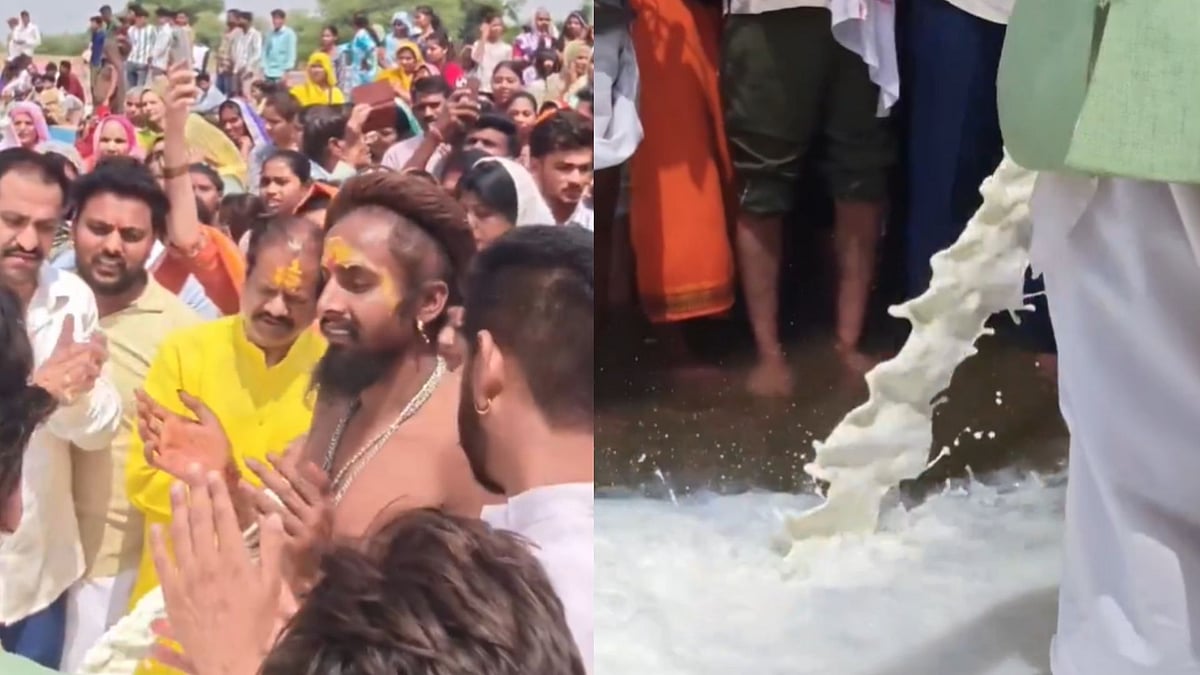
A video showing thousands of litres of milk being emptied into the Narmada River has gone viral on social media, triggering intense discussions about religious practices, environmental responsibility and food inequality in India. The incident reportedly involved devotees pouring nearly 11,000 litres of milk into the river as part of a spiritual offering.
While supporters described the act as a sacred ritual performed to fulfil religious vows, critics questioned whether such large-scale offerings should continue in a country where access to nutrition remains uneven.
Ritual meant as devotion, but divides opinion online
According to those involved, the milk was offered to honour the holy river and symbolically feed aquatic life. Devotees believed the ritual would bring blessings and spiritual fulfilment, and many viewed the flowing white currents as a sign of faith and reverence.
However, the visuals quickly ignited debate. Social media users expressed sharply divided opinions, some defended the act as religious freedom, while others argued that devotion should not come at the cost of environmental damage or food wastage.
Environmental impact: How milk becomes a pollutant
Though milk appears harmless, experts warn that releasing large quantities into freshwater ecosystems can cause serious ecological stress.
Milk is rich in organic compounds such as fats, proteins and sugars. When introduced in massive volumes, bacteria begin breaking it down rapidly. This decomposition process consumes dissolved oxygen in the water, a phenomenon measured through biochemical oxygen demand (BOD).
As oxygen levels drop, fish and other aquatic organisms struggle to survive. In extreme cases, sudden nutrient loading can lead to fish deaths, algae growth and disruption of the river’s natural biodiversity. The fatty layer formed by milk residues may also interfere with aquatic respiration by coating surfaces and affecting gill function.
Faith versus food waste: A larger ethical question
Beyond ecological concerns, the incident has stirred emotional reactions related to hunger and inequality. One user said, "Mockery in the name of DHARMA. Aise dhongi baba desh aur dharm ko bohut nuksaan pahucha rahe hai. Inki vajah se hi dharm badnaam hai."
Another said, "And the poor kids in schools get adulterated milk."
India continues to battle malnutrition, anemia and stunting in several rural and low-income communities. Critics argue that the quantity of milk used in the ritual could have provided nourishment to thousands of children and labourers struggling with rising food costs.
RECENT STORIES
-
-
-
-
-