Yogi Govt Reimagines Balvatika As Holistic Learning Hub For Young Minds
The new Balvatika curriculum scientifically integrates the ‘Panchakosha’ principle of Indian knowledge tradition with 5 key dimensions of child development. Annamaya Kosha is linked to physical development, Pranamaya Kosha to socio-emotional and ethical development, Manomaya Kosha to language and literacy, Vijnanamaya Kosha to cognitive development, and Anandamaya Kosha to aesthetic development.

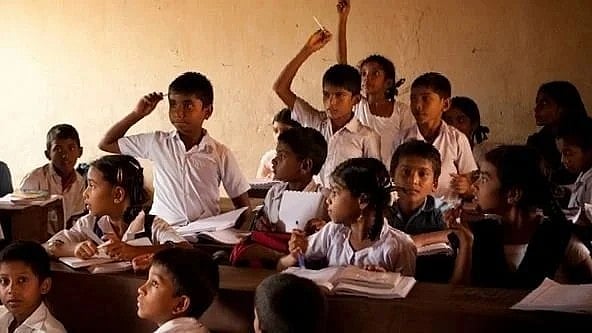
Yogi Govt Reimagines Balvatika As Holistic Learning Hub For Young Minds | File Pic (Representative Image)
Lucknow: The Yogi government is taking decisive steps to develop Balvatika not only as a centre of early education but also as the first laboratory for shaping future citizens who are capable, sensitive, and creative. Early childhood education for children in the 3 to 6 age group is being reimagined as a hub for holistic development.
The new Balvatika curriculum scientifically integrates the ‘Panchakosha’ principle of Indian knowledge tradition with 5 key dimensions of child development. Annamaya Kosha is linked to physical development, Pranamaya Kosha to socio-emotional and ethical development, Manomaya Kosha to language and literacy, Vijnanamaya Kosha to cognitive development, and Anandamaya Kosha to aesthetic development.
In line with this, SCERT has developed workbooks, activity booklets, picture stories, numeracy content, and art and music-based materials such as Chahak, Kadam, and Kalankur. These adopt play, story, and activity-based pedagogy to ensure holistic development of children.
This initiative will support not only academic growth but also balanced development of the body, mind, intellect, and emotions. Children will grow into creative, sensitive, and capable individuals from an early stage.
The objective of this curriculum is to ensure balanced development of every aspect of a child’s personality and to build a strong foundation for learning from the early years. It is based on play, activity, and experiential learning.
Children are encouraged to learn through stories, dialogue, art, and group activities, enabling them to develop language, numeracy, and social skills without pressure.
The curriculum incorporates sports for physical development, interactive activities for language development, curiosity-driven learning for cognitive growth, group participation for social and ethical development, and creative activities for aesthetic development. This approach aims to build confidence, sensitivity, and creativity among children.
According to SCERT Joint Director Dr Pawan Sachan, the age group of 3 to 6 years is the most crucial phase of child development, during which nearly 85% of a child’s abilities are formed. Keeping this in view, a comprehensive and child-centric curriculum has been developed to shape their future effectively.
RECENT STORIES
-
-
-
-
-