Uttar Pradesh: One Nation, One Election Targeted For 2029, Says JPC Chief PP Chaudhary
JPC Chairman PP Chaudhary said work is progressing towards implementing One Nation, One Election, with simultaneous Lok Sabha and Assembly elections targeted for 2029. He said the reform requires constitutional amendments and aims to save resources, reduce election disruptions and improve governance. The JPC is consulting stakeholders before submitting its report.

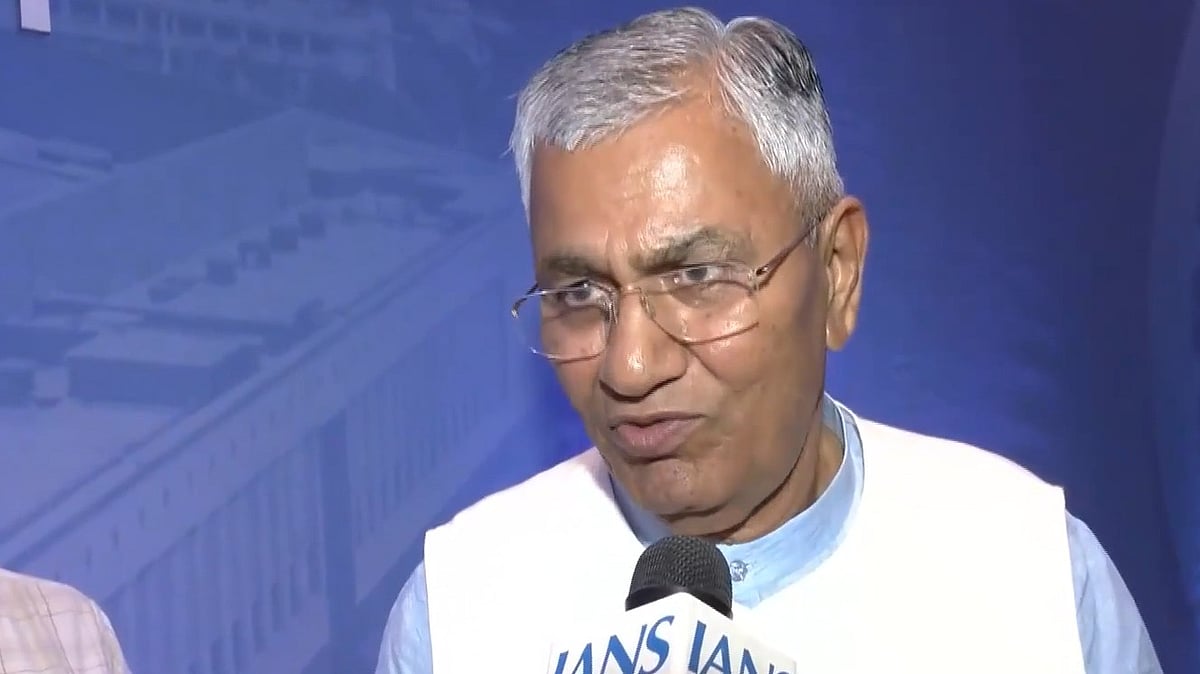
Uttar Pradesh: One Nation, One Election Targeted For 2029, Says JPC Chief PP Chaudhary | X - IANS
Lucknow, July 15: Joint Parliamentary Committee (JPC) Chairman and BJP MP PP Chaudhary said that work is progressing rapidly towards One Nation, One Election. "Our objective is that in 2029, Lok Sabha and State Legislative Assembly elections across the country should be held simultaneously. Necessary constitutional and legal amendments will be made for this. This is not the agenda of any political party but a comprehensive electoral reform linked to national interest, which will strengthen both democracy and governance." Mr Chaudhary was addressing a press conference in Lucknow on Wednesday.
PP Chaudhary stated, "Prime Minister Narendra Modi has long supported the concept of One Nation, One Election. Frequent elections adversely affect the country's development, administrative functioning and economy. The repeated enforcement of the Model Code of Conduct due to continuous election cycles impacts development projects, while a large part of the government machinery remains engaged in election-related work. If Lok Sabha and Assembly elections are held simultaneously, time, resources and public money will be saved, and governance can function more effectively."
The JPC Chairman stated, simultaneous elections are not a new arrangement in the country. After Independence, Lok Sabha and Legislative Assembly elections in most states were held together in 1952, 1957, 1962 and 1967. At that time, there were neither EVMs nor the technological facilities available today. Voting was conducted through ballot papers, yet the elections were successfully completed. Later, this electoral cycle was disrupted due to various reasons. President's Rule was imposed in some states, some Legislative Assemblies were dissolved before completing their terms, and the formation of new states resulted in different election schedules. Subsequently, during the Emergency, the tenure of the Lok Sabha was extended, which completely altered the election calendar.
PP Chaudhary stated, "Indian voters are highly aware and politically mature. The greatest strength behind the success of democracy is the wisdom of its voters. Political parties and analysts often predict election outcomes, but the results turn out differently because Indian voters cast their votes independently after making their own judgments. It is not appropriate to argue that if Lok Sabha and Assembly elections are held together, voters will become confused. From 1952 to 1967, crores of voters cast their votes simultaneously in both elections. Today, when the country is far more technologically advanced and voters are more aware than ever before, there is no solid basis for such apprehensions."
PP Chaudhary also responded to objections claiming that One Nation, One Election is against the basic structure of the Constitution, the federal system or democracy.
He stated, "If simultaneous elections between 1952 and 1967 did not violate democracy or the federal structure, then advancing such an argument today is merely part of a political debate. Even for several years after 1967, Assembly elections in some states continued to be held along with Lok Sabha elections. Therefore, it is factually incorrect to say that simultaneous elections are contrary to the spirit of Indian democracy."
PP Chaudhary said, the idea of One Nation, One Election is not the contribution of any one government. Several constitutional institutions and expert committees have recommended it from time to time. In 1983, the Election Commission recommended holding Lok Sabha and Assembly elections simultaneously in its report. Subsequently, in 1999, the Law Commission also supported this proposal. In 2002, the Commission constituted to review the working of the Constitution also considered it an appropriate reform. In 2015, the Parliamentary Standing Committee on Personnel, Public Grievances, Law and Justice, chaired by a Congress Rajya Sabha MP, also supported simultaneous elections in its report. In addition, NITI Aayog, in its 2018 report, recommended taking steps in this direction.
The JPC Chairman stated, "In 2020, the Central Government constituted a high-level committee under the chairmanship of former President Ram Nath Kovind. The committee included Union Home Minister Amit Shah, Rajya Sabha MP Ghulam Nabi Azad, along with several experts and constitutional scholars. The committee held extensive consultations with various political parties, experts, the Election Commission, constitutional institutions and other stakeholders. A report of more than 18,000 pages was prepared and submitted to the government. In its report, the committee recommended holding Lok Sabha and Assembly elections simultaneously and also suggested that local body elections be conducted within a fixed timeline."
PP Chaudhary stated, after considering the recommendations of the committee chaired by the former President, the Union Cabinet approved the related Bills. These were subsequently introduced in Parliament. Various political parties expressed their views in Parliament, and after extensive discussion, the Bills were referred to the Joint Parliamentary Committee (JPC) so that a detailed report could be prepared after considering the views of all stakeholders. The committee's objective is not to submit a report in favour of or against any political party, but to make concrete recommendations in the national interest after obtaining suggestions from all stakeholders.
Also Watch:
The JPC Chairman stated, "The committee is visiting different states across the country. So far, it has visited around 10 states, including Uttarakhand, Punjab, Haryana, Himachal Pradesh, Karnataka, Gujarat, Goa and Uttar Pradesh. During these visits, suggestions have been obtained from Chief Ministers, former Chief Ministers, Legislative Assembly Speakers, political parties, legal experts and various organisations. Several important suggestions have also been received during the Uttar Pradesh visit. At present, the committee is only listening to all stakeholders and has not reached any conclusion. The final report will be prepared after studying all the suggestions received."
PP Chaudhary said, the foremost concern before the committee is not the interest of any political party but the national interest. If frequent elections affect development works, weaken the investment environment and impose an additional burden on government resources, then serious consideration should be given to reforming the system. Continuous election cycles affect sectors such as industry, education, healthcare, agriculture and infrastructure. Frequent elections also result in a large number of administrative officials and security personnel being deployed on election duty. If elections are held simultaneously, these resources can be utilised more effectively for development works.
Responding to a question regarding EVMs and election preparedness, PP Chaudhary stated, "Today, technology is far more advanced than before. If the Election Commission gets about 6 months for preparation, it is fully capable of conducting simultaneous elections across the country. Earlier, elections were conducted successfully using ballot papers, whereas today modern technology and better election management systems are available. The Joint Parliamentary Committee is seriously examining all suggestions and objections."
The committee's effort is to prepare a report keeping democratic values and the constitutional framework in mind so that, in future, the system of One Nation, One Election can be implemented effectively and practically across the country."
RECENT STORIES
-
-
-
-
-