Uttar Pradesh: Lucknow's 88-Year-Old Coffee House Shuts Down, Leaving Behind A Rich Legacy
Lucknow’s iconic Indian Coffee House, a historic meeting place for politicians, journalists, writers and artists for nearly nine decades, has remained shut for almost three months. Once a hub of political discussions and literary conversations, the Coffee House’s closure has raised concerns among citizens who want the institution revived.

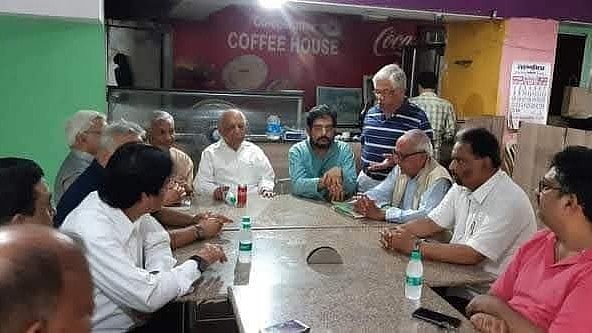
Uttar Pradesh: Lucknow's 88-Year-Old Coffee House Shuts Down, Leaving Behind A Rich Legacy | File Pic
Lucknow: Lucknow’s 88-year-old Indian Coffee House, once a bustling meeting place for politicians, journalists, writers, artists and social activists, has remained shut for nearly three months, bringing silence to a place that for decades was at the centre of the city’s political and intellectual life.
Long before mobile phones and social media transformed political reporting, the Coffee House was where political leaders, journalists and other influential people met over cups of coffee. Political developments were discussed, information exchanged and, often, news stories took shape during these informal conversations.
A historic political hub
Its walls have witnessed several chapters of Uttar Pradesh’s political history. Former prime ministers Jawaharlal Nehru, Atal Bihari Vajpayee and Chandra Shekhar, socialist leader Ram Manohar Lohia, Acharya Narendra Dev, former chief ministers Vir Bahadur Singh and Narayan Dutt Tiwari, former defence minister George Fernandes, Mulayam Singh Yadav and Lalji Tandon were among the political figures associated with the Coffee House.
Writer and journalist Pradeep Kapoor, who has written a book titled ‘Lucknow ka Coffee House’, says Lucknow has lost one of its iconic meeting points.
He recalls former chief minister Vir Bahadur Singh was known to visit the Coffee House without any official entourage and would often sit among journalists and intellectuals and have coffee with them. When Singh resigned as chief minister in 1988, he came to the Coffee House soon afterwards, Kapoor said.
Leaders and intellectuals gathered
Former prime minister Chandra Shekhar also visited the Coffee House during his 2002 visit to Lucknow. Lalji Tandon had a particularly close association with the place and often described it as his “political school”. According to Kapoor, Tandon would sit there with political associates and others whenever a political crisis arose and discuss ways to resolve it.
The Coffee House was not restricted to politicians. It was equally popular among writers, poets, journalists and artists. Literary figures such as Yashpal, Majaz Lakhnavi, Amritlal Nagar, Madan Mohan Siddhu and Thakur Prasad Singh were among those who frequented the place.
Kapoor said the Coffee House was particularly popular during the 1970s and 1980s because people could have an inexpensive cup of coffee while becoming part of serious discussions about politics and society.
ALSO READ
A symbol of public culture
The price of a cup of coffee, which once started at around Rs 4, eventually rose to Rs 50. But its importance was never measured simply by the price of coffee. The Coffee House became part of Lucknow’s public culture and a place where people from different walks of life could meet and exchange views.
The Coffee House was also different from an ordinary commercial establishment. It was run as a cooperative institution. “Because of its history and its importance in the city’s social and intellectual life, every closure in the past had triggered appeals from citizens and efforts to revive it,” said Pallabh Mitra, a retired banker and a regular in Coffee House and.
Also Watch:
Calls to revive legacy
For generations of Lucknow residents, the Indian Coffee House was more than a place to drink coffee. It was a newsroom without a newsroom, a political meeting place without a formal agenda and a literary adda where ideas travelled from one table to another.
Today, its doors remain shut and the once noisy tables are empty. For a city whose political and literary history was often discussed over its coffee cups, the silence marks the loss of an institution that was deeply woven into Lucknow’s public life.
“Lucknow should give a thought as how to revive this iconic place. We should not allow its silent death,” Kapoor said.
RECENT STORIES
-
-
-
-
-