'Stop Making Reels, Start Reading Books' CM Yogi Adityanath's Message To Youth At Ram Nath Kovind's Book Launch
Uttar Pradesh Chief Minister Yogi Adityanath released former President Ram Nath Kovind's Hindi autobiography in Lucknow on October 14. Praising Kovind's journey from poverty to Rashtrapati Bhavan, Yogi urged young people to prioritise books over social media reels. He also highlighted plans for libraries across gram panchayats statewide.

'Stop Making Reels, Start Reading Books' CM Yogi Adityanath's Message To Youth At Ram Nath Kovind's Book Launch | X
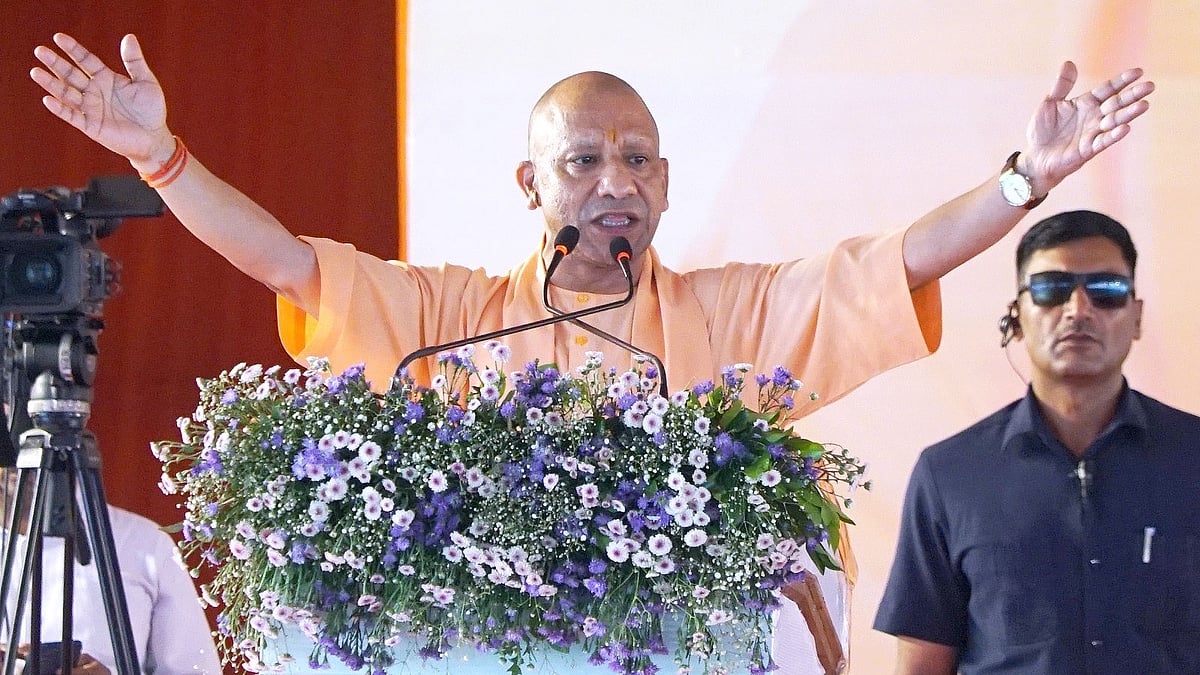
Lucknow, October 14: The country's Chief Minister, Yogi Adityanath, on Wednesday released the autobiography of former President of India Ram Nath Kovind, ‘Bharatiya Ganrajya Ki Vijaygatha: Mera Jeevan, Mera Sangharsh’, at the Lok Bhavan auditorium, in the former President's presence. On the occasion, the Chief Minister described the former President's life as an inspiring journey from deprivation and struggle to the country's highest constitutional office. He said, "Ram Nath Kovind did not use deprivation as a shield, but turned it into a path towards progress and struggle. He charted his life through hard work, perseverance, and firm determination. His life is a source of inspiration for the youth and students of the country."
The Chief Minister said, "Ram NathKovind'ss visits always hold special significance for the people of the state because Uttar Pradesh is both his birthplace and the land where he pursued hislife'ss work. The occasion is also important because the Hindi translation of the autobiography, which was earlier released by Prime Minister Narendra Modi, has now been released in Lucknow, the capital of the state that is his sacred birthplace."
He informed, "Ram Nath Kovind's autobiography tells the story of an Indian who did not allow the difficulties of life to become obstacles to progress. Born into an extremely poor family in Paraunkh village, Ram Nath Kovind lost his mother at a very young age. Despite this, he never let deprivation become a reason to give up, nor did he use his circumstances as a basis for asking anyone for anything. He received his education at a village school, pursued higher education, and became an advocate, giving voice to the underprivileged and the poor. Thereafter, he made nationalist ideology and public life part of his struggle. After beginning his political journey as a member and office-bearer of the Bharatiya Janata Party, he became a member of the Rajya Sabha, went on to serve as the Governor of Bihar and ultimately assumed the highest constitutional office as President of India."
The Chief Minister stated, "Ram Nath Kovind's journey teaches us that greatness does not come merely from progressing under favorable circumstances, but is achieved through the courage to confront Adversity. The houses were mud-built, but the resolve was firm. This determination marked the beginning of his journey. When circumstances are favorable, one should move forward on the path of public welfare and development. However, in adverse circumstances, one should have the courage to face them rather than retreat from the struggle. This very quality took Ram Nath Kovind to the position of leading the country for 5 years as the constitutional head of 145 crore Indians. Whatever responsibility was entrusted to him, he discharged it with ease, simplicity and in keeping with the sentiments of the Indian people."
He said that Ram Nath Kovind's distinction lies not only in reaching the highest constitutional office, but also in his affection for his birthplace, village and old relationships. He has had several opportunities to visit Paraunkh village. Prime Minister Narendra Modi has also visited his village. Affection for one's birthplace should be an important value in every Indian's life.
He further added that even after retiring as President, Ram Nath Kovind visits old associates whenever he gets the opportunity. When he visits Kanpur, he heads to his village, and when he comes to Lucknow, he doesn't forget to meet old acquaintances. His relationships with the chaat vendor, tea seller, cloth merchant, and other old acquaintances remain intact even today. His life conveys a message of love and gratitude towards one's birthplace. No matter how high a person rises in life, they should never forget their roots, their village, their society or the people who have played an important role in their life journey.
To explain his point, the Chief Minister referred to the episode involving Lord Shri Ram and Lakshman. He said, "After the victory over Lanka, when Lakshman sees the golden city and suggests staying there for some time, Lord Shri Ram explains to him the importance of one's birthplace and motherland. Lord Shri Ram says, "Api Swarnamayi Lanka Na Me Lakshman Rochate, Janani Janmabhoomishcha Swargadapi Gariyasi." This means that even the golden city of Lanka does not attract him, because one's mother and birthplace are greater than heaven."
The Chief Minister stated that Ram Nath Kovind visited various states of the country and numerous countries around the world as President. During these visits, he effectively represented India's position and helped strengthen the country's relations with other nations. His public life exemplifies constitutional propriety, humble demeanor, and dedication to the nation. His journey from a village to Rashtrapati Bhavan proves that even the greatest goals can be achieved through firm determination and hard work, despite difficult circumstances.
The Chief Minister urged students and young people to read the biographies and autobiographies of great personalities to help them progress in life.
He said, "Studying an individual's struggles provides an opportunity to understand how difficult circumstances can be transformed into sources of strength. Ram Nath Kovind's autobiography is important from this perspective as well, because it presents the journey from deprivation to the highest constitutional office. It is necessary to reflect on the direction in which our schools, colleges and panchayats are progressing."
He further added that students must have access to books that can guide their lives. Good books are the most important guides. They develop the ability to think and understand, offer opportunities to learn from experiences and inspire people to progress in life.
Expressing concern over the growing influence of smartphones and social media in modern life, the Chief Minister said, "People today spend five to seven hours solely on smartphones and social media platforms. If they could save one or two hours and devote that time to reading books and reflection, it could benefit individuals much more. Instead of making reels on social media to gain likes, young people should focus on living their real lives. Compared with the virtual popularity offered by social media, real-life experiences, knowledge, study and personality development are more beneficial."
The Chief Minister urged young people to make good use of their time and make good books a part of their lives.
Inspired by Prime Minister Narendra Modi, the Chief Minister said work is underway in Uttar Pradesh to develop a library in every gram panchayat. The state has established 57,600 gram sachivalayas, and one room in each has been earmarked exclusively for a library. Arrangements are being made to allow children from villages to visit these libraries and study.
He further informed that the focus is also on establishing digital libraries. Libraries are centers of knowledge, ideas, and personality development. Children in rural areas should also have access to good books and study materials. This will give them opportunities to develop their talents and better prepare for the future. Work to develop libraries is also underway on a large scale in universities, colleges, secondary schools, and Basic Education Council schools.
Referring to the book fairs being organized in Uttar Pradesh with the support of the National Book Trust (NBT), the Chief Minister said the state is making extensive efforts to increase people's interest in books.
He stated, "When the idea of organizing a book fair in Lucknow was first discussed, doubts were expressed about whether people would buy books in the present times. At that point, I urged NBT to organize a book fair once and see how it went. Many people visited the fair in Lucknow, and a good number of books were purchased. After this, I suggested organizing a book fair in Gorakhpur as well. In Gorakhpur, book sales and public participation were even higher."
He added that this shows that even where expectations are low, considerable interest in books can emerge, provided people are given an appropriate platform and opportunity. Young people, students, and people from various sections of society also visited the book fair organized on the Lucknow University campus and bought good books.
Former President of India Ram Nath Kovind, his wife Savita Kovind, Assembly Speaker Satish Mahana, Deputy Chief Ministers Keshav Prasad Maurya and Brajesh Pathak, Finance and Parliamentary Affairs Minister Suresh Kumar Khanna, Social Welfare Minister Asim Arun, and Kapish Mehra, Managing Director of Rupa Publications, were among the distinguished guests present on the occasion.
RECENT STORIES
-
-
-
-
-