Sambhal Violence Case: SC Sets Aside NSA Detention Of Mulla Afroz, Says Confession Alone Cannot Justify Action
The Supreme Court has set aside the preventive detention of Sambhal violence accused Mulla Afroz under the National Security Act, ruling that an alleged confession alone cannot justify detention. The court criticised the authorities’ approach and directed the Uttar Pradesh government to pay ₹10 lakh in costs.

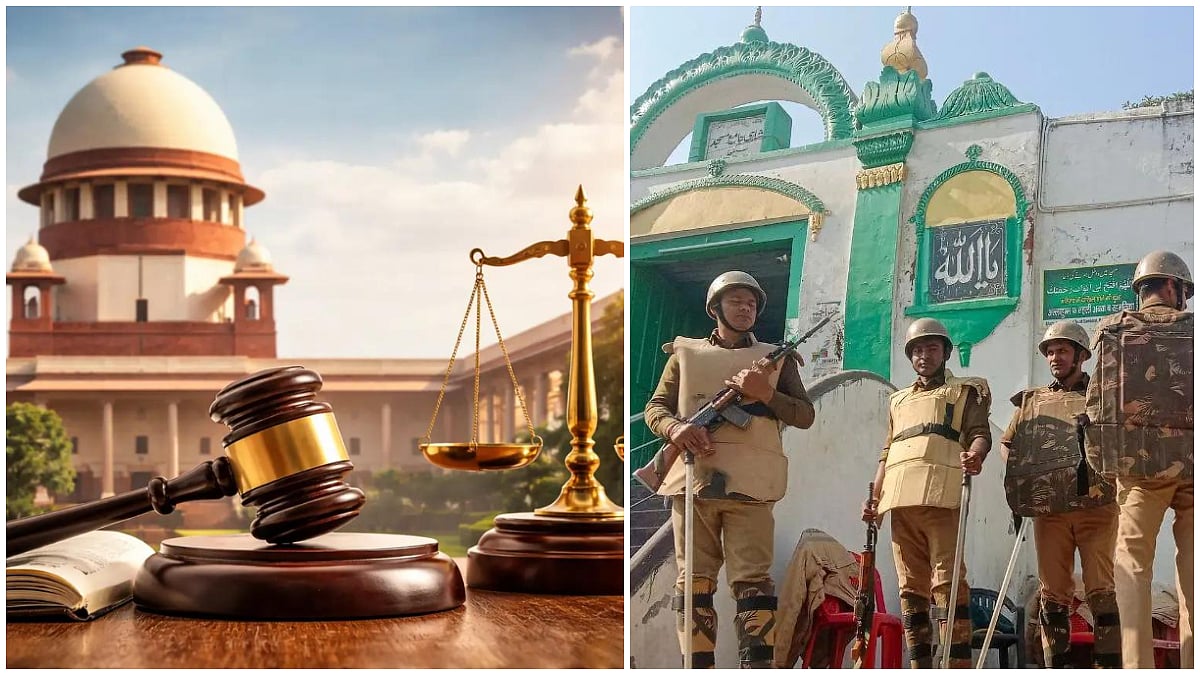
Sambhal Violence Case: SC Sets Aside NSA Detention Of Mulla Afroz, Says Confession Alone Cannot Justify Action | X
Lucknow: The Supreme Court has set aside the preventive detention of Sambhal violence accused Mulla Afroz under the National Security Act, holding that a confession allegedly made by an accused cannot, by itself, form the basis for such detention.
Supreme Court sets aside detention
A bench of Justices Dipankar Datta and Sheel Nagu found fault with the manner in which the authorities exercised their powers against Afroz and ordered the Uttar Pradesh government to pay Rs 10 lakh in costs.
The case concerns Afroz's detention under the NSA in connection with the violence that broke out in Sambhal in November 2024. The Supreme Court had questioned the UP government earlier this month over whether a custodial confession could form the basis of the "subjective satisfaction" required for preventive detention.
The bench had also questioned the 54-day gap between the alleged incident and Afroz's arrest, particularly when CCTV footage from the day of the violence was available.
Earlier court proceedings
The Allahabad High Court had earlier upheld the detention order, holding that the District Magistrate had considered the material available on record and had recorded reasons for invoking the NSA. The detention order was issued on October 13, 2025, while Afroz was already in judicial custody.
The Supreme Court's ruling underlines that the authority ordering preventive detention must consider relevant circumstances and cannot mechanically rely on a confession to arrive at the required subjective satisfaction.
NSA detention provisions
The case also highlights the exceptional nature of preventive detention under the NSA. The law permits detention to prevent a person from acting in a manner considered prejudicial to national security or the maintenance of public order. The detainee is entitled to be informed of the grounds of detention and given an opportunity to make a representation.
ALSO READ
What is the Sambhal case?
Violence erupted in Sambhal on November 24, 2024, during a court-ordered survey of the Shahi Jama Masjid. The survey followed a claim that a temple had previously existed at the site.
Four people were killed and several others were injured when protesters clashed with security personnel during the second round of the survey.
Afroz was arrested in January 2025 and was subsequently booked in connection with several cases arising from the violence. The Allahabad High Court record says he was not named in the initial FIR relating to the deaths and that his alleged involvement in several cases emerged later, including on the basis of an alleged extra-judicial confession.
Also Watch:
Government defence and ruling
The UP government had defended the NSA detention before the High Court, saying the violence had disturbed public order and that Afroz's detention was necessary to prevent similar activities in the future. The High Court rejected his challenge in June 2026.
The Supreme Court's intervention now means the preventive detention order against Afroz stands quashed.
RECENT STORIES
-
-
-
-
-