Can Faith Save The Ganga? Kashi Vishwanath's Plastic-Free Sawan Offers A Green Pilgrimage
The Kashi Vishwanath Temple Trust has banned single-use plastic inside the temple complex from Sawan, starting July 30, to reduce pollution reaching the Ganga. Devotees will be encouraged to use steel, copper, brass, bamboo and paper alternatives instead of plastic pouches, bottles and polythene packaging. The move targets waste generation during the expected 70-80 lakh pilgrim visits.

Can Faith Save The Ganga? Kashi Vishwanath's Plastic-Free Sawan Offers A Green Pilgrimage | X - cleanganganmcg
Varanasi: Before sunrise, Rajkumar Seth carefully arranges bamboo baskets, steel lotas and paper bags outside his small shop in the narrow lanes leading to the Kashi Vishwanath Temple. Until a few days ago, his shelves were stacked with plastic flower trays, polythene bags and disposable containers. This Sawan, they have disappeared.
"It is a good step by the temple administration. It will definitely help the environment," Seth said. "We have replaced plastic with steel, paper and bamboo. Devotees are also accepting the change."
For Seth, it is a business adjustment. For the Kashi Vishwanath Temple Trust, it marks the beginning of an ambitious environmental campaign that seeks to protect the Ganga from one of its fastest-growing pollutants.
Beginning with the holy month of Sawan, which starts on July 30, the temple trust has imposed a complete ban on the use of plastic inside the Kashi Vishwanath Temple complex. The order prohibits devotees from carrying milk for abhishek in plastic pouches, Gangajal in plastic bottles or jerrycans, and flowers, fruits and prasad packed in polythene bags, plastic trays or other single use plastic packaging. Instead, pilgrims have been asked to use traditional copper, brass and steel vessels along with bamboo baskets, paper bags and other biodegradable alternatives.
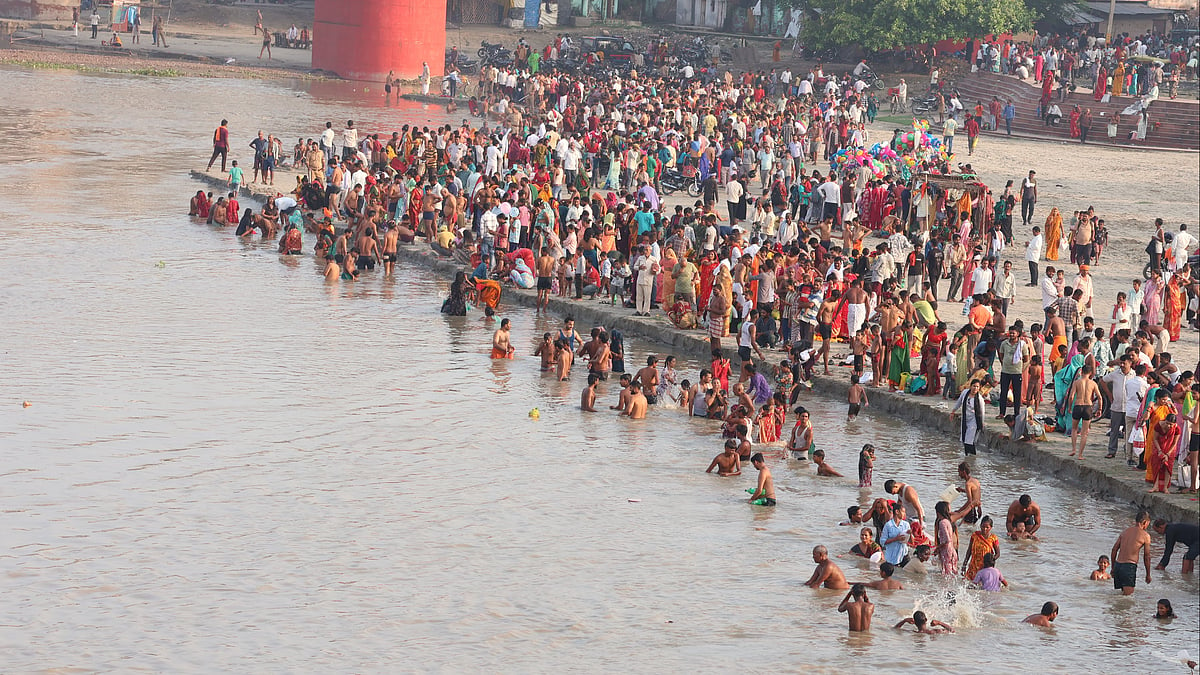
The decision transforms one of India's largest annual religious gatherings into a test of whether faith can drive environmental change. With an estimated 70 to 80 lakh pilgrims expected to visit the temple during Sawan, the administration hopes the ban will prevent tonnes of plastic waste from entering the city's drainage network and eventually the Ganga.
Temple officials admit there is no scientific estimate of the quantity of plastic generated during previous Sawan pilgrimages, but they say the scale is enormous.
"We do not have an exact figure of plastic waste generated during Sawan," a senior temple official said. "But with nearly 70 to 80 lakh pilgrims expected, the quantity can be substantial. Milk pouches used for abhishek, plastic bottles, disposable cups, polythene bags and packaging material together account for a huge volume of waste."
One estimate suggests it could be close to 20-30 tonnes.
The concern is backed by scientific evidence showing that plastic discarded during religious activities ultimately finds its way into the river.
A study by Delhi-based environmental organisation Toxics Link found microplastics in every sample collected from the Ganga at Haridwar, Kanpur and Varanasi, with the highest concentration recorded in Varanasi. Assi Ghat, one of the city's most visited riverfronts, showed the maximum abundance of microplastics.
The study identified untreated sewage, urban waste and religious offerings wrapped in non-biodegradable plastic as major contributors to pollution. Once discarded, plastic bags, milk packets and bottles gradually fragment into microscopic particles that persist in the river and are eventually carried downstream into the ocean.
Dr RK Singh of the Department of Environment and Sustainable Development at BHU who collaborated with the National Institute of Oceanography, Goa, on analysing the river samples, said the findings highlighted the seriousness of plastic pollution in the Ganga.
"The highest concentration of single use and secondary plastic products was found in Varanasi. Assi Ghat recorded the maximum abundance of microplastics," Dr Singh said. "We also observed a sewage outlet discharging wastewater directly into the Ganga, which contributes to the concentration of microplastics in the river."
According to the study, the abundance of microplastics in the surface water at Varanasi was measured at 2.42 ± 0.405 particles per cubic metre.
Environment Minister Arun Kumar Saxena said the temple's initiative addresses a much larger ecological challenge.
"The Ganga river basin is among the world's largest plastic-emitting river systems," he said. "More than 0.12 million tonnes of plastic from the basin enters marine ecosystems every year. Plastic discarded during pilgrimages, tourism and urban activities gradually breaks down into microplastics, threatening the endangered Gangetic dolphin, affecting fisheries and polluting the river."
Environmental experts say plastic packaging now accounts for more than half of the visible waste found in the Ganga basin. Unlike flowers and other biodegradable offerings, plastic bags, milk pouches and disposable bottles do not decompose. Instead, they fragment into tiny particles that are consumed by fish and other aquatic organisms, eventually entering the food chain.
Also Watch:
Officials say preventing plastic from entering the river is far more effective than trying to remove it after it has become part of the ecosystem.
"Once plastic reaches the Ganga, it is extremely difficult to recover," an official associated with the campaign said. "The idea is to stop pollution at its source by changing the way devotees bring their offerings."
To ensure compliance, volunteers will guide pilgrims at entry points while paper cups will be provided to devotees arriving with plastic containers so they can still perform rituals. Traders around the temple have shifted to bamboo baskets, cardboard boxes, cloth bags and reusable steel utensils. Pilgrims are also being urged not to throw floral offerings or packaging into the river and to use electric boats operating from Namo Ghat to reduce pollution.
The campaign has found support among devotees.
"Plastic should not be used in a holy place," said Pradeep Singh, who had travelled from Madhya Pradesh. "If using paper and steel helps keep the Ganga clean, everyone should cooperate."
Another devotee, Aditya, said protecting the river was as important as offering prayers.
Back in the temple lane, Rajkumar Seth watches devotees leave his shop carrying bamboo baskets instead of plastic bags. It is a small change repeated thousands of times each day.
Whether those small changes can reduce the flow of plastic into one of the world's most sacred rivers will become clear after the Sawan pilgrimage ends. But by targeting plastic before it reaches the Ganga, the Kashi Vishwanath Temple Trust is attempting something that river conservationists have advocated for years: stopping pollution at its source rather than cleaning it up after the damage has already been done.
RECENT STORIES
-
-
-
-
-