AI Hiring Raises Bias Concerns As Experts Demand Transparency And Human Oversight In Recruitment
AI-based recruitment is raising concerns over discrimination and unequal opportunities as companies increasingly rely on automated screening tools. A 2026 Stanford analysis of four million job applications identified racial disparities in AI-based candidate recommendations.

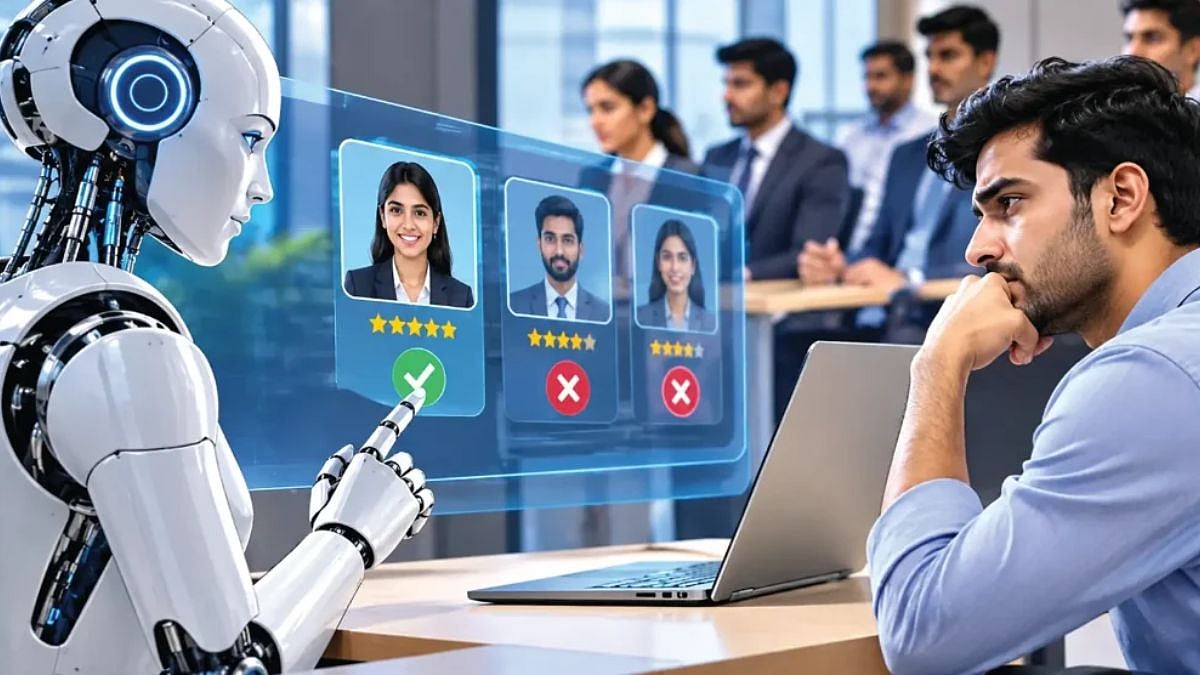
AI-powered recruitment tools are increasingly being used to screen job applicants, raising questions about fairness, transparency and accountability | Representational Image
Lucknow, November 12, 2026: Artificial Intelligence (AI) is increasingly transforming recruitment in the private sector, but growing dependence on automated hiring tools has raised concerns over discrimination and unequal opportunities for job seekers. Systems designed to screen resumes, assess candidates and shortlist applicants are facing questions about fairness, transparency and accountability.
AI-based recruitment platforms are being used by companies to process large volumes of applications, match qualifications with job requirements and evaluate candidates through automated assessments.
While these tools can reduce recruitment time and administrative costs, concerns are emerging that algorithmic decisions may disadvantage certain categories of applicants.
Algorithmic Bias In Recruitment
One major concern is that AI systems learn from historical recruitment data. If the data reflects existing workplace inequalities or hiring preferences, algorithms may reproduce those patterns in future selections.
Consequently, candidates with similar qualifications may receive different assessments because of factors that are not necessarily relevant to their professional abilities.
Another challenge is the lack of transparency in automated screening. Applicants are often unaware of why their applications were rejected or which parameters influenced their rankings. This makes it difficult for candidates to question potentially unfair decisions.
Research by Stanford University's Institute for Human-Centered Artificial Intelligence, published in 2026, has highlighted these concerns. An analysis of four million job applications found evidence of racial disparities in AI-based candidate recommendations. Researchers also identified instances of repeated rejection across multiple employers using similar screening systems.
The findings underline the risks of relying heavily on a limited number of recruitment technology providers. When several companies use similar algorithms, a candidate's negative assessment could affect opportunities across different organisations.
Experts Call For Greater Transparency
In India, the growing adoption of AI in recruitment has also intensified discussions about responsible technology use. Industry experts have emphasised the need for companies to maintain human supervision, regularly audit recruitment algorithms and ensure that selection criteria remain relevant to job requirements.
Transparency in automated assessments, clear explanations for rejection and opportunities for human review could help protect applicants from unfair screening.
As AI becomes an integral part of private-sector recruitment, the challenge will be to balance technological efficiency with equal opportunity. Experts believe that technology should assist hiring decisions rather than become an unquestioned authority over candidates' professional futures.
To get details on exclusive and budget-friendly property deals in Mumbai & surrounding regions, do visit: https://budgetproperties.in/
RECENT STORIES
-
-
-
-
-