After Ayodhya, Is Mathura Set To Become BJP's Next Big Political Battleground In Uttar Pradesh?
The BJP's two-day strategy meeting in Braj has placed Mathura at the centre of political debate ahead of the 2027 Uttar Pradesh Assembly elections. A renewed Krishna temple pitch and the slogan 'Radhe-Radhe, Kamal Khila De' have drawn comparisons with Ayodhya. However, the Krishna Janmabhoomi-Shahi Idgah dispute remains before the courts, while governance and caste politics remain key issues.

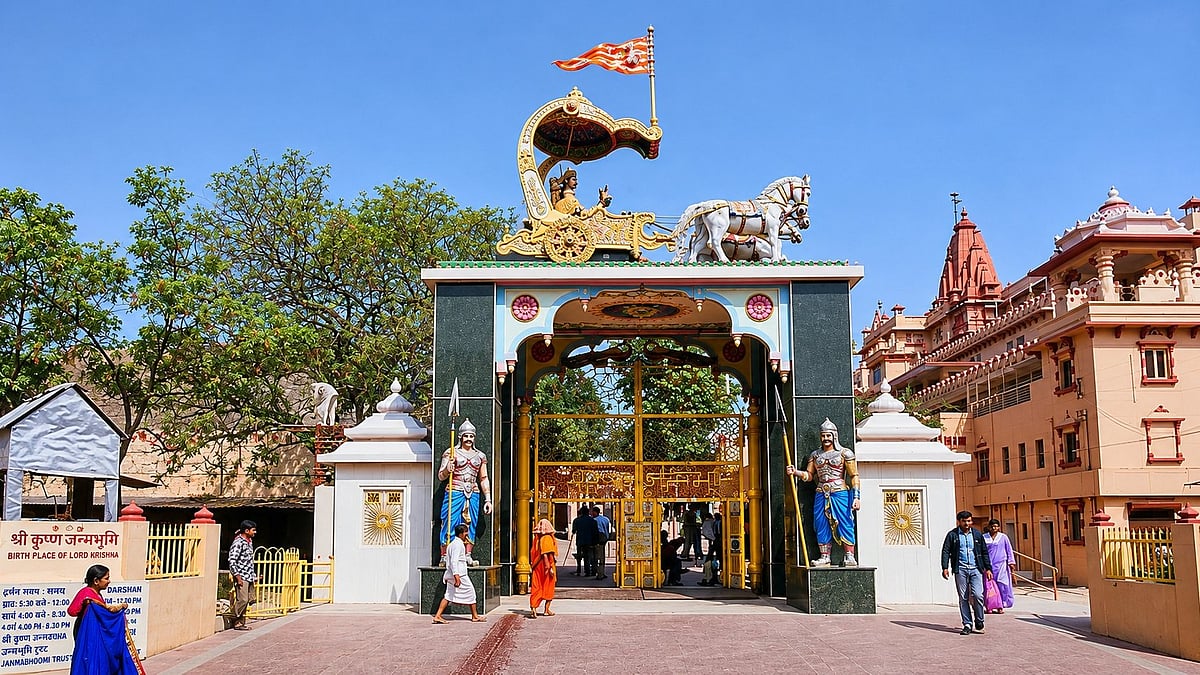
After Ayodhya, Is Mathura Set To Become BJP's Next Big Political Battleground In Uttar Pradesh? | X - Outlookindia
Mathura: Is Mathura emerging as the next Ayodhya in Uttar Pradesh's political landscape? The BJP's two-day strategy meeting in Braj, accompanied by a renewed pitch for a grand Krishna temple and the slogan ‘Radhe-Radhe, Kamal Khila De’, has brought this question to the centre of the political debate ahead of the 2027 Assembly elections.
The symbolism was difficult to miss. After Ayodhya became the centrepiece of the BJP's Hindutva politics for decades, the party has now chosen the land of Lord Krishna to deliberate on its electoral roadmap. Deputy Chief Minister Keshav Prasad Maurya made the political intent explicit when he declared, "Ayodhya hui hamari hai, ab Mathura ki baari hai." He also invited Samajwadi Party president Akhilesh Yadav to join the proposed kar seva for a grand Krishna temple.
BJP's New Slogan Blends Faith And Politics
The new slogan, ‘Radhe-Radhe, Kamal Khila De’, blends the devotional identity of Braj with the BJP's electoral symbol. It is more than a regional catchphrase. It indicates the party's attempt to extend its religious-political narrative from Ram Janmabhoomi to Krishna Janmabhoomi, keeping cultural nationalism central to its campaign.
The timing is significant. The consecration of the Ram temple in January 2024 marked the fulfilment of a longstanding promise that had shaped the BJP's political mobilisation. With Ayodhya's temple now a reality, Mathura offers the party another religious issue around which it can mobilise its cadre and sustain its ideological messaging. The Krishna Janmabhoomi-Shahi Idgah dispute, however, remains before the courts and cannot be treated as a settled matter.
Political Calculations Around Yadav Vote Base
There is also a political calculation involving Akhilesh Yadav. Lord Krishna holds a special place in the religious and cultural identity of the Yadav community, a key support base of the Samajwadi Party. By challenging Akhilesh to support the demand for a grand temple, the BJP is seeking to bring him into a debate that has both religious and political implications for his party.
The Mathura pitch also comes against the backdrop of the SP's PDA (Pichhda, Dalit, Alpsankhyak) mobilisation. The BJP could seek to use a broader Hindu religious identity to appeal across caste groups, particularly among OBC communities. Whether this narrative can counter the Opposition's caste-based social coalition remains an important question.
Braj Meeting Reinforces Religious Messaging
The choice of Braj for the organisational meeting further reinforced the message. Yogi Adityanath performed cow worship at the Pandit Deendayal Upadhyaya Cow Research Centre in Parakhham, while his subsequent visit to Barsana brought together the themes of cow protection, saint traditions, environmental conservation and public welfare.
ALSO READ
Mathura Faces Different Political And Legal Challenges
Yet, Mathura cannot automatically replicate Ayodhya's political journey. The Ram Janmabhoomi movement had a long history of mobilisation and a distinct political trajectory. The Krishna Janmabhoomi dispute has its own legal complexities and social context. Moreover, voters in Uttar Pradesh will also judge the government on employment, inflation, agricultural concerns, law and order, welfare delivery and development.
For the BJP, therefore, the challenge will be to combine the Mathura narrative with its governance pitch and organisational machinery. The party's strategy meeting also emphasised booth-level mobilisation, youth participation and reaching beneficiaries of government schemes.
The Opposition, meanwhile, is unlikely to allow the election to be reduced to a contest over religious symbolism. The SP will seek to retain its focus on social justice and PDA politics, while questioning the BJP's governance record.
Also Watch:
Will Mathura Shape The 2027 Elections?
Mathura may not replace Ayodhya, but it is increasingly becoming an important part of the BJP's political conversation. The question for 2027 is whether Krishna Janmabhoomi will remain an ideological rallying point or acquire the electoral centrality that Ram Janmabhoomi once enjoyed. The answer will depend not merely on slogans from Braj but on how voters respond to the competing narratives of religious identity, social justice and governance.
RECENT STORIES
-
-
-
-
-