Union Budget 2026-27: Indian Govt Hikes Electronic Component Manufacturing Outlay To ₹40,000 Crore
Finance Minister Nirmala Sitharaman announced the launch of India Semiconductor Mission 2.0 with a Rs 40,000 crore outlay to boost local electronics manufacturing and innovation. The Budget 2026-27 also introduces a Rs 10,000 crore SME growth fund, a five-part textile sector program, and support for rare earth mineral corridors in key states to promote self-reliance and job creation.

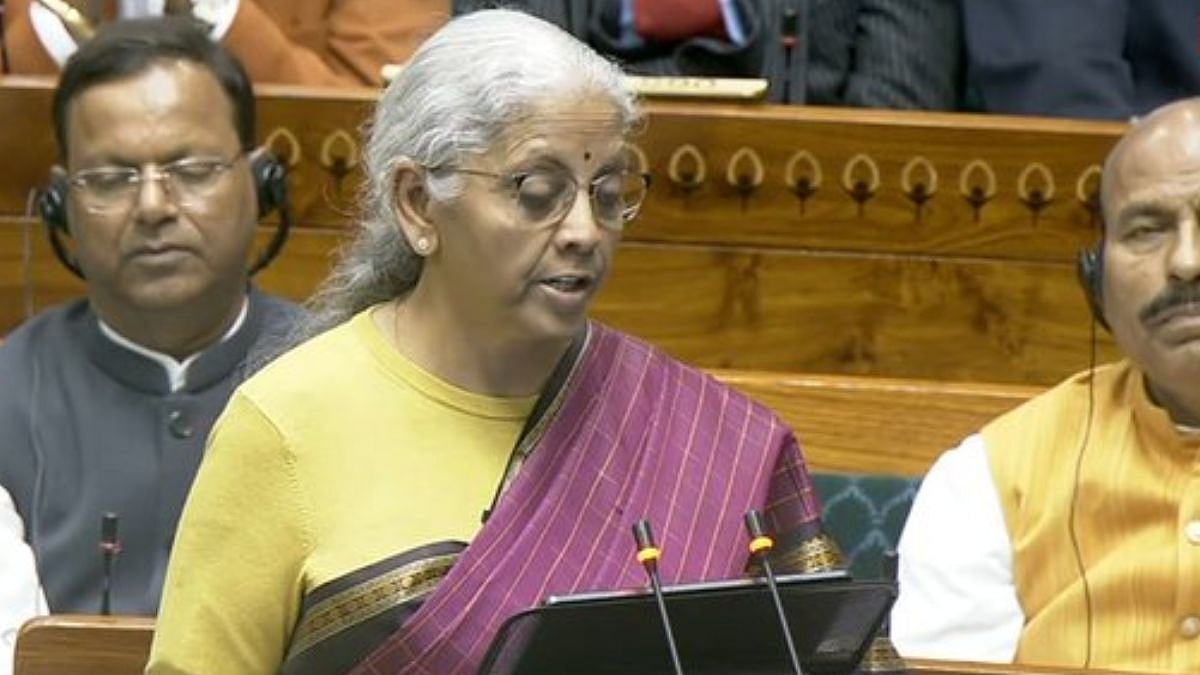
Union Finance Minister Nirmala Sitharaman | X @ShikhaDarbariDr
New Delhi: Giving a thrust to ‘Make in India’ and domestic manufacturing, Finance Minister Nirmala Sitharaman on Sunday announced the launch of the India Semiconductor Mission (ISM) 2.0, while increasing the outlay for electronics component manufacturing to Rs 40,000 crore to strengthen local production and innovation.
India’s Semiconductor Mission 1.0 expanded the country’s semiconductor capabilities, and building on this, the government will launch ISM 2.0 to produce equipment and materials, develop full-stack Indian IP, and strengthen supply chains, she said while presenting the Budget 2026-27.
"We will also focus on industry-led research and training centres to develop technology and a skilled workforce. The Electronics Components Manufacturing Scheme, launched in April 2025 with an outlay of Rs 22,999 crore, already has investment commitments at double the targets," the Finance Minister told the House.
ALSO READ
The Union Budget 2026-27 also proposed to introduce a dedicated Rs 10,000 crore SME growth fund to create future jobs, incentivising enterprises based on select criteria.
For the labour-intensive textile sector, the Finance Minister proposed an integrated programme with five key components. The first is the National Fibre Scheme, aimed at achieving self-reliance in natural fibres like silk, wool, and jute, as well as man-made and new industrial-age fibres.
The second is the Textile Expansion and Employment Scheme, which seeks to modernise traditional clusters by providing capital support for machinery, technology upgrades, and common testing and certification centres.
The third component is the National Handloom and Handicraft Programme (NHHP), designed to integrate and strengthen existing schemes while ensuring targeted support for weavers and artisans.
A government scheme for rare-earth permanent magnets was launched in November 2025.
"We now propose to support the mineral-rich states of Odisha, Kerala, Andhra Pradesh and Tamil Nadu to establish dedicated rare earth corridors," announced FM Sitharaman during her Budget speech.
(Except for the headline, this article has not been edited by FPJ's editorial team and is auto-generated from an agency feed.)
RECENT STORIES
-
-
-
-
-