Trump’s H-1B, Green Card Crackdown Could Push AI Talent Out Of US, Warns Microsoft President
Microsoft President Brad Smith has warned that Trump administration restrictions on skilled immigration and green cards could drive AI engineers and tech professionals abroad. He rejected JD Vance’s H-1B visa misuse allegations, citing hiring records and delays in permanent residency applications.

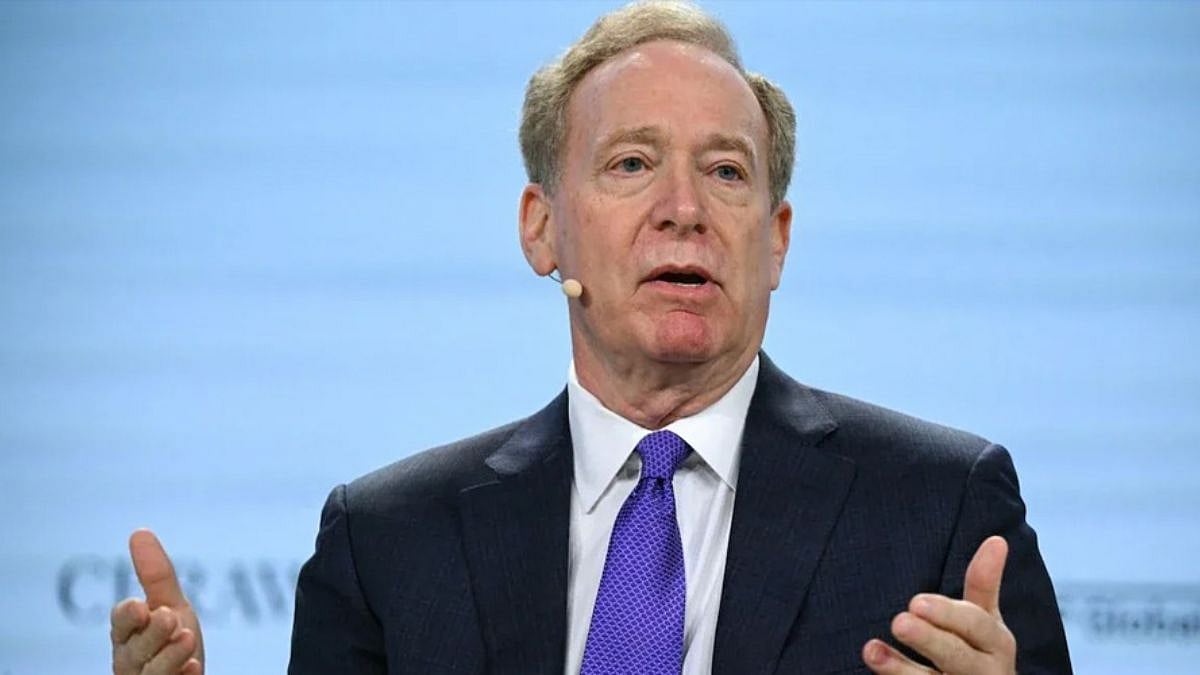
Trump’s H-1B, Green Card Crackdown Could Push AI Talent Out Of US, Warns Microsoft President | X
Microsoft President Brad Smith has warned that the Donald Trump administration’s restrictions on skilled immigration and permanent residency could weaken the US technology industry and push highly qualified professionals to other countries.
His warning comes days after the administration moved to bar Microsoft and seven other companies from seeking green cards for foreign employees.
In an exclusive interview with Politico’s Decoded at the International AI Summit in Dublin, Ireland, Smith rejected Vice President JD Vance’s allegations that Microsoft had misused the H-1B visa programme to recruit foreign workers at lower salaries.
He cautioned that tougher immigration policies could affect America’s ability to attract engineers and specialists in artificial intelligence (AI).
ALSO READ
“We should all be worried about sending — intentionally or inadvertently or otherwise — signals that send the most talented next wave of AI [or] SI software engineers to other countries, rather than the United States,” Smith told Politico.
His comments came less than a week after Vance announced restrictions preventing Microsoft and seven other companies from applying for green cards on behalf of skilled foreign workers.
Microsoft Rejects Allegations Of H-1B Visa Misuse
Vance accused Microsoft of exploiting the H-1B visa programme to hire foreign workers instead of employing Americans at higher salaries.
Smith dismissed the allegations as “completely off base”, suggesting that the Vice President had been given inaccurate information about Microsoft’s recruitment and immigration records.
ALSO READ
He maintained that most of the company’s green card applications concerned employees who had worked at Microsoft for years rather than newly recruited foreign workers.
According to Smith, the applications largely reflected delays in the US permanent residency process.
“Unfortunately, it’s just because the green card backlog is so long,” he said.
He also rejected allegations that Microsoft paid foreign-born employees less than their American counterparts, stating that the company followed the same compensation system regardless of immigration status.
ALSO READ
Smith said Microsoft had recruited more than 9,000 US-born workers last year, a figure he argued had been overlooked in the administration’s criticism.
“We will stand by our record,” he said, calling on White House officials to review the company’s employment data.
Immigration Restrictions Could Hurt US Technology Sector
Smith highlighted the role of immigrants in strengthening American innovation and economic growth.
He said five of the six Americans honoured by President Donald Trump with technology and science medals were immigrants to the United States.
According to Smith, those individuals and their companies collectively represented more than 25% of the total market value of the S&P 500.
“Let’s not put that at risk,” he said, warning that restrictions on skilled immigration could undermine the economic contributions of immigrant entrepreneurs and technology leaders.
He also expressed concern that uncertainty surrounding permanent residency could discourage highly skilled professionals from building careers in the US, particularly in emerging fields such as AI.
Microsoft Backs Some Trump AI Policies Despite Immigration Dispute
The disagreement reflects growing tensions between the Trump administration’s efforts to tighten employment-based immigration rules and the technology industry’s need for specialised workers.
Despite opposing the administration’s approach to skilled immigration, Smith expressed support for some of its AI policies.
These included export controls imposed on Anthropic’s new AI models, highlighting Microsoft’s willingness to back certain White House technology initiatives while challenging its immigration restrictions.
RECENT STORIES
-
-
-
-
-