NEET UG 2026 Re-Exam: How To Spot Fake WhatsApp Messages From Real NTA Alerts & How To Download Your Admit Card Safely
The National Testing Agency has begun sending official WhatsApp alerts to NEET UG 2026 candidates ahead of the June 21 re-exam, while warning them about rising scams. Only messages from a verified number with a blue tick are genuine, and NTA says it will never ask for OTPs, payments, or replies through WhatsApp broadcasts.

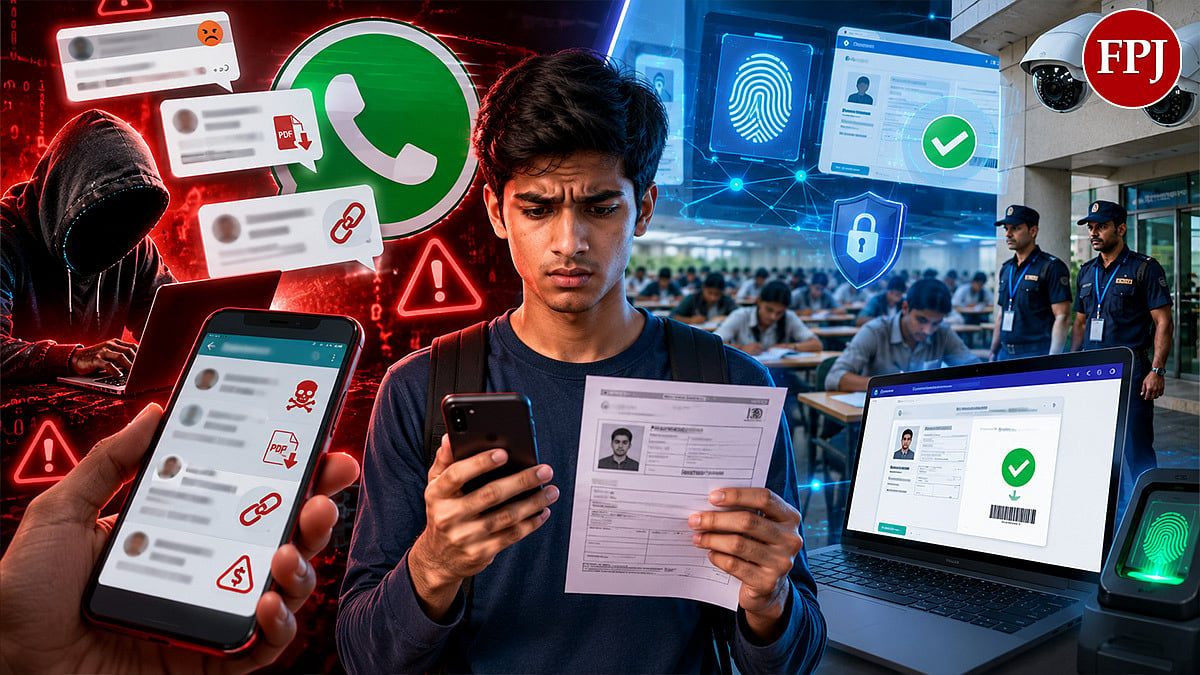
With the NEET UG 2026 re-examination just two days away, the National Testing Agency has turned to an unusual channel to reach over a million anxious candidate - WhatsApp. But the move has come with a sharp warning attached, because scammers are already exploiting the same platform to target students. Here's a tech-side breakdown of what's official, what's fake, and how to tell the difference.
Why NTA is using WhatsApp for NEET UG 2026 announcements?
Ahead of the re-exam scheduled for June 21, NTA has started sending reminder SMS messages, emails, and WhatsApp notifications urging candidates to download their admit cards, while simultaneously cautioning them against fraudulent messages and fake communications. The original NEET-UG exam, held on May 3, was cancelled on May 12 following allegations of a paper leak, a controversy the CBI is still investigating. That backdrop is precisely why this WhatsApp rollout matters. With so much anxiety already swirling around the exam, fraudsters have a ready-made audience to target.
How to identify a genuine NTA message?
This is the part students need to get right. NTA has clarified that genuine WhatsApp messages will only arrive from its verified number, +91 78279 80287, which displays a blue verification tick alongside the name "National Testing Agency." Any account using the NTA name without that blue tick should be treated as suspicious and ignored.
Equally important: NTA's WhatsApp service is strictly broadcast-only, meaning candidates are not expected to reply to anything they receive on it. That single detail is a useful litmus test. If a message on WhatsApp is asking you to respond, click through to a link, or share information, it's already behaving differently from how the real channel works.
Red flags that scream 'scam'
Officials have been explicit about what the agency will never ask for. Candidates have been told that NTA will never request OTPs, personal banking details, or payments through any message . The agency has specifically warned candidates not to share OTPs, personal details, or make payments in response to messages claiming to be from NTA.
Beyond WhatsApp, fraud attempts have spread to other platforms too. Fraudulent Telegram channels have reportedly asked students for amounts ranging from Rs. 14,000 to Rs. 25,000, with some scammers demanding as much as Rs. 10 lakh in exchange for fake promises of leaked papers, and officials have stressed that students who hand over admit cards, WhatsApp numbers, or personal details to such channels risk further exploitation, since money sent to scammers is typically unrecoverable. NTA has reiterated there is no leaked paper in circulation, and that no individual or platform has legitimate access to the re-test's question content.
A simple checklist for students:
- No blue tick on WhatsApp? Don't trust it.
- Being asked to reply, click a link, or verify details? It's not the real channel.
- Anyone offering 'leaked papers' for money is running a scam.
- Don't forward suspicious messages to friends; report them instead.
How to download your NEET UG 2026 admit card?
For something this important, the safest route is also the simplest. Candidates should download their admit card only from the official website, neet.nta.nic.in, since the earlier May 3 admit card is no longer valid for the re-exam. NTA has also advised students to type out the website address manually rather than tapping links shared via SMS, email, or social media. This is a basic but effective way to avoid landing on a lookalike phishing page.
Demand for the re-issued admit card has been significant. More than 10 lakh students have already downloaded their re-NEET UG admit card for 2026.
What to do if something looks off?
NTA has also built a dedicated reporting mechanism for this exact situation. The agency has launched an online facility allowing students, parents, coaching institutes, and the general public to report suspicious claims or fraudulent activity related to the re-NEET question paper, accessible at innovateindia.mygov.in/neet-ug-2026. If a message, channel, or website feels even slightly off - wrong number, no verification badge, unsolicited payment request - that portal is where it should be flagged, rather than acted upon.
It is clear that NTA trusts WhatsApp more than Telegram. Whether all of these preventive measures will be fruitful for a seamless examination or not, devoid of any leaks, remains to be seen.
RECENT STORIES
-
-
-
-
-