Indian Telegram Users Say They Can Still Access The App, Even Though Government Issued A Ban Ahead Of NEET UG 2026 Re-Exam
Hours after the government invoked Section 69A of the IT Act to restrict Telegram ahead of the NEET UG 2026 re-exam, users across India reported the app still working normally. The order is temporary and applies until June 22, with a separate directive disabling message edits until June 30. Enforcement varies across ISPs.

Sourced
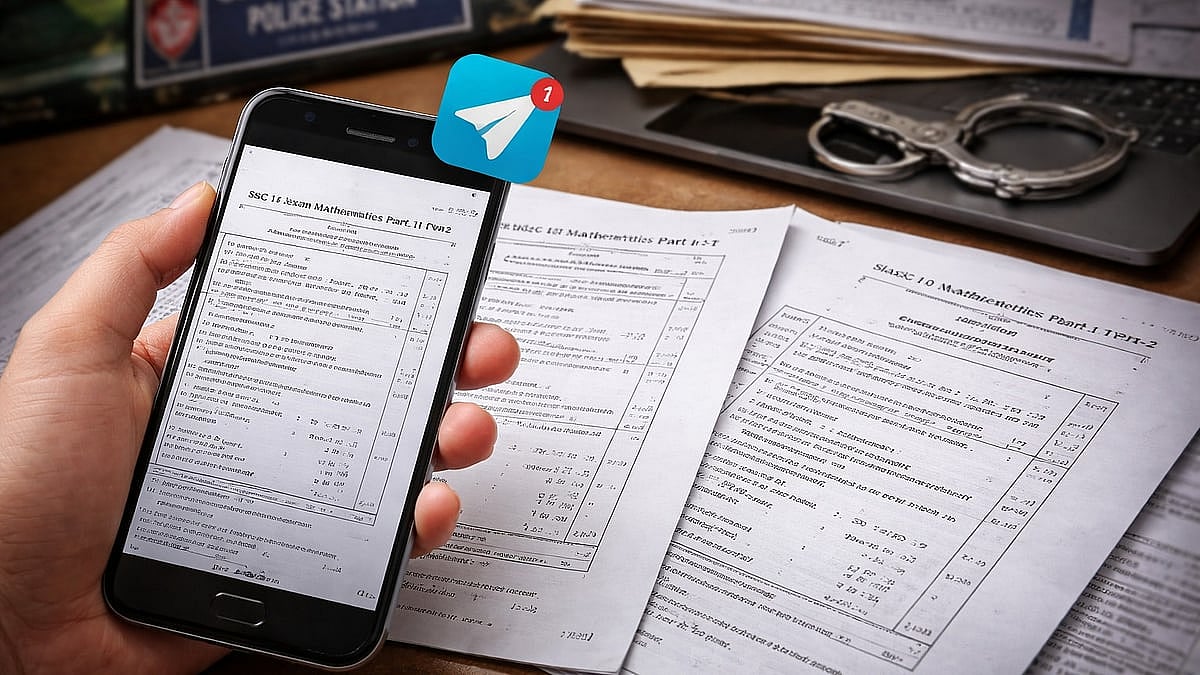
Hours after the government invoked emergency IT law powers to block the app ahead of NEET UG's re-examination, multiple users report that the ban has not been enforced yet. The Indian government banned Telegram today, invoking Section 69A of the Information Technology Act, 2000. Hours later, a few number of users across India say the app is working perfectly normally.
Users on X began flagging the issue shortly after the ban was announced, with several reporting they could open Telegram, send messages and even create new accounts without any hindrance. Our own testing confirmed the same - Telegram was accessible, and a new account could be created and used to chat without any obstacle.
What the government has actually banned, and what it hasn't
It is important to clarify that this is not a blanket, permanent ban on Telegram. The government has issued two narrow, time-bound orders, and neither is as sweeping as the phrase 'Telegram ban' might suggest.
The first order, issued by the Ministry of Electronics and Information Technology (MeitY) on the recommendation of the National Testing Agency (NTA), restricts access to Telegram in India under Section 69A of the IT Act.
This ban on platform access runs until June 22, the day after the NEET (UG) 2026 re-examination scheduled for June 21.
The second order is separate and goes further in time, but narrower in scope. It requires Telegram to disable its message-editing feature in India for messages already posted, until June 30, 2026. This targets a specific method used to fabricate fake paper leak evidence.
Why it is not working as a complete block
Section 69A orders in India direct ISPs and telecom operators to block access to a platform or URL. However, enforcement is notoriously uneven and depends on individual ISPs implementing the block at their end. Users on different networks - Jio, Airtel, BSNL, Vi - may experience different outcomes depending on whether their provider has acted on the order yet, or at all.
VPNs also render such blocks trivial to bypass, as India learned during previous internet restrictions in Jammu & Kashmir and during farmer protest-related blocks in 2021.
The government has not confirmed that all ISPs have implemented the Telegram block, and Telegram itself has not issued a statement on the matter.
Why the government acted
The NTA, in an official press release, described the platform access restriction as a 'measure of last resort,' taken only after channel-by-channel takedowns coordinated by the Indian Cyber Crime Coordination Centre (I4C) under the Ministry of Home Affairs had 'not produced, at the platform level, the response required to protect candidates.'
According to the NTA, channels operating under names such as 'PAPER LEAKED NEET', 'Re-NEET 2026', 'Private Mafia', and 'REE NEET MAFIAA' demanded sums ranging from a few thousand to several lakhs of rupees from candidates and their families for purported access to the re-examination paper.
The NTA was unambiguous, "There is no paper available outside the secured examination chain. The promise of any such material is, in every instance, a fraud."
MeitY directs Telegram's message-editing feature
The second MeitY direction, disabling Telegram's message-editing feature through June 30, addresses a subtler and more insidious problem.
As the NTA press release explains, Telegram allows channel administrators to edit previously posted messages, including swapping out attached files such as PDFs, while retaining the original timestamp. Cheating rackets have used this to manufacture fake 'paper leak' evidence - they post an innocuous message before an exam, then edit it after the exam to insert the actual question paper, making it appear the paper was in circulation before the test was conducted.
By ordering Telegram to disable editing of already-posted messages, MeitY is specifically targeting this mechanism of post-exam fabrication, regardless of whether any genuine leak occurred.
What happens to your chats and data
The temporary block does not delete accounts, chats, groups or files. All messages, photos, videos and documents will remain stored on Telegram's servers. Once access is restored, users should be able to access their chats normally and receive any missed messages.
The NEET (UG) 2026 re-examination on June 21 is itself the result of a controversy. The original examination, held on May 3, was cancelled following widespread allegations of question paper leaks. The re-examination affects hundreds of thousands of medical aspirants across India. The stakes are high enough that the Union Home Secretary reviewed state-level exam preparedness as recently as Monday, and the government is now willing to invoke emergency IT powers to prevent any perception of cheating, whether genuine or manufactured, from disrupting it.
RECENT STORIES
-
-
-
-
-