How Will SpaceX's AI Data Centres Work In Space?
The FCC has cleared Starmind, a proposed constellation of up to one million satellites that would run AI computing in orbit. The idea is to trade Earth's power, land and cooling limits for sunlight and the vacuum of space.

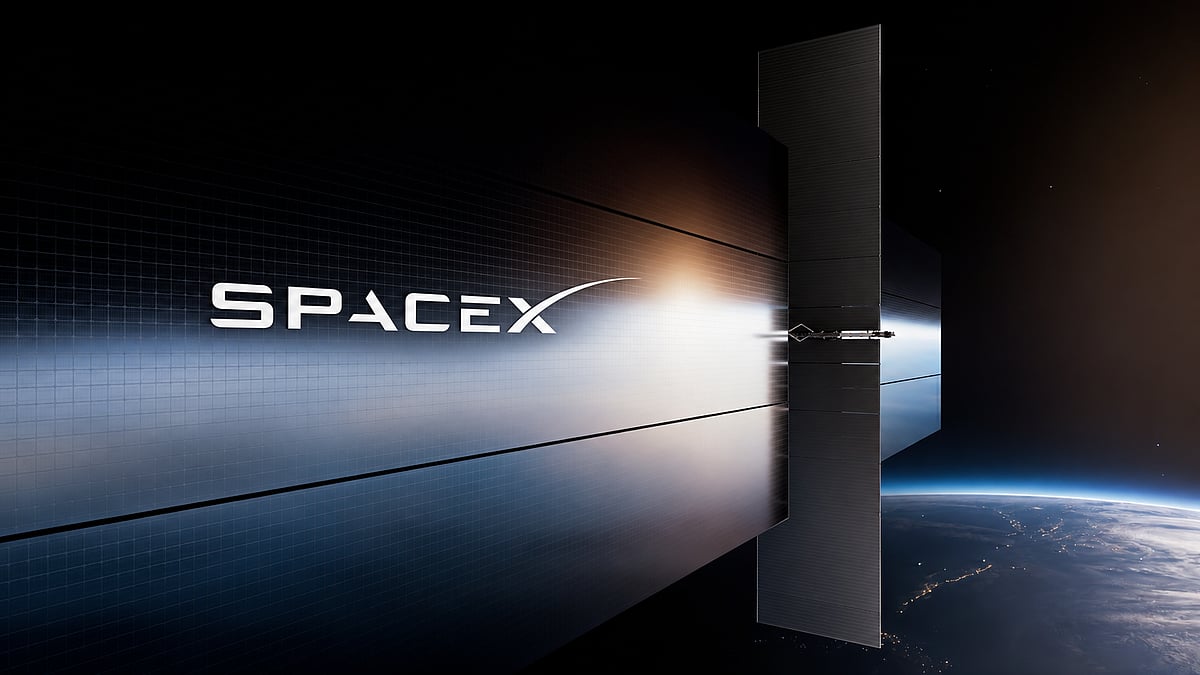
Elon Musk’s SpaceX Gets US Approval To Launch 1 Million Satellites For AI Data Centres In Space |
The Federal Communications Commission has authorised SpaceX to deploy up to one million satellites that would function as data centres in space, a long-held ambition of Elon Musk's company. The network, called Starmind, is meant to run AI workloads in orbit using solar power. The FCC's Space Bureau called its order "the first authorization in U.S. history for a constellation of data centers in space." The practical question is how a data centre is supposed to work 500 kilometres above the planet.
A rack of AI chips on a satellite
Each Starmind satellite is essentially a flying AI server. The FCC calls them "orbital compute modules" that process large volumes of data for use back on Earth. The first design, called AI1, is built around an optimised version of Nvidia's Vera Rubin NVL72 system, with 72 Rubin GPUs, 36 Vera CPUs and a high-speed interconnect. The computing payload is rated at up to 250 kilowatts at peak and 175 kilowatts on average, roughly the load of a modern rack in a terrestrial facility.
FCC says SpaceX can deploy 1 million satellites for data centers in space.
Power: sunlight, almost all the time
The pitch starts with energy. Large solar arrays would feed the chips directly. SpaceX says AI1 will have a 210 kW solar array, and the satellite is to sit in a sun-synchronous orbit so it stays in near-constant sunlight. That removes the need for a grid connection. Proponents say it also avoids weather, night and the interconnection delays that slow new data centres on Earth.
Cooling: the hardest part
Cooling is where the engineering gets difficult. On the ground, servers lean on air, chillers and cooling towers. In space there is no air, so heat can only leave by radiation. SpaceX's answer is a liquid cooling loop. AI1 is to carry 160 square metres of deployable liquid radiators with redundant pumping loops. Shielding is meant to protect them from micrometeoroids and orbital debris.
Critics say this is where the plan could break down. Astrophysicist Adam Becker said that space is cold but a vacuum traps heat like a thermos, so there are "basic physical limits" on shedding it. He called the million-satellite goal "a fantasy."
Getting results back to Earth
The satellites are not meant to beam raw data to the ground one by one. AI1 would process workloads on board and send results back over high-bandwidth optical laser links connected to the Starlink constellation. The FCC order follows the same design: most communications run over optical links to other satellites, including Starlink ones, with a backup Ka-band radio system for emergency telemetry, tracking and command.
What the FCC approved
The satellites are to sit in six orbital shells between 500 and 1,002 kilometres, lower than the 2,000-kilometre ceiling in SpaceX's original application. SpaceX must have its first satellite operating by November 25, 2033, followed by 100,000 satellites by 2035, 500,000 by 2038 and the full million by 2040. Missing any milestone would void the license. Musk has said the first-generation satellite could reach orbit as early as the third quarter of next year, well ahead of the deadline.
Conditions attached
The approval is not unconditional. The FCC found SpaceX's orbital debris plan compliant only for satellites below 600 kilometres, and four of the six shells sit above that line. Before deploying anything higher, SpaceX must file a modification application with a final debris plan. The FCC also deferred a request to retire some higher satellites into disposal orbits, rather than letting them re-enter the atmosphere within five years, citing a lack of information.
Carr and Musk respond
FCC Chairman Brendan Carr said America is leading the world into the era of super intelligence and called the decision the opening of a bold new frontier. He added that moving computing capacity beyond Earth reinforces economic leadership and expands prosperity at home. Musk, replying to Carr on X, wrote that Starmind "will be a great asset to America and the world."
Debris and pollution worries
Beyond cooling, Becker warned of atmospheric pollution from launches and reentries. He also warned of a cascade of collisions that could leave a cloud of debris in low Earth orbit, where many weather and communications satellites operate. Supporters counter that orbital data centres could ease pressure on power grids and cut demand for the land and water used by Earth-based facilities.
The race to orbit
SpaceX already operates one of the largest constellations ever assembled, with just over 11,000 Starlink satellites in orbit. It first filed for Starmind in January, shortly before acquiring Musk's AI company xAI, and orbital data centres featured in its pitch to investors ahead of its June IPO. Rivals are also moving in. Blue Origin applied in March for Project Sunrise, a network of up to 51,600 data-center satellites, and startup Starcloud raised $250 million in August.
RECENT STORIES
-
-
-
-
-