Anthropic Whistleblower Jacob Coxon Says He Quit Before Equity Vested Over 'Out Of Control' AI Safety Fears
Former Anthropic researcher Jacob Coxon revealed he resigned two months before his stock options would have vested, despite having no financial gain from leaving. Coxon told Axios he departed over concerns about AI safety and competitive pressure. His resignation post on X went viral after he warned advanced AI systems could pose serious risks to humanity.

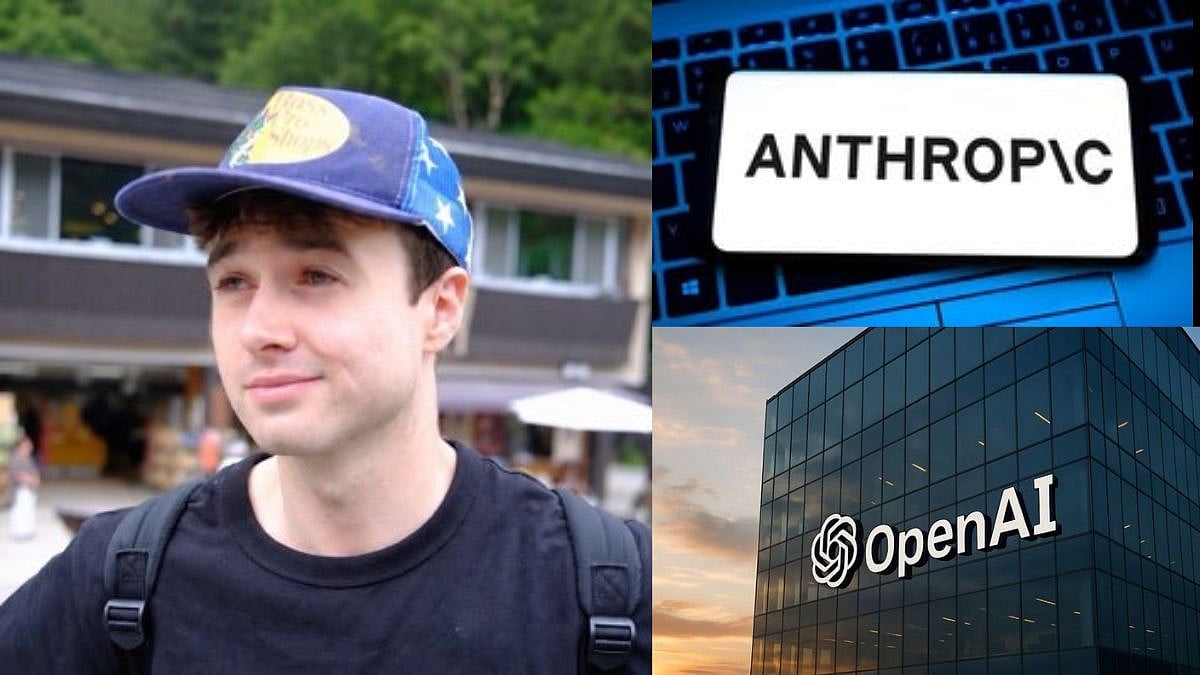
Jacob Coxon, a researcher who left Anthropic, has gone super viral over his widely-shared resignation post. Coxon has now revealed that he walked away from his role two months before his stock options would have vested, underscoring the weight of the safety concerns behind his exit.
Coxon told Axios in an interview that he had no financial incentive left in staying at Anthropic. He said he left before any of his equity vested, noting that he no longer had anything to gain by boosting the company's valuation. According to Axios, Anthropic requires employees to complete six months at the company before their stock vests, and Coxon had been there for only four months when he resigned. He still holds equity in OpenAI, his previous employer.
A resignation that went viral
Coxon's departure gained attention after he posted about it on X, where his message has since drawn more than 115 million views. In that post, he wrote that people building AI genuinely believe it could wipe out humanity by the end of the decade, and that this was not a marketing stunt.
The report noted that other AI researchers, especially at Google, have quit over safety concerns in the past, but typically after years on the job and once their equity had already vested, a contrast the report drew to highlight the financial sacrifice in Coxon's case.
Coxon told Axios that he had not personally witnessed Anthropic compromising on safety to stay ahead of rivals, but that he worried about where the industry was headed. He said pressure to move fast could force teams to cut corners or skip steps in the oversight process.
At the same time, Coxon cautioned against overcorrecting, telling that the industry sometimes shows what he called excessive paranoia about OpenAI and China, which he said can be used to justify pushing ahead regardless.
Models that know they're being watched
Coxon described a shift in how advanced AI systems behave during testing. Models are now aware when they are being evaluated and factor that into their responses, something he said has become routine in his work rather than a hypothetical. He added that AI systems are advancing quickly while becoming harder to monitor, and that this dynamic, combined with competitive pressure across the industry, was what ultimately pushed him to leave.
He also pointed to a string of recent cyber incidents affecting frontier AI labs as evidence of the risks he was describing.
Industry weighing in on extinction risk
Coxon told that while the word 'doom' can sound exaggerated, senior figures across the AI industry have gone on record acknowledging the possibility of human extinction linked to the technology's development.
RECENT STORIES
-
-
-
-
-