Iran President Masoud Pezeshkian Accuses US Of ‘Bending Rules’ Amid FIFA World Cup 2026 Controversies
Iran President Masoud Pezeshkian criticised the United States over FIFA World Cup 2026 controversies, alleging rule manipulation and unfair treatment. His remarks followed disputes over refereeing decisions in the Egypt-Argentina match and FIFA's handling of Folarin Balogun's suspension. Iran had also raised concerns over tournament logistics and travel arrangements.

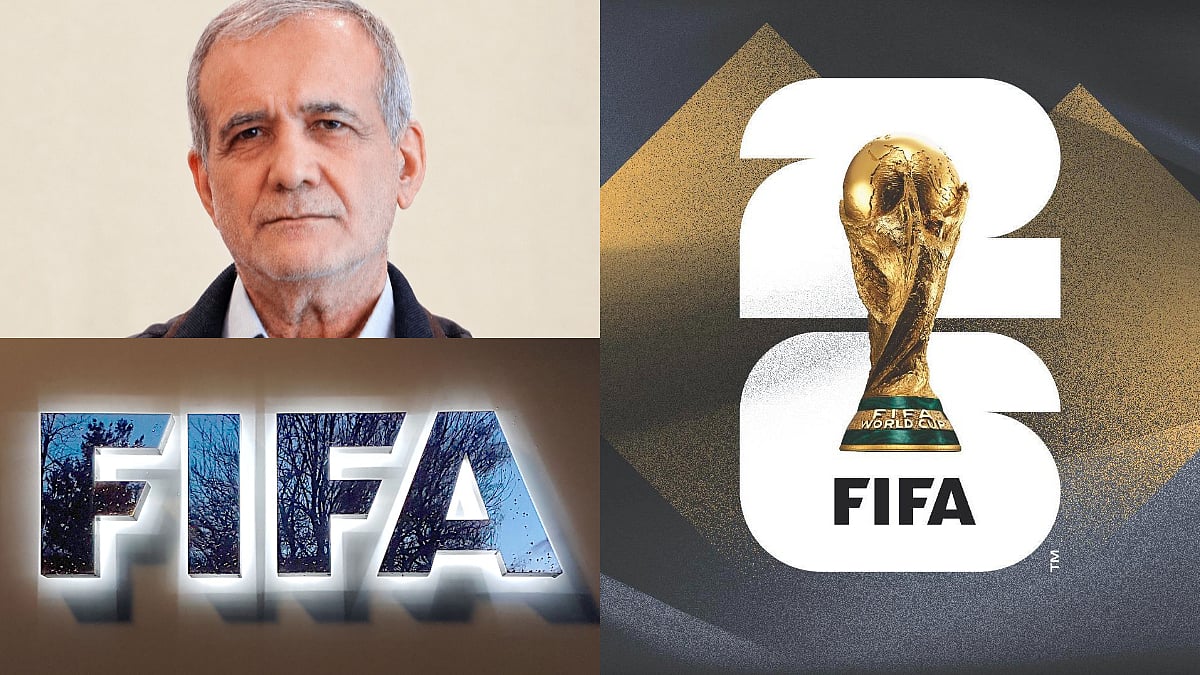
Iran President Masoud Pezeshkian Accuses US Of ‘Bending Rules’ Amid FIFA World Cup 2026 Controversies | X
Tehran [Iran], July 8: Iran President Masoud Pezeshkian has launched a scathing attack on the United States and the handling of the FIFA World Cup 2026, accusing the host nation of "bending rules", "bullying rivals" and "cheating" amid a series of controversies that have overshadowed the tournament's knockout stage.
Pezeshkian targets US
In a post on X, Pezeshkian linked the latest disputes surrounding the World Cup to what he described as Washington's broader foreign policy approach.
"The U.S. government's conduct as World Cup host follows its familiar foreign policy: bending rules, bullying rivals, creating obstacles, and cheating. This is their MAGA playbook. Iran rejects such games. We stand firmly for our rights," the Iranian President wrote.
His remarks came shortly after Egypt's dramatic 3-2 Round of 16 defeat to defending champions Argentina, a match that sparked fresh debate over refereeing decisions and FIFA's handling of the tournament.
Egypt-Argentina controversy
Egypt head coach Hossam Hassan accused FIFA of favouring Argentina and captain Lionel Messi after his side surrendered a two-goal lead. A second-half Egypt goal by Mostafa Ziko was ruled out following an on-field VAR review, with officials determining that an infringement around 20 seconds before the ball found the net invalidated the goal.
The decision proved to be one of the defining moments of the contest and heightened tensions on the Egypt bench. During the latter stages of the match, Hassan was also seen raising his arms above his head in an "X" shape -- the anti-racism signal introduced by FIFA in 2024 that allows players and coaches to report alleged racist incidents. If validated, the gesture can ultimately result in a match being suspended or abandoned.
Balogun suspension row
The Egypt controversy follows another high-profile dispute involving United States forward Folarin Balogun. After receiving a red card against Bosnia and Herzegovina in the Round of 32, Balogun's automatic one-match suspension was suspended by FIFA under Article 27 of the FIFA Disciplinary Code, allowing him to play in the Round of 16 against Belgium.
The reversal drew widespread criticism after US President Donald Trump revealed he had spoken with FIFA president Gianni Infantino to "review" Balogun's suspension before FIFA announced the decision.
Also Watch:
Iran’s World Cup concerns
Iran had earlier voiced its own concerns over the organisation of the tournament. Despite remaining unbeaten in the group stage, Team Melli failed to qualify for the knockout rounds. Captain Mehdi Taremi criticised FIFA's logistical arrangements after Iran's draw with Egypt, describing the travel schedule as a "disaster" after the squad was required to return immediately to its base camp in Tijuana, Mexico, following matches.
Iran's World Cup campaign was also affected by geopolitical tensions, visa-related issues and extensive travel demands, with officials and players repeatedly expressing dissatisfaction over the tournament's organisation.
(Except for the headline, this article has not been edited by FPJ's editorial team and is auto-generated from an agency feed.)
RECENT STORIES
-
-
-
-
-