FPJ Exclusive | From Cab Driver To Chasing Asian Games Gold: Rower Salman Khan's Incredible Rise Against All Odds
Indian rower Salman Khan will represent India in the men’s quadruple sculls at the Asian Games 2026 alongside Balraj Panwar, Satnam Singh and Jakar Khan. From driving an Uber cab to support his family after his father’s death to joining the Army and discovering rowing, Salman’s inspiring journey reflects resilience. He is targeting gold in Japan.

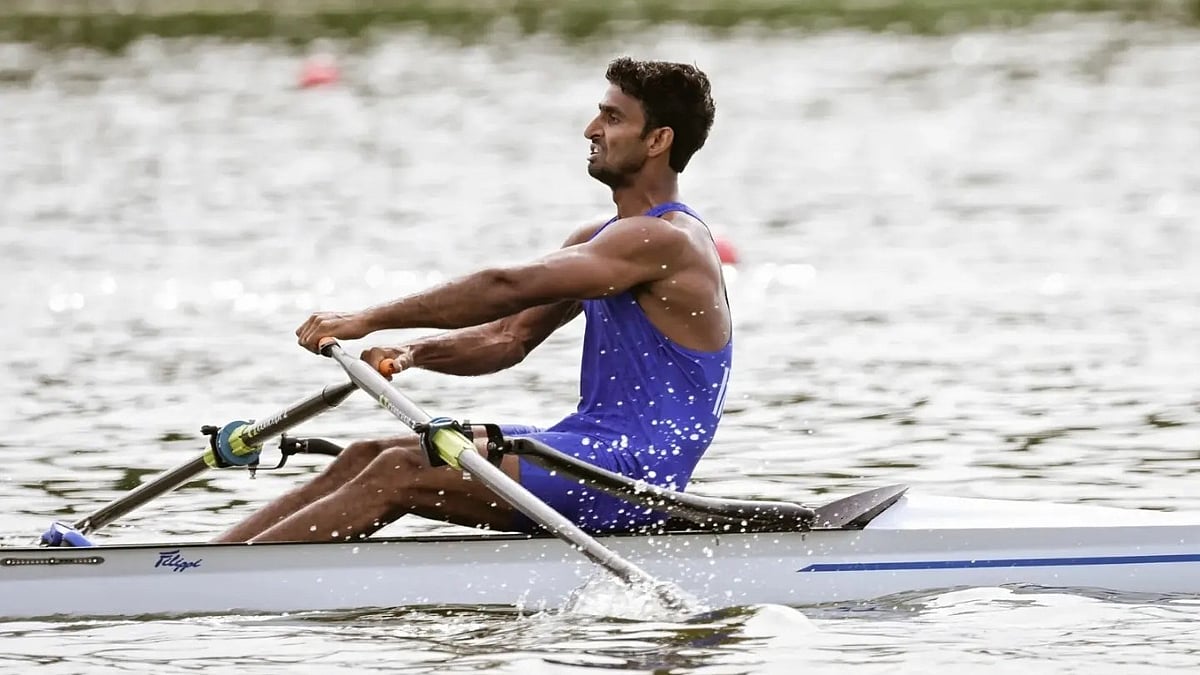
Salman Khan/Instagram
Indian rower Salman Khan is set to represent the country at the Asian Games 2026 as part of the men’s quadruple sculls team alongside Balraj Panwar, Satnam Singh and Jakar Khan.
In an exclusive interview with The Free Press Journal, Salman opened up about his difficult childhood, his journey from driving an Uber cab to joining the Indian Army, and how he eventually found his calling in rowing.
Excerpts...
1. Could you tell us about your childhood and how you first got introduced to rowing?
I was born in Pure Dhingai (Khairahna), Amethi district, Uttar Pradesh. My father, Mohd Kasim Khan, worked in truck-body construction in Tauru, Haryana, which is where I completed my schooling. My mother’s name is Jabrun Nisha, and my wife's name is Sahiba Khatoon, who has been a constant support in my life.
We are four brothers and two sisters, and being the eldest, the entire responsibility fell on me when my father passed away from dengue. I was just 18 at the time. With all my younger siblings studying, the financial situation was very tight. My dream of joining the Army took a backseat because earning a livelihood became the priority. I drove an Uber cab in Delhi day and night to keep the household running.
One day, while I was resting after a shift, a close friend called and reminded me that with my height and physical build, I should not give up on the Army. His advice pushed me to try again. I handed over the cab to another driver and put in four months of hard running and preparation. I cleared the recruitment rally, medical, and written exams, joining the Bombay Engineer Group (BEG), Kirkee, Pune, on 25 September 2018.
At the training center, the coaches noticed my height and physique and introduced me to rowing. I knew nothing about the sport and had no interest in doing it because my family's financial situation was weak and sports felt out of reach. I refused multiple times, but the coaches insisted and put me on the water. They recognized my potential and trained me rigorously. I am truly grateful to all my coaches and the supporting staff for pushing me and shaping me into the athlete I am today.
2. What was it about rowing that attracted you to the sport, and when did you realise that you could pursue it professionally?
Rowing was not my choice in the beginning. Due to the financial conditions at home, my focus was solely on family responsibilities, so I kept saying no. But the coaches were persistent and brought me into the boat.
When I competed in my first inter-centre regatta and won a silver medal, it gave me confidence that the effort was showing results. The real turning point came in 2021 when I cleared the ergometer benchmarks and was selected for the Army Rowing Node (ARN) at CME Pune. Training alongside India's best rowers under the guidance of the coaches made me realize that rowing was my true calling, and that I could pursue it professionally to win medals for the country.
3. Who were the biggest influences and supporters in your journey, especially during the early stages of your career?
My family has been my greatest strength, especially my mother, whose prayers kept our home together. In my sporting journey, my coaches and the entire supporting staff have been my backbone. There was a phase where I simply lost interest and had no desire to continue rowing. It was our Training Officer, Major Nagendra Hooda sir, who stepped in, guided me, and helped me regain my focus. At the Army Rowing Node, our Commanding Officer, Colonel Ramakrishnan sir, provided tremendous motivation. He looked after us with genuine care, like a guardian, which gave us a lot of confidence. Later, the coaches recognized my potential and brought me into the Indian national setup. I am deeply thankful to my officers, coaches, and supporting staff for their constant backing.
4. What were some of the biggest challenges you faced while establishing yourself as a rower?
The challenges were personal before they were sporting. Losing my father at 18 and driving a cab day and night to support my siblings was a very tough phase.
Transitioning from that life into elite sports had its own hurdles. There were moments when I did not feel like continuing with rowing. But our officers and coaches stood by me and kept me on track. Those life experiences taught me patience and mental toughness, which help me stay composed during difficult races.
5. How would you describe your journey from being a young rower to earning a place in India’s Asian Games squad?
It has been a journey built on discipline and perseverance. I started as a beginner at BEG Pune in late 2018 and joined the Army Rowing Node in 2021.
My breakthrough came at the 36th National Games in Gujarat (2022), where I won gold. At the 2023 Senior Nationals, winning gold in the single sculls against Olympian Dattu Bhokanal confirmed that I belonged at the top national level. The coaches then drafted me into the India camp.
In 2024, winning my first international gold at the Asian Rowing Cup in South Korea with Nitin Deol was a major milestone, earning me promotion to Naib Subedar in the Indian Army. Backing that up with a silver at the 2025 Australian Rowing Championships and a silver at the 2025 Asian Rowing Championships gave me the momentum to secure my place in India's Asian Games squad.
6. What does representing India at the Asian Games mean to you personally?
Wearing the India jersey with the Tricolour is the greatest honor of my life. When our national flag was raised after winning gold at the 2024 Asian Rowing Cup, it was a moment of immense pride. Competing at the Asian Games is a much bigger responsibility. Coming from a village background to standing on this stage representing 1.4 billion people means everything to me.
7. You are part of the men’s quadruple sculls team alongside Balraj Panwar, Satnam Singh and Jakar Khan. How would you describe the chemistry within the crew?
Our crew is built on mutual trust, brotherhood, and a common purpose. Balraj brings valuable Olympic race experience, while Satnam, Jakar, and I back him up with solid power and technical rhythm. We live, eat, train, and review our race videos together every single day at ARN. In a quad, four rowers must move with a single heartbeat. Sharing an Army background gives us a natural sense of discipline and camaraderie that reflects directly on the water.
8. In quadruple sculls, synchronisation and coordination are extremely important. How much time and effort goes into developing that understanding among the four rowers?
It requires continuous hard work and thousands of kilometers on the water under the coaches' supervision. In a quad, individual strength alone is not enough, we must lock into a collective rhythm, match the combination, and ensure that all four of us share the exact same mindset and intent.
Only when all four minds are aligned and every blade moves in complete harmony does the boat move smoothly and fast. Since our camp began on 22 February 2026, our coaches have worked with us daily on this exact combination until it became second nature.
9. How do you and your teammates communicate and maintain rhythm during a race when every stroke matters?
During a 2000-meter race, your heart is working at maximum capacity, so there is no time for long conversation. Communication happens through short, clear technical calls from our stroke man; holding length, adjusting rate, or driving through the legs. Most of the rhythm is felt instinctively through the boat and the foot-stretchers. When you trust your crew completely, the coordination flows naturally.
10. You won silver at the 2025 Asian Rowing Championships. How much confidence did that victory give the team ahead of the Asian Games?
Winning silver in Vietnam (in double sculls with Jaspinder Singh) proved that our preparation was on par with the best in Asia. It gave us confidence, but it also made us determined. Standing on the second step of the podium created a clear focus: our job now is to push harder and turn that silver into gold in Japan.
11. What did you learn from your performances at the Asian Rowing Championships that you can carry into the Asian Games?
The biggest takeaway was handling the third 500-meter split. That is where physical fatigue peaks and lactic acid builds up. Staying composed, keeping blade work clean, and holding length through that phase makes all the difference. We have put significant focus on that part of the race during our training.
12. How has your training changed as the Asian Games have approached? What does a typical training day look like for you?
The training has shifted toward race-pace intensity, boat speed, and technical precision. A typical day is demanding:
05:00 AM – 09:00 AM: First water session, covering around 20 kilometers of technical work and aerobic pieces.
09:30 AM: High-protein breakfast, rest, and video analysis of the morning session.
11:00 AM – 12:45 PM: Strength, power output, and core training in the gym.
01:00 PM: Lunch, followed by mandatory afternoon rest for recovery.
04:00 PM – 06:30 PM: Second water session focusing on starts, sprint pieces, and race pacing.
07:00 PM onwards: Dinner at 7:00 PM, speaking with family on the phone, and going to sleep by 09:30 PM to recover for the next morning.
13. How important are strength and conditioning, gym sessions and recovery in your preparation for a major competition like the Asian Games?
They are just as essential as time on the water. Rowing requires cardiovascular endurance combined with explosive leg drive and core power. Our Strength and Conditioning Coach, Najibul Haque sir, has been instrumental in structuring my gym and conditioning work at the Army Rowing Node, ensuring I generate optimal wattage while staying injury-free. Along with lifting, proper nutrition and adequate sleep keep our bodies ready for two demanding sessions every day.
14. Could you take us through your diet and nutrition routine during an intense training phase?
With such high daily training volume, the body burns between 4,500 and 5,000 calories each day. My diet consists of clean complex carbohydrates: oats, rice, and sweet potatoes paired with high-quality protein like eggs, chicken, and whey isolate for muscle repair. During long water sessions, isotonic energy gels and electrolytes are essential to prevent dehydration and cramping. The support from the SAI TOPS scheme has been very valuable in meeting our specialized dietary and supplement needs.
15. Rowing demands tremendous physical endurance but also mental strength. How do you prepare yourself mentally for the pressure of a major race?
My life experiences have been my greatest teacher in mental toughness. When you have shouldered family responsibilities at 18, sporting pressure feels manageable. On race day, I visualize our race plan stroke by stroke, ignoring what is happening in other lanes. I have complete faith in God, our hard work, and my crew.
16. India has produced some strong performances in rowing at the Asian Games in recent editions. Does that history motivate the current generation of rowers?
Yes, absolutely. Senior rowers and Army veterans like , Swarn Singh sir, and Olympian Arvind Singh sir have shown us that Indian rowers can compete and win at the Asian level. Their achievements show that the system at the Army Rowing Node and the Indian Army produces champions. Following the path of seniors like Swarn sir and Arvind sir gives our crew pride and the belief that we can contend for the top spot.
17. Is there a specific target or timing that you and the team have set for yourselves at the Asian Games?
Our primary objective is to fight for the Gold medal. Timings depend heavily on wind and water conditions on race day, so our main focus is executing our race plan and power delivery cleanly from the start to the 2000-meter line. If we row to our potential, the timing will take care of itself.
18. What would winning an Asian Games medal mean to you, your family and everyone who has supported your journey?
It would mean everything. My family has seen very tough times, and this would bring genuine happiness to my mother and my wife, Sahiba Khatoon, who has stood by me throughout. It would also be a tribute to the Indian Army, our coaches, and our support staff who placed their trust in me. Standing on the podium with the national anthem playing would be the proudest moment of my life.
19. Beyond the Asian Games, what are the bigger goals you have set for yourself in rowing?
The immediate focus is the Asian Games, but the ultimate goal is the Olympic Games. I want to compete at the World Championships, secure an Olympic quota, and work toward an Olympic medal for India. Beyond medals, I hope my journey shows youth from ordinary backgrounds that disciplined hard work can change your life.
20. Finally, what would you like to tell Indian sports fans who will be cheering for you and the Indian rowing team in Japan?
I request all Indian sports fans to support us and keep us in their prayers. Our crew, our coaches, supporting staff, ARN, the Rowing Federation of India, and SAI TOPS have put everything into this preparation. I want to thank every coach and staff member who guided me from day one. I have full faith in God, my teammates, and our preparation. When we race in Japan, we will give everything we have to see our Indian Tricolour flying high. Jai Hind.
Salman Khan’s journey from driving an Uber cab to earning a place in India’s Asian Games squad is a story of resilience, discipline and determination. As he prepares to compete in the men’s quadruple sculls alongside Balraj Panwar, Satnam Singh and Jakar Khan, the Indian rower will be aiming to turn years of hard work into a gold medal for the country. With the support of his family, coaches, the Indian Army and fans back home, Salman is ready to give his best on the waters of Japan.
RECENT STORIES
-
-
-
-
-