Pune: PMC Inspects 14 Lakh Houses, Detects Mosquito Breeding In 13,000, Collects ₹6.3 Lakh In Fines
PMC Health Department Chief Dr Nina Borade said, "Going by the annual trend, Pune records approximately 4,000 to 5,000 dengue-positive cases every year. This year, the initial figure from January onwards was 2,413. However, after the data was rechecked, 122 duplicate entries were identified. After removing these, the actual number of cases stands at 2,291

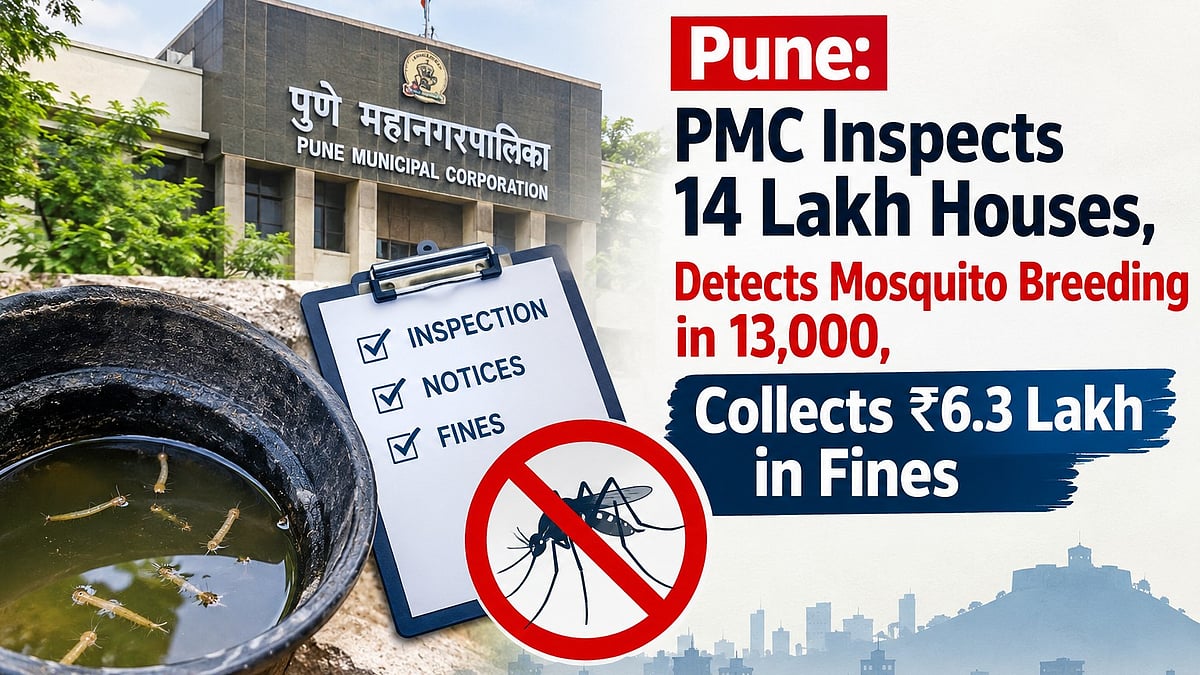
Pune: PMC Inspects 14 Lakh Houses, Detects Mosquito Breeding In 13,000, Collects ₹6.3 Lakh In Fines | AI
Pune: With dengue cases continuing to be reported in Pune, the Pune Municipal Corporation (PMC) has inspected around 14 lakh homes since January, detecting mosquito breeding in approximately 13,000 houses. Civic teams found Aedes mosquito larvae in 18,885 containers, issued notices to 2,664 properties and collected fines amounting to ₹6.30 lakh as part of the city's mosquito-control drive, the PMC's Health Department informed The Free Press Journal.
According to the PMC, staff inspected 28,31,386 containers and water-storage sites during household visits. The findings have prompted the civic body to intensify preventive measures, including fogging, insecticide spraying, removal of breeding sites and daily monitoring of control activities.
PMC Health Department Chief Dr Nina Borade said, "Going by the annual trend, Pune records approximately 4,000 to 5,000 dengue-positive cases every year. This year, the initial figure from January onwards was 2,413. However, after the data was rechecked, 122 duplicate entries were identified. After removing these, the actual number of cases stands at 2,291."
ALSO READ
Humid Weather Keeps Mosquito Breeding in Focus
Borade said dengue cases generally begin declining after the monsoon as temperatures fall in October. However, the expected change in weather has not occurred this year, allowing cases to remain elevated.
"Generally, after the monsoon, temperatures begin to fall in October and dengue cases start declining. This year, however, winter has not set in as expected, and cases have not yet started coming down. We are treating this as a warning signal and taking various measures at the municipal corporation level," she said.
The PMC has conducted review meetings at different administrative levels, with the Municipal Commissioner and Additional Commissioner issuing instructions to strengthen preventive action. Measures include fogging, indoor insecticide spraying, emptying water containers and destroying mosquito-breeding sites. The civic body is reviewing these measures daily.
ALSO READ
'Dengue Mosquitoes Breed Inside Homes'
Borade said public participation was essential because dengue-carrying Aedes mosquitoes commonly breed in small quantities of clean, stagnant water in and around homes.
"The dengue mosquito is largely a domestic mosquito. It bites during the day and breeds in places where clean water accumulates. Plates beneath flower pots, discarded tyres on terraces, broken boxes, coconut shells and scrap materials can collect water. If water remains there for more than seven days, mosquito breeding can increase," she said.
The civic body also surveys approximately 100 houses within a 300-metre radius of the residence of a person diagnosed with dengue to identify additional breeding sites and prevent further transmission.
Residents have been urged to remove stagnant water, cover water-storage tanks, maintain cleanliness and cooperate with civic inspection teams. Borade also advised people experiencing fever, skin rashes, headaches or joint pain to contact the nearest hospital promptly.
Households with dengue patients should use mosquito nets to prevent mosquitoes from biting infected individuals and potentially spreading the virus further. Hospitals Have Adequate Beds, Says PMC
The PMC has reserved 50 isolation beds for infectious diseases at Dr Naidu Hospital. Borade said three patients were admitted there at the time of her statement, while 35 beds were vacant.
"We have sufficient beds available, so people should not panic or be frightened," she said.
Private hospitals had approximately 23,000 beds and PMC hospitals around 1,400 beds. Private hospitals had approximately 2,900 intensive care unit (ICU) beds, while Kamala Nehru Hospital had seven ICU beds, according to Borade.
The PMC has made rapid dengue diagnostic kits available at its dispensaries, while free confirmatory testing is offered at Dr Naidu, Dr Kotnis and Kamala Nehru hospitals.
RECENT STORIES
-
-
-
-
-