Manjara Reservoir At Just 16% Live Storage; Water Crisis Looms For Latur, Ambajogai & 28 Villages
With the major monsoon spell virtually over and no substantial rainfall recorded in the catchment area, hopes now rest on the retreating monsoon to revive the reservoir

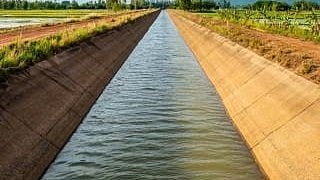
Manjara Reservoir At Just 16% Live Storage; Water Crisis Looms For Latur, Ambajogai & 28 Villages | Sourced
Beed: A looming water crisis threatens Ambajogai, Latur and 28 surrounding villages as the Manjara reservoir, the region's primary source of drinking water, has only 16% live storage following poor rainfall during the core monsoon months.
Despite June and July—the two peak months of the southwest monsoon—passing without significant rainfall in the reservoir's catchment area, water levels have remained alarmingly low. If the current situation continues, drinking water supply schemes dependent on the reservoir are likely to face severe stress in the coming months.
The Manjara reservoir requires 224.093 million cubic metres (MCM) of water to reach full capacity. At present, it holds only 75.905 MCM, leaving nearly 84% of its storage capacity unfilled. The reservoir, which reached full capacity last year, is now unlikely to fill unless the region receives substantial rainfall. Residents across Beed, Latur and Dharashiv districts are anxiously watching the weather in the hope of improved inflows.
Constructed in 1980 primarily to provide irrigation for farmers, the Manjara Dam has a large storage capacity but receives relatively low and slow inflows because of the nature of its catchment area. As a result, it has reached full capacity only 17 times in the past 47 years.
Water for irrigation through the dam's right and left bank canals is released only when the reservoir is full. However, over the last two decades, the dam has increasingly become the principal source of drinking water for Ambajogai, Latur, Kaij, Dharur, Kalamb and several other towns and villages. Consequently, irrigation releases have taken a back seat, leaving local farmers struggling with inadequate water for agriculture.
With the major monsoon spell virtually over and no substantial rainfall recorded in the catchment area, hopes now rest on the retreating monsoon to revive the reservoir.
Farmers from nearly 70 villages, who have invested heavily in laying pipelines from the dam for irrigation, now fear their investments may prove futile if water levels do not improve. The fate of both agriculture and drinking water supply in the region now depends largely on the rainfall expected during the retreating monsoon.
RECENT STORIES
-
-
-
-
-