Maharashtra’s Longest-Serving Deputy CM Ajit Pawar Dies, Leaving Behind Power & Controversy
Ajit Pawar was defined by a corporate-like approach to the state's bureaucracy. He was famously known for starting his workday at 6:00 AM, a habit that forced the state's top bureaucrats to match his pace

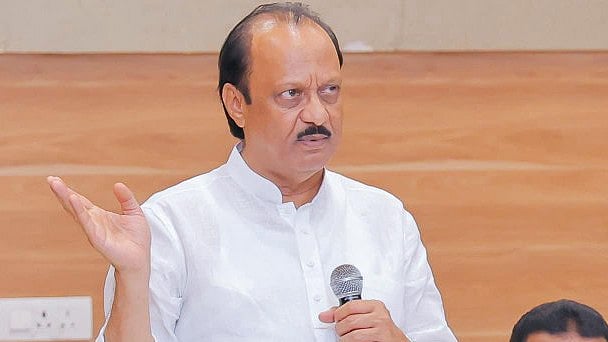
Maharashtra’s Longest-Serving Deputy CM Ajit Pawar Dies, Leaving Behind Power & Controversy | Sourced
Pune: Ajit Pawar was the longest non-consecutively serving Deputy Chief Minister of Maharashtra. Along with that, he held important portfolios, including the finance and public works development (PWD) departments and others, as a governing leader in the Maharashtra State Government. The reports of his death shook the entire nation on Wednesday evening.
Ajit Pawar’s legacy across Maharashtra is marked by high-speed administrative execution, fiscal control, and a "result-at-any-cost" mindset.
Ajit Pawar’s legacy is a study in administrative efficiency clashing with political volatility. Often referred to as "Dada" (elder brother), he carved out a reputation as the "engine room" of the Maharashtra government -- a leader who prioritised the "how" of governance over the "why" of ideology.
The news of his death on the morning of Wednesday shocked everyone, as a private plane carrying him and five others was reported to have crashed in Baramati while landing. A total of six people, including Deputy Chief Minister Ajit Pawar, died. Pawar has four meetings scheduled on Wednesday as he is about to campaign for the Nationalist Congress Party (NCP) in the upcoming Pune Zilla Parishad and Panchayat Samiti polls.
Often credited with the development of his home turf, Baramati, as well as the cities of Pune and Pimpri-Chinchwad, Ajit Pawar’s political career was not limited to this triangle. Over nearly three decades in the state Assembly, mostly in government and occasionally in the opposition, Pawar left a mark regardless of where he sat on the political spectrum.
The "Mr Fix-it" of Mantralaya
Ajit Pawar was defined by a corporate-like approach to the state's bureaucracy. He was famously known for starting his workday at 6:00 AM, a habit that forced the state's top bureaucrats to match his pace.
1) Key Decisions and Contributions: Ajit Pawar played a key role in shaping Maharashtra’s governance through a series of high-impact decisions. As a multi-term finance minister, he was credited with maintaining fiscal discipline and streamlining the District Annual Plan (DAP). This plan enabled quicker fund allocation to backward districts such as Beed, Gadchiroli, and Latur. Ajit Pawar also pushed infrastructure development beyond western Maharashtra, approving Rs 358.89 crore for the conservation of historical sites.
Pawar also promoted industrial decentralisation in the Konkan region to reduce dependence on the Mumbai–Pune corridor. In agriculture, he was instrumental in implementing the Mahatma Jyotirao Phule Loan Waiver Scheme, benefiting lakhs of farmers across Vidarbha and Marathwada.
ALSO READ
2) Ladki Bahin Project: In his 10th and 11th budgets, Pawar orchestrated the Mukhya Mantri Majhi Ladki Bahin Yojana, something which helped the Mahayuti alliance win the Assembly Elections in 2024. Ajit Pawar will always be remembered for this. He allocated a massive Rs 46,000 crore annually for this, despite warnings from the state's treasury about the rising debt (projected to reach 17.3% of GSDP).
In March 2025, he admitted in the Assembly that the scheme was "hastily implemented," leading to funds reaching wealthy families. He refused to claw back the money, choosing instead to "fix it forward" to maintain political goodwill.
3) The "Action-Orientated" Leader: Despite all the controversies and political plays, Pawar enjoyed deep respect within the administrative and cooperative sectors. Bureaucrats often appreciated his "yes or no" style. Unlike many politicians who kept files pending, Pawar was known for making on-the-spot decisions. His decisions significantly reduced project gestation periods.
Beyond Pune, he was a stabilising force for the sugar cooperatives and milk unions across the state. Farmers often viewed him as a leader who understood the "soil" and the technicalities of agricultural pricing and distribution. Even after joining the BJP-led Mahayuti, he maintained a "Shiv-Shahu-Phule-Ambedkar" ideological stance, often acting as a bridge between the right-wing and the progressive Maratha sentiments. Despite rebelling against his uncle Sharad Pawar in 2023, his respect for his political mentor was evident in many of his speeches.
4) The Six Terms of Deputy CM: Ajit Pawar’s tenure as Maharashtra’s longest-serving Deputy Chief Minister (non-consecutively) was marked by swift decision-making, administrative control, and deep influence over the state’s financial and cooperative systems. Serving six terms under four chief ministers, including Prithviraj Chavan, Uddhav Thackeray, Eknath Shinde and Devendra Fadnavis across shifting political alliances, Pawar emerged as a constant power centre in the Mantralaya.
Pawar was always known for his command over finance and governance; he presented 11 state budgets and played a key role in shaping welfare and fiscal policy. His long stewardship of cooperative institutions, particularly in the sugar belt, helped stabilise rural economies across western Maharashtra and parts of Marathwada. Pawar was also recognised for his administrative strictness, famously enforcing early-morning work culture and introducing biometric attendance after surprise inspections. Pawar’s political life reflected pragmatic, transactional governance -- effective, polarising, and influential until his death in a plane crash in January 2026.
5) The Irrigation Ministry: Ajit Pawar’s tenure as Maharashtra’s Irrigation (Water Resources) Minister from 1999 to 2010 remains the most closely examined phase of his political career. Holding near-complete control over the department across three successive governments, he pursued an aggressive, speed-driven approach to irrigation development. Ajit Pawar approved large projects and fast-tracked clearances by bypassing traditional bureaucratic processes.
His 2005 decision to centralise all tender and work-order approvals in the minister’s office marked a turning point as he managed to significantly reduce the autonomy of senior engineers. This approach peaked in 2009, when dozens of irrigation projects, particularly in Vidarbha, received massive cost escalations within a short pre-election window. The overall estimates of these projects rose sharply. Pawar also strengthened regional irrigation development corporations, enabling them to raise funds through market loans, which expanded project execution but added substantially to state debt.
The controversy culminated in allegations that Rs 70,000 crore had been spent with negligible growth in irrigation potential, forcing Pawar’s resignation in 2012. Although the Anti-Corruption Bureau (ACB) later closed key enquiries, public criticism persisted. Supporters credit him with completing stalled projects, resolving interstate water disputes, and ensuring swift file clearance. He left behind a legacy viewed as both administratively decisive and deeply contentious.
6) Controversies Throughout Political Career: Ajit Pawar’s political career was marked by a sharp contradiction. Although he was admired for swift, result-orientated governance, he was persistently shadowed by major controversies. His tenure was dominated by allegations linked to irrigation projects, cooperative banks, and large-scale financial decisions. The Rs 70,000 crore irrigation controversy, involving massive cost escalations and disputed outcomes, became the most enduring stain of his career. He was temporarily forced to resign despite later clean chits.
Similar scrutiny followed in the Maharashtra State Cooperative Bank case and the Lavasa hill city project. Courts noted procedural lapses but no criminal liability. Equally damaging were Pawar’s blunt public remarks. This includes the 2013 drought comment and later statements perceived as threats to voters and officials. Investigations into alleged benami assets and family-linked land deals added to the pressure, though several cases were closed before his death. Pawar’s legacy remains a balance between administrative efficiency and relentless political and ethical scrutiny.
His "80-hour government" with the BJP in 2019 and the subsequent 2023 split from his uncle, Sharad Pawar, led to accusations of betrayal and being "power-hungry". Critics argued these moves prioritised personal survival over party ideology. Also, he was accused by people from his government of favouring people from his party while disbursing funds.
RECENT STORIES
-
-
-
-
-