Maharashtra Onion Output Hit By Unseasonal Weather; Exporters Oppose Sudden Export Ban
Onion production in Maharashtra has suffered a major setback due to hailstorms and unseasonal rains during February-March, followed by an intense heatwave caused by the El Niño effect in April-May 2026

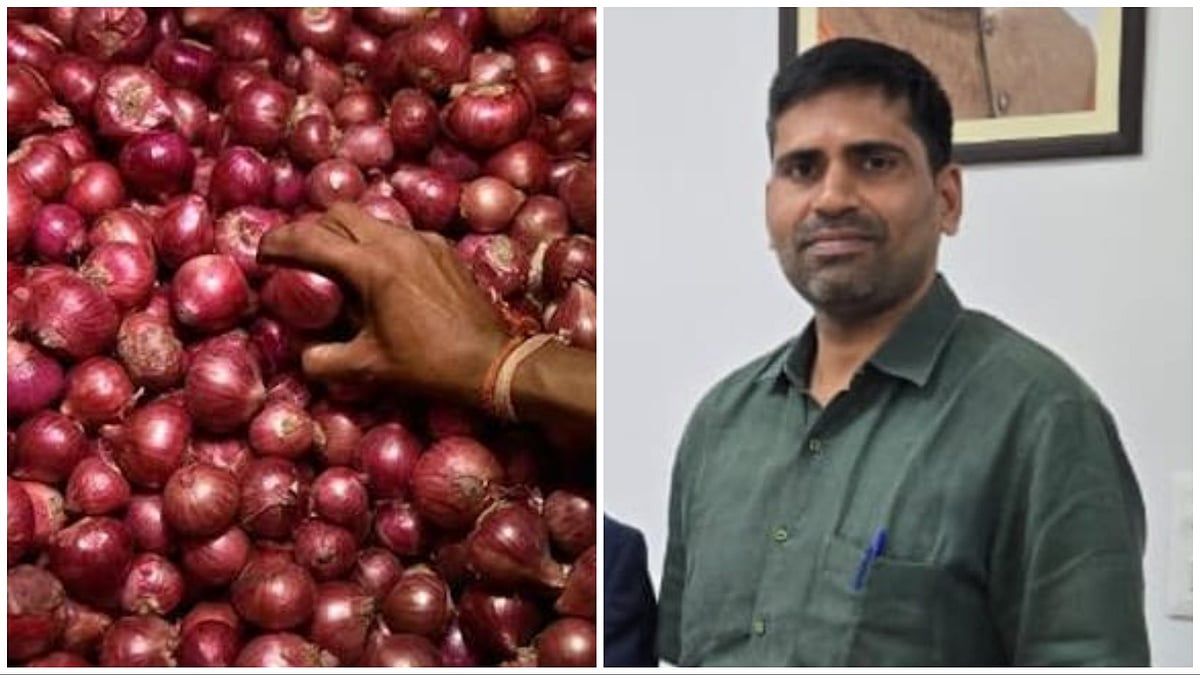
Maharashtra Onion Output Hit By Unseasonal Weather; Exporters Oppose Sudden Export Ban | Sourced
Nashik: Onion production in Maharashtra has suffered a major setback due to hailstorms and unseasonal rains during February-March, followed by an intense heatwave caused by the El Niño effect in April-May 2026. The decline in rabi onion production and deterioration of stored onions have reduced market arrivals, leading to an improvement in onion prices at the Lasalgaon Agricultural Produce Market Committee (APMC), the country’s largest onion market.
In view of the expected shortage during the August-November period, the Horticulture Produce Exporters Association (HPEA) has urged the central government not to impose a sudden ban on onion exports. In a letter addressed to Union Consumer Affairs Minister Pralhad Joshi, HPEA Vice President Vikas Singh recommended replacing abrupt export bans with a scientific, criteria-based onion export management policy.
According to the letter, data from the Maharashtra State Agricultural Marketing Board (MSAMB) shows that the average onion price at Lasalgaon APMC increased from Rs 1,021 per quintal on May 17, 2026, to Rs 1,740 per quintal by June 17, 2026.
The association further stated that adverse weather conditions between October 2025 and April 2026 affected more than 600,000 farmers across Maharashtra, damaging crops over 145,606 hectares. In the Nashik district alone, over 18,000 acres were affected. Although the Maharashtra government has sanctioned Rs 166.36 crore in relief, the losses are too significant to be fully compensated.
HPEA also highlighted the adverse consequences of sudden export bans. When exports are halted, excess domestic supply causes onion prices to crash below production costs, resulting in severe financial losses for farmers and discouraging cultivation in the following season. The association noted that nearly 80% of the workforce engaged in onion grading, sorting, and packing consists of women, whose livelihoods are directly affected by export restrictions.
Frequent export bans also undermine India’s credibility in international markets. Importing countries such as Bangladesh, Sri Lanka, Nepal, and Gulf nations may shift their sourcing to competitors like Pakistan, Egypt, and Türkiye, resulting in the permanent loss of export markets.
Vikas Singh said, “The adverse weather conditions in 2026, including unseasonal rains and declining production, have pushed the onion sector into a serious crisis. At such a time, the central government must implement a long-term, sustainable, and balanced onion export policy that ensures fair prices for farmers while protecting consumers. Planned and scientific policy interventions, rather than temporary and abrupt decisions, are the only effective solution to this recurring problem.”
Adverse Effects of Sudden Export Bans
- Losses to Farmers: Export restrictions flood the domestic market, causing onion prices to fall to as low as Rs 5–10 per kg, often below the cost of production, discouraging future cultivation.
- Economic Hardship for Rural Women: Around 80% of workers involved in onion grading, sorting, and packing are women. Export bans result in immediate job losses for these landless rural workers.
- Damage to India’s Trade Reputation: Repeated export bans reduce India’s reliability as a supplier, prompting buyers in Bangladesh, Sri Lanka, Nepal, and Gulf countries to source onions from Pakistan, Egypt, or Türkiye.
RECENT STORIES
-
-
-
-
-