LPG Shortage Concerns Push Restaurants & Canteens To Explore Biomass Pellet Stoves In Maharashtra
Restaurants, hostels, canteens and institutional kitchens that rely heavily on LPG are particularly vulnerable to supply fluctuations. EcoSense Appliances Pvt Ltd has developed improved pellet stove models designed to cater to different scales of cooking requirements in commercial kitchens

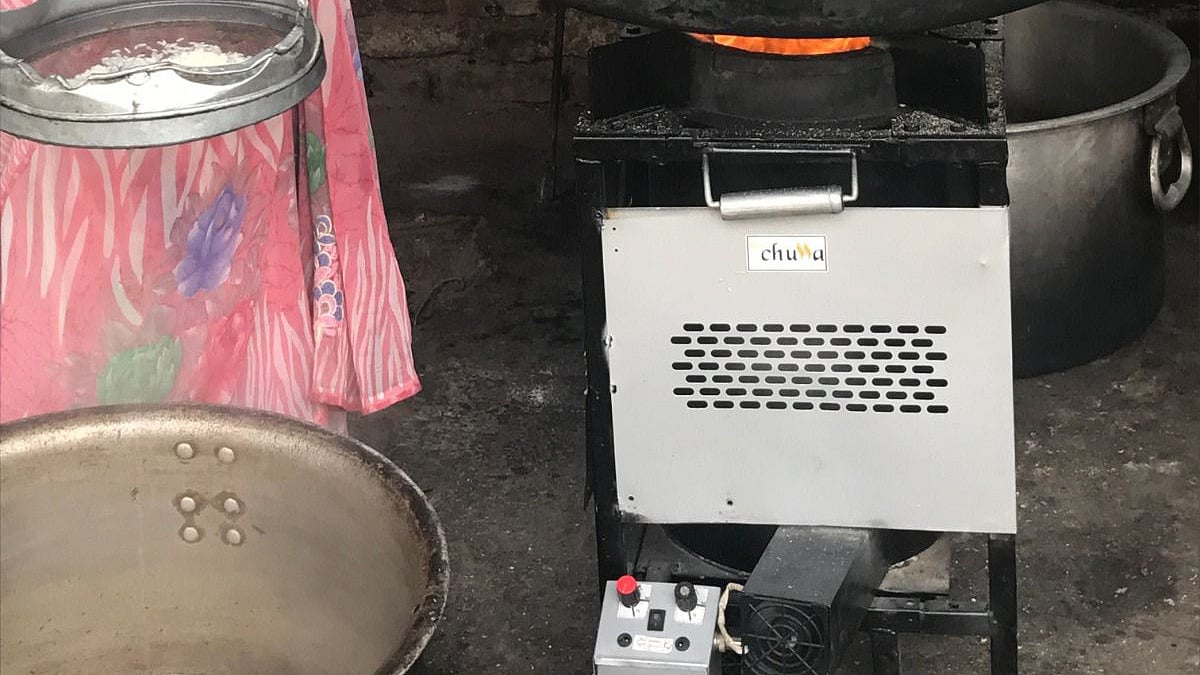
LPG Shortage Concerns Push Restaurants & Canteens To Explore Biomass Pellet Stoves In Maharashtra | Sourced
Chhatrapati Sambhajinagar: Amid ongoing concerns over liquefied petroleum gas (LPG) supply shortages, commercial kitchens across the country are increasingly exploring alternative fuel options to ensure uninterrupted cooking operations.
Restaurants, hostels, canteens and institutional kitchens that rely heavily on LPG are particularly vulnerable to supply fluctuations. EcoSense Appliances Pvt Ltd has developed improved pellet stove models designed to cater to different scales of cooking requirements in commercial kitchens.
Improved biomass pellet stoves are emerging as a practical solution that can support kitchen energy security while reducing dependence on LPG. Biomass pellets are produced from locally available agricultural residues and biomass waste such as sawdust, crop residues and other organic materials.
These materials are converted into compact fuel pellets that provide efficient and relatively cleaner combustion.
Pellets are currently available at approximately Rs 20 per kg, making them a stable and locally sourced fuel option for cooking. Depending on the stove capacity and usage pattern, the cooking cost can range from approximately Rs0.17 per minute to Rs1.33 per minute, offering a predictable and locally available energy alternative.
The stoves are available in capacities ranging from 2.5 kg per batch to 10 kg per batch, enabling cooking durations ranging from approximately 70 minutes to 150 minutes per batch. This makes them suitable for restaurants, hostels, canteens and institutional kitchens that operate in continuous cooking cycles.
Unlike LPG burners, pellet stoves operate on a batch-based cooking system. Once pellets are loaded, the stove continues to provide heat for a defined duration, making it particularly suitable for kitchens that require steady cooking for longer periods.
ALSO READ
Ketaki Kokil, director of EcoSense Appliances Pvt Ltd, said, “Biomass pellets produced from agricultural waste offer a sustainable and locally available cooking fuel. When combined with swadeshi improved cookstoves, they can help strengthen kitchen energy security while promoting cleaner and more sustainable cooking practices across commercial kitchens.”
Energy experts highlight that diversifying cooking fuels can improve operational resilience for commercial kitchens. By utilising locally produced biomass pellets, improved pellet stoves contribute to a more decentralised and sustainable cooking energy ecosystem while supporting productive utilisation of agricultural waste.
RECENT STORIES
-
-
-
-
-