How Pimpri-Chinchwad Reached This Point: The Waste Crisis Behind the Deadly Moshi Garbage Depot Collapse
Pimpri-Chinchwad has long been known as one of Maharashtra’s fastest-growing industrial and IT cities. Over the last three decades, it has transformed from a cluster of villages into a major urban centre that attracts thousands of people from across the country in search of jobs

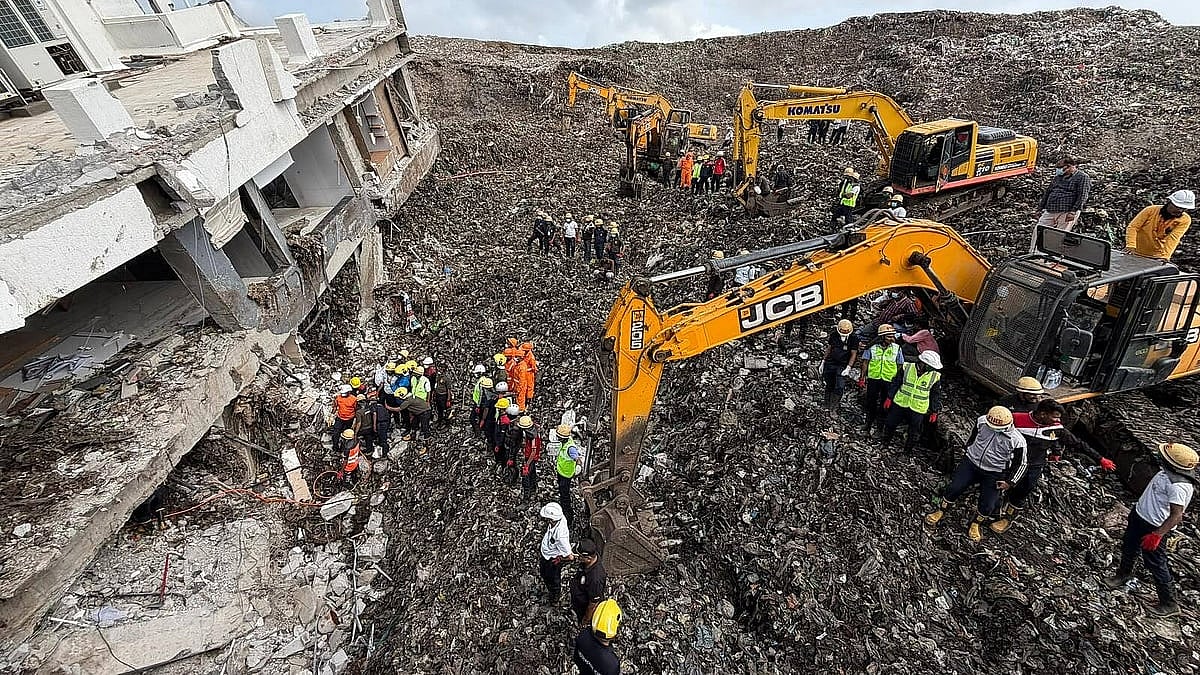
How Pimpri-Chinchwad Reached This Point: The Waste Crisis Behind the Deadly Moshi Garbage Depot Collapse | Sourced
Pimpri-Chinchwad: Pimpri-Chinchwad has long been known as one of Maharashtra’s fastest-growing industrial and IT cities. Over the last three decades, it has transformed from a cluster of villages into a major urban centre that attracts thousands of people from across the country in search of jobs. Its relevance across the country is the same as Pune, if not more. But the deadly Moshi garbage depot collapse has exposed the hidden cost of this rapid growth. As the city’s population expanded, its waste management system failed to keep pace, leading to a crisis that ultimately claimed nine lives.
The 8th July accident at the Moshi waste-to-energy plant has raised serious questions about how the city reached this point. A massive heap of rain-soaked legacy waste collapsed onto the administrative building of the plant, which trapped workers inside. After an 84-hour rescue operation, nine workers were found dead while 14 were rescued.
City’s Garbage Crisis…
The city now generates around 1,579 tonnes of solid waste every day. However, only about 700 tonnes are processed daily. The remaining waste continues to pile up at the Moshi depot, adding to the legacy waste that has accumulated over several decades. Officials and experts say this growing gap between waste generation and processing has made the city’s only garbage depot increasingly vulnerable.
The Moshi garbage depot has been receiving the city’s waste since 1991 -- being collected here for 35 years. For many years, waste was dumped there without scientific processing. As a result, huge mountains of garbage were formed. To reduce this burden, the Pimpri-Chinchwad Municipal Corporation (PCMC) started the waste-to-energy project on a public-private partnership (PPP) model. The project, operated by Antony Lara Renewable Energy Pvt Ltd, was inaugurated by Prime Minister Narendra Modi through video conferencing on 1st August 2023.
The Accident…
The project converts municipal waste into electricity and has a generation capacity of about 14 megawatts. Around 125 employees work at the plant. On the day of the accident, 23 workers were inside the three-storey administrative building located within the depot. Heavy rainfall over several days destabilised the nearby garbage mound, which collapsed onto the building.
The tragedy has also brought attention to the location of the building. It stood beside a massive garbage mound estimated to be around 70 feet high. Questions are now being raised about whether adequate safety measures were taken while constructing and operating the building so close to the landfill.
The accident has also triggered scrutiny of the project itself. Although the land, garbage and infrastructure belong to the municipal corporation, PCMC is required to purchase electricity generated by the private operator at Rs 5 per unit for 21 years under the agreement. The corporation leased the land for Re 1 and also contributed around Rs 50 crore towards the project along with a bank guarantee. The project also received substantial financial support from the central government.
Earlier Warnings Ignored?
The Central Pollution Control Board (CPCB) had also flagged the Moshi Waste-to-Energy plant in 2025 for non-compliance with certain provisions of the Solid Waste Management Rules. The matter was placed before the National Green Tribunal after CPCB pointed out shortcomings in mandatory environmental reporting. While these observations were related to environmental compliance and not the building collapse, they showed that the project was already under regulatory scrutiny before the tragedy.
Experts say heavy rainfall can significantly weaken landfill slopes. Rainwater increases the weight of garbage and raises water pressure inside the waste mound. If proper drainage, compaction and slope stabilisation measures are not maintained, the risk of a landfill slide increases.
ALSO READ
The disaster has also exposed alleged administrative lapses. After initially calling the incident a natural disaster, PCMC later ordered a detailed inquiry. Notices were issued to the environment department and the project operator. Police have also registered a case against the project’s head and safety officer over the deaths.
Another issue that emerged after the accident is the status of the administrative building. Preliminary findings indicate that only the ground floor had a completion certificate, while the upper two floors were reportedly being used without one. This has led to fresh questions about how the building was allowed to operate.
Political Pressure Rises…
Political leaders have also demanded accountability. Shiv Sena MP Srirang Barne questioned why the building was permitted without complete approvals and asked why the garbage mountain continued to grow despite years of spending on waste management. He demanded strict action against those found responsible.
The tragedy has also revived the debate over the city’s dependence on a single garbage depot. Earlier, the municipal corporation had proposed setting up another waste disposal site in Punawale. However, the plan was dropped after public protests and political opposition. The land reservation was later changed in the city’s development plan.
ALSO READ
Experts warn that the city’s waste problem will continue to grow unless new infrastructure is created. Estimates suggest that daily waste generation could increase to around 2,200 tonnes in the next five years, over 3,300 tonnes in 10 years and nearly 5,800 tonnes in the next two decades if population growth continues at the same rate it has been in recent years.
For many residents, the Moshi tragedy is more than just an industrial accident. It has become a symbol of the consequences of rapid urbanisation without matching civic planning. As investigations continue, citizens are waiting for answers on whether the disaster was unavoidable or the result of years of neglect, poor planning and delayed action.
RECENT STORIES
-
-
-
-
-