Education Must Shape Character Before It Shapes Careers
India's education system must move beyond academic success to nurture character, resilience, integrity and self-awareness. Blending modern learning with timeless wisdom, including Vedantic principles, can help students build meaningful lives, make ethical choices and become responsible citizens prepared for both professional success and personal fulfilment.

Never before have young people had greater access to knowledge, opportunity and technology. Educational pathways are expanding, learning has been transformed by digital tools, and career possibilities continue to multiply. Yet beneath this remarkable progress lies a troubling reality.
Students are struggling. Anxiety and stress have become routine. Young professionals speak openly about burnout and the pressure to perform without pause. Despite being more connected than ever, many feel lonely and without direction. They graduate equipped to build careers but uncertain how to build lives.
We are producing capable professionals faster than we are producing grounded human beings.
This raises a question worth sitting with: What is education ultimately for?
If we measure it only by grades, degrees and employment outcomes, many systems are doing fine. But if education is also supposed to cultivate wisdom, resilience, integrity and self-awareness, the conversation needs to go much deeper. Preparing people for a livelihood is not the same as preparing them for life.
Beyond Information
We live in an age of information abundance. Knowledge is a tap away. Skills can be picked up on countless platforms. And yet information alone does not produce clarity.
Someone can know a great deal and still fall apart under pressure. A person can hold impressive technical expertise and struggle badly when faced with failure, ethical difficulty or an uncertain path forward—not because he lacks intelligence, but because he has never been taught to understand and mange himself. An education that sharpens the intellect while ignoring the inner life leaves something essential undone.
The real challenge for educators is not just how to provide knowledge; it is how to develop judgement. Not just how to produce capable individuals, but how to help shape responsible ones.
This is where the difference between training and education matters. Training prepares a person to do something. Education prepares a person to become someone.
A Timely Conversation for India
As India advances the National Education Policy 2020 and explores how Indian Knowledge Systems can be woven into mainstream learning, a genuine opportunity has opened up.
Much of the public conversation focuses, understandably, on curriculum, skills, innovation and employability. These things matter. But underneath them lies a more pressing question: How do we help young people develop the inner steadiness to navigate a world that keeps getting more complex?
Real educational success cannot be read off examination scores or placement statistics alone. It shows in a person’s ability to exercise judgement, act with integrity, handle setbacks without falling apart, and contribute something useful to the world around them. These are not extras. They belong at the centre of what education is for.
The Wisdom in a Holistic Approach
The growing interest in holistic learning reflects something educators have been slowly arriving at: human development does not happen in one dimension.
A child is not only a future employee. She is also a future parent, citizen, neighbour, friend. The qualities that allow someone to show up well in those roles cannot be developed through academics alone.
Compassion cannot be memorised. Integrity cannot be downloaded. Self-discipline cannot be outsourced.
These qualities come from reflection, from practice, and from a sustained engagement with values over time.
India's educational tradition understood this well. Learning was never only about accumulating information. It was understood as a process of inner refinement, a journey through which knowledge shapes character and character guides action. Education, in that understanding, is not about filling the mind. It is about awakening the person.
What Vedantic Thought Offers
Vedanta begins with a simple but far-reaching observation: lasting fulfilment does not come from external achievement alone. It comes from inner maturity.
This is a useful counterweight to modern life. We live in a world that celebrates accomplishment while frequently neglecting self-mastery. Children are taught to compete but not always how to cope. They are encouraged to pursue success without being asked to reflect on what it is for.
Vedantic wisdom offers a complementary layer to modern education, one that encourages self-awareness, emotional balance and clarity of purpose. It asks individuals to understand not only the world around them, but the workings of their own minds. It encourages introspection, emotional maturity and the steady development of one’s inner life.
When schools take this seriously, students become better equipped to handle both success and failure. They develop resilience, the confidence to make ethical choices, and some consideration for how their actions land on others. These qualities do not get in the way of achievement. They deepen it.
Five Verses, a Lifetime of Use
One persistent difficulty in values education is translation; how do you take a principle and make it something a person naturally carries into daily life?
This is part of why the Bhagavad Gita continues to be relevant well outside religious or philosophical study. It addresses the questions young people actually face: How should I act? How do I handle failure? How do I stay steady when things are uncertain? What do I owe to others? What is the purpose of my life?
Initiatives like Gita Panchamrit distil the teachings of the Bhagavad Gita into five verses that address self-unfoldment, disciplined action, responsibility, dedication and inner strength. In a country as diverse as India, a small set of shared values, rooted in resilience and responsibility, can offer young people a common ethical vocabulary without flattening that diversity. The point is not uniformity of thought. It is a shared foundation.
Their value lies not just in recitation, but in reflection, practice and living those principles every day.
The Opportunity
Educators around the world are increasingly talking about social-emotional learning, character education and ethical leadership. The conversation acknowledges what test scores alone cannot capture.
India is well-placed to contribute to this global moment. It has a long tradition that never separated knowledge from character. The timeless wisdom of the Gurukul system when combined with modern education, offers a genuinely holistic model of learning. The goal is not to choose between modern learning and older wisdom — the two work together. A country needs scientists, entrepreneurs and professionals. It also needs citizens who act with integrity and a sense of responsibility toward others.
The future will belong not only to those who know more, but to those who know themselves.
The Measure That Matters
Years from now, the real test of an educational system will not be found in its rankings or employment statistics.
It will be found in the character of the people it shaped.
Do they act honestly when nobody is watching? Can they face difficulty with courage? Do they use what they know in service of something beyond themselves? Do they hold both competence and compassion? Do they work towards a higher goal or doing something for the greater good?
These are the questions that last.
India's future will be shaped not only by what its children know, but by the character they cultivate and the lives they choose to lead.
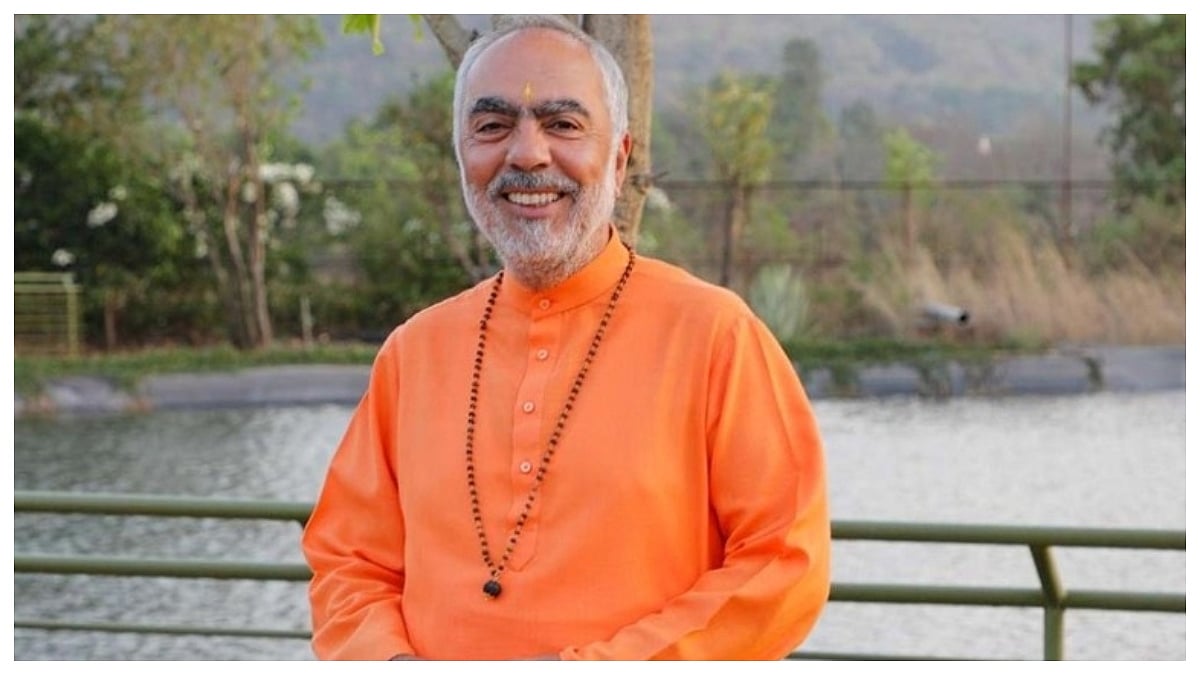
(By Swami Swaroopananda, Global Head, Chinmaya Mission)
Published on: Wednesday, July 08, 2026, 06:07 PM ISTRECENT STORIES
-
-
-
-
-