Supreme Court Rules Medical Negligence Proceedings Against Doctors Continue After Their Death, Compensation From Estate Only
The Supreme Court ruled that medical negligence proceedings against a doctor do not automatically end after the doctor’s death. The court said legal heirs can be brought on record, but any compensation awarded can only be recovered from assets inherited from the deceased doctor. The verdict has sparked concern among sections of India’s medical fraternity.

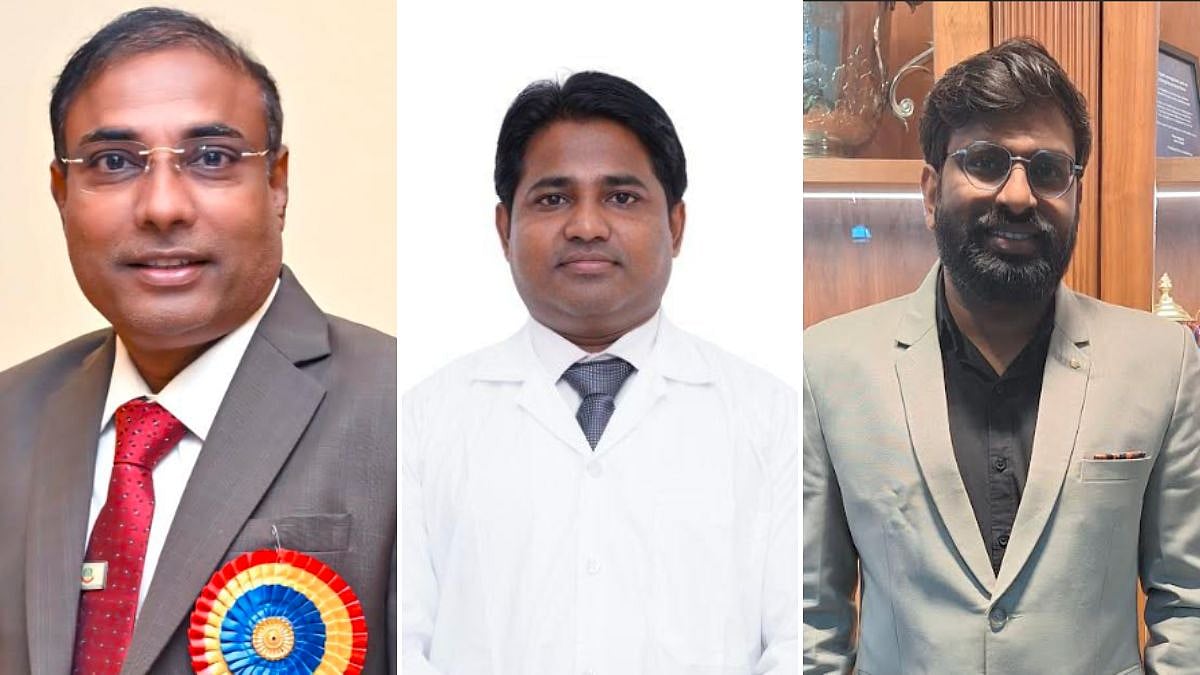
Dr Santosh Kadam , a former President of the Indian Medical Association (L), Dr Aniket Mule, Consultant Internal Medicine, KIMS Hospitals (C) & Dr Amar Agame, General Secretary, BMC MARD (R) |
Mumbai: In a significant ruling on medical negligence law, the Supreme Court of India has held that proceedings against a doctor for alleged medical negligence do not automatically end upon the doctor’s death.
Judgment delivered by Justices Maheshwari and Chandurkar
The judgment was delivered in Kumud Lall v. Suresh Chandra Roy by a bench comprising Justice J. K. Maheshwari and Justice Atul S. Chandurkar.
The Court clarified that if a doctor dies during the pendency of medical negligence proceedings under the Consumer Protection Act, the legal heirs of the deceased doctor can be brought on record in the case. However, the judges emphasized that the liability of legal heirs is not personal. Any compensation awarded by the court can only be recovered from the estate or assets inherited from the deceased doctor.
Medical fraternity expresses concern over insecurity for families
The ruling has triggered concern among sections of the medical fraternity, with many doctors arguing that the judgment could create fear and insecurity among healthcare professionals and their families.
Several practitioners expressed apprehension that legal heirs — who may have had no involvement in the treatment or alleged negligence — could become entangled in prolonged litigation after a doctor’s death.
Dr Amar Agame: Emotional burden on families is a human concern
Dr Amar Agame, General Secretary, BMC MARD said that while accountability in medicine is important, the emotional burden on families must also be considered. “A doctor’s duty is to treat patients with sincerity and the best possible judgment, but medicine can never guarantee outcomes every single time. Continuing negligence proceedings even after a doctor’s death may legally protect the right to sue, but it also highlights how emotionally exhausting and vulnerable the medical profession has become today,” he said.
He added that imposing legal and emotional burdens on heirs after the loss of a loved one raises “a serious human concern that cannot be ignored.”
A section of healthcare professionals warned that such legal developments may further encourage “defensive medicine,” where doctors order excessive tests or avoid high-risk procedures primarily to reduce exposure to litigation.
Dr Aniket Mule: Balanced approach needed, not fear-driven climate
Dr Aniket Mule, Consultant Internal Medicine, KIMS Hospitals, Thane said that many doctors already work under immense pressure, especially in emergency care and critically ill patients where risks are naturally higher. “It is important that the healthcare system maintains a balanced approach that protects patient rights while also ensuring fairness and confidence for medical professionals. A climate driven primarily by fear of litigation can sometimes make doctors more defensive in their practice, which may ultimately affect timely medical decision-making in difficult situations,” said Dr Mule.
Offering a different perspective, Dr Santosh Kadam, a former President of the Indian Medical Association (IMA) Maharashtra and a recent winner in the Maharashtra Medical Council elections said the legal principle recognised by the Supreme Court was not entirely new.
Dr Santosh Kadam: Legal principle already existed, not entirely new
“This provision has already existed in law,” Dr. Kadam said. “If a medical negligence case continues after the doctor’s death and compensation is awarded, the amount will be recovered only from the deceased doctor’s assets or earnings.”
He explained that since a doctor’s estate is inherited by legal heirs after death, compensation can only be recovered from the inherited assets and not from the heirs personally.
“If the deceased doctor has not left behind any assets or earnings, the legal heirs will not be required to pay anything,” he added.
In its observations, the Supreme Court noted that purely personal claims — such as pain, suffering, or damage to reputation — generally abate with the death of the wrongdoer. However, claims involving financial loss or damage to the estate survive and may continue against the estate of the deceased.
To get details on exclusive and budget-friendly property deals in Mumbai & surrounding regions, do visit: https://budgetproperties.in/
RECENT STORIES
-
-
-
-
-