Mumbai’s ‘Paatal Lok’: MMRDA Plans 70-km Underground Tunnel Network To Beat Traffic
MMRDA is preparing a DPR for Mumbai’s proposed 70-km underground road network, dubbed ‘Paatal Lok’, to ease congestion and improve connectivity. The authority’s 2026-27 budget has earmarked Rs 5,543.51 crore for key tunnel projects, including the Thane-Borivali and Orange Gate-Marine Drive corridors. The plan’s final scope and timeline depend on approvals.

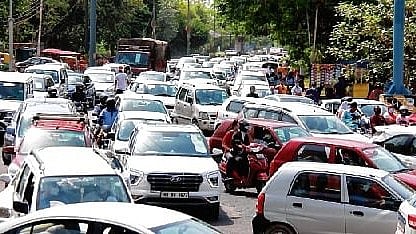
Mumbai’s ‘Paatal Lok’: MMRDA Plans 70-km Underground Tunnel Network To Beat Traffic | Representative Image
Mumbai: With Mumbai’s roads buckling under mounting traffic pressure, the Mumbai Metropolitan Region Development Authority (MMRDA) is looking beneath the city for a solution. The authority is preparing a Detailed Project Report (DPR) for a proposed 70-km underground tunnel road network, envisioned as a third mode of mobility that could transform how motorists travel across the metropolis.
Dubbed ‘Paatal Lok’, the ambitious plan seeks to create an underground web of road corridors connecting key locations across Mumbai and the wider Mumbai Metropolitan Region (MMR). The objective is to provide alternative routes for motorists, reduce pressure on congested surface roads and improve east-west as well as north-south connectivity.
Nearly 60% of Mumbai’s traffic load currently depends on the Western Express Highway (WEH), highlighting the need for parallel corridors to distribute vehicular movement more efficiently. With average peak-hour speeds on some major routes dropping to around 15-20 kmph, the proposed underground network is intended to offer a faster alternative to surface-level travel.
ALSO READ
At the recently held Mumbai Podium 2026 event, MMRDA Commissioner Dr Sanjay Mukherjee outlined the vision for the proposed tunnel network, which aims to separate long-distance through-traffic from local vehicular movement. The underground corridors are expected to complement the city's existing and planned infrastructure, including metro lines, coastal roads and arterial highways.
The larger ambition is to establish an integrated, multi-level mobility grid, allowing commuters to bypass congested stretches rather than compete for limited road space. However, the network's final scope, implementation timeline and execution strategy will depend on the DPR and subsequent approvals.
Key projects under Mumbai's ‘Paatal Lok’ vision
The MMRDA's 2026-27 budget has earmarked a total of Rs 5,543.51 crore for key tunnel infrastructure projects.
Thane-Borivali twin tunnel — Rs 3,029.51 crore: One of the network's major components, the twin tunnel will provide a direct alternative to existing road routes between the eastern and western suburbs, reducing dependence on congested arterial roads.
Orange Gate-Marine Drive urban tunnel — Rs 1,250 crore: The under construction corridor aims to improve connectivity between the eastern side of South Mumbai and the Marine Drive area, offering an alternative route for motorists travelling across the island city.
Proposed Mumbai Integrated Tunnel Road Network — Rs 1,189 crore: The allocation supports the broader vision of connecting multiple underground corridors into an integrated road system, improving cross-city movement and creating alternative routes for traffic.
Proposed Gaimukh-Fountain Hotel tunnel — Rs 75 crore: The proposed corridor is part of the MMRDA's wider efforts to strengthen connectivity in the metropolitan region and provide alternatives to existing road links.
Mulund-Goregaon tunnel corridor: Envisioned as another important east-west connection, the proposed corridor aims to improve travel between the eastern and western suburbs while easing pressure on existing roads.
ALSO READ
The and under construction tunnel network forms part of a wider infrastructure push to address Mumbai's chronic congestion through underground roads, parallel corridors and high-speed links. By shifting a portion of vehicular movement below ground, the MMRDA hopes to create additional road capacity without relying entirely on widening existing roads in an already densely developed city.
Meanwhile, Chief Minister Devendra Fadnavis had also stated several times that they aims to make Mumbai traffic-free within the next three years through these projects; with timely execution of major infrastructure projects and their integration with the city's existing transport network.
For a city where road space is increasingly scarce, Mumbai's proposed ‘Paatal Lok’ could mark a significant shift in urban mobility planning.
To get details on exclusive and budget-friendly property deals in Mumbai & surrounding regions, do visit: https://budgetproperties.in/
RECENT STORIES
-
-
-
-
-