Mumbai: Study Finds Delayed Parenthood Fuelling Urban Infertility Crisis, Nearly Half Of Patients Aged Between 31 To 35
A Mumbai-based study at a government ART centre found rising infertility, with 47% of patients aged 31–35, indicating delayed childbearing and late treatment. Urban patients dominated (96.6%), highlighting rural access gaps. Primary and secondary infertility were nearly equal. Most cases involved non-tubal causes, with modest success rates, stressing need for early diagnosis and awareness.

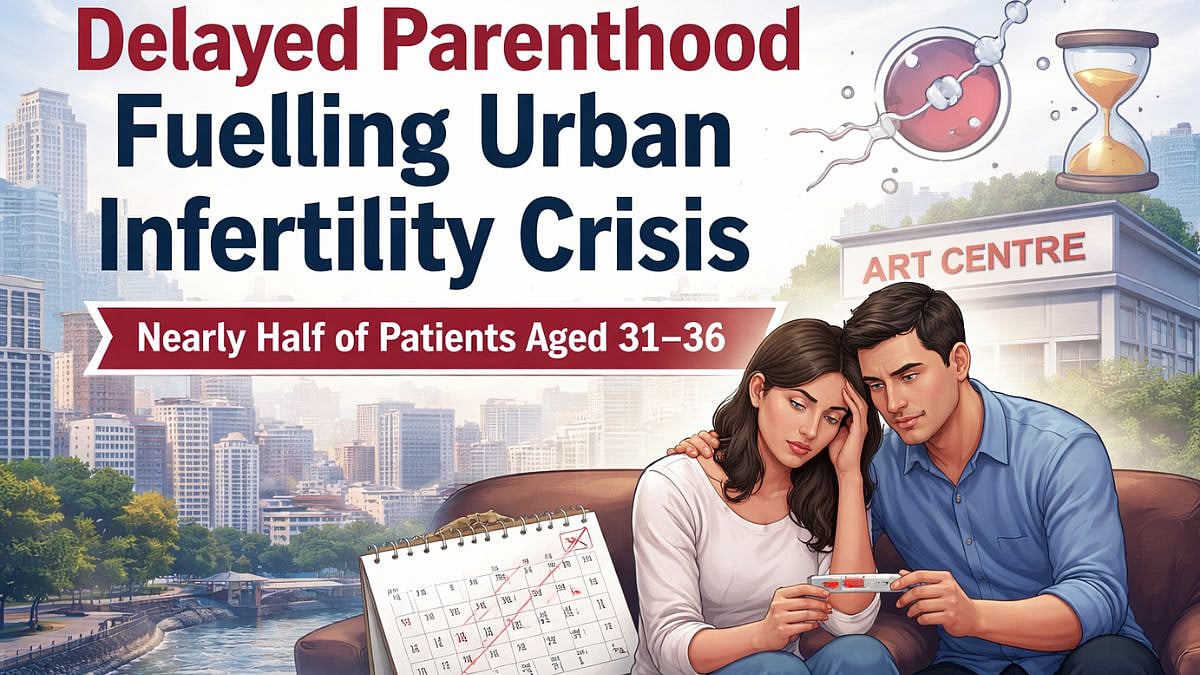
Mumbai: Study Finds Delayed Parenthood Fuelling Urban Infertility Crisis, Nearly Half Of Patients Aged Between 31 To 35 | chatgpt
Mumbai: A recent study conducted at a government-run Assisted Reproductive Technology (ART) centre in Mumbai has highlighted the growing burden of infertility, with nearly 47% of patients falling in the 31–35 years age group, indicating delayed childbearing and late healthcare-seeking behaviour among couples.
The study, carried out between August and October 2025, analysed 60 patients to understand their demographic and clinical profiles. The findings reveal that infertility continues to be a significant reproductive health concern, particularly in urban populations.
According to the study, 96.6% of patients were from urban areas, pointing to a gap in access to infertility services among rural populations. Experts suggest that better awareness, availability of specialized healthcare facilities, and financial capability may contribute to higher utilization of ART services in cities.
ALSO READ
The study was conducted by Dr. Afifa Naushad, Dr. Tushar Palve, and Dr. Rajashree Thatikonda from the Department of Obstetrics and Gynecology at Cama and Albless Hospital, Mumbai. Dr. Afifa Naushad served as the corresponding author for the research, which focused on evaluating the demographic and clinical profile of patients attending a government-run ART centre.
The study found that primary infertility accounted for 51.67% of cases, while secondary infertility made up 48.33%. Primary infertility refers to couples who have never achieved a pregnancy despite at least one year of regular unprotected intercourse. In contrast, secondary infertility refers to couples who have conceived at least once in the past—regardless of the outcome—but are unable to conceive again. The near-equal distribution highlights that infertility affects both first-time conception and subsequent pregnancies.
ALSO READ
A significant number of couples had been married for 5 to 10 years before seeking medical help, reflecting delayed healthcare-seeking behaviour often influenced by social stigma, lack of awareness, and financial constraints.
Clinical findings showed that over 70% of patients had normal fallopian tube function, suggesting that infertility in many cases may be due to non-tubal factors such as ovulatory disorders or hormonal imbalances. Treatment approaches primarily included ovulation induction (56%) and intrauterine insemination (IUI) (33%), following a cost-effective and stepwise approach commonly adopted in government healthcare settings.
The overall pregnancy success rate observed in the study was 8.3%, which is comparable to outcomes reported in similar public-sector ART centres across India.
ALSO READ
Dr Tushar Palve, medical superintendent and one of the researchers emphasize that while government ART centres play a crucial role in providing affordable fertility care, there is a need to promote early diagnosis, improve awareness, and expand access to services in rural areas. “Strengthening counselling services is also essential to address the emotional and psychological impact of infertility,” said Dr Palve.
The study concludes that infertility is a multifactorial condition influenced by demographic, clinical, and socioeconomic factors, and highlights the importance of timely intervention and accessible reproductive healthcare to improve outcomes.
To get details on exclusive and budget-friendly property deals in Mumbai & surrounding regions, do visit: https://budgetproperties.in/
RECENT STORIES
-
-
-
-
-