Mumbai: Short Crossing Traffic Signals, Speeding 2-Wheelers & Blocked Footpaths Put Senior Citizens At Risk | FPJ Report From Cuffe Parade
Pedestrians in Mumbai’s Cuffe Parade are raising safety concerns over 15–20-second crossing signals, speeding two-wheelers, obstructed footpaths and wrong-side driving. Residents say senior citizens and people with limited mobility need longer signal times and safer, pedestrian-friendly junctions.

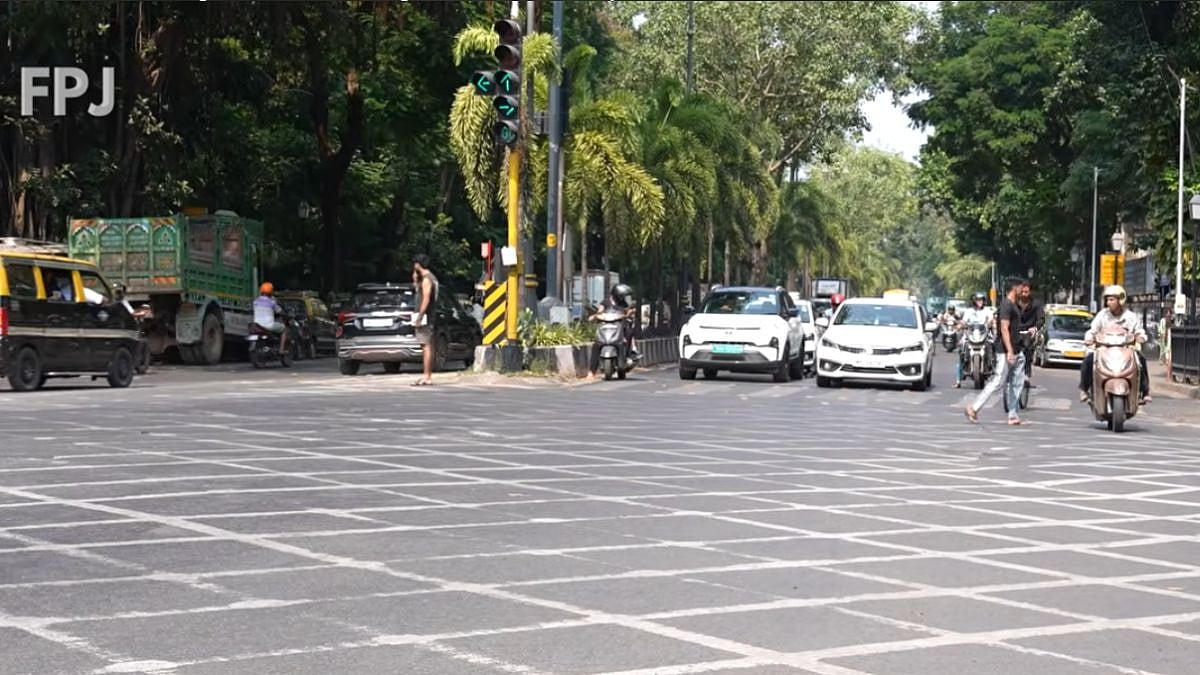
Mumbai: Short Crossing Traffic Signals, Speeding 2-Wheelers & Blocked Footpaths Put Senior Citizens At Risk | FPJ Report From Cuffe Parade | FPJ
Mumbai: Pedestrians at Mumbai’s busy junctions are racing against time, with crossing signals reportedly lasting just 15–20 seconds, leaving senior citizens and people with limited mobility struggling to reach the other side before traffic resumes.
During a visit to a busy junction near the Cuffe Parade Metro station, The Free Press Journal found residents raising concerns over inadequate pedestrian crossing time, speeding two-wheelers, obstructed footpaths and vehicles approaching unexpectedly from both directions.
Cuffe Parade resident Niket Kumar questioned whether signal timings were tailored to individual junctions. “Is it area-specific, is it junctionspecific, or is it just being applied?” he asked, citing a turning signal that remained green for just seven to eight seconds.
ALSO READ
Kumar also flagged confusion caused by a single countdown counter serving two traffic movements. Calling short signals “a recipe for disaster”, he suggested technology that could adjust timings based on pedestrian and vehicle volumes.
He said pedestrians must negotiate occupied footpaths, watch approaching vehicles and remain alert to wrongside traffic. “We are taught from childhood to look in both directions and cross the road,” he said, adding that vehicles now frequently approach unexpectedly from either side.
Senior citizen Ashok Bharwani, who moved to Mumbai around 35 years ago, said increasing traffic, particularly two-wheelers, had made crossings dangerous.
ALSO READ
“They move in a zigzag way and it's very confusing when you're crossing the road,” he said, comparing their movements to snakes. He added that slower reflexes made elderly pedestrians particularly vulnerable and demanded longer crossing times.
Another elderly woman said vehicles approaching from all four directions made the junction difficult to navigate.
Residents argued that Mumbai’s investments in roads, flyovers, metro lines and junction improvements must be accompanied by pedestrian-friendly signals, unobstructed footpaths and stricter enforcement against wrong-side driving.
They questioned why walking safely remained challenging in a city aspiring to international standards.
With traffic volumes rising, pedestrians said infrastructure planning must prioritise people’s safety rather than merely speeding up vehicular movement.
To get details on exclusive and budget-friendly property deals in Mumbai & surrounding regions, do visit: https://budgetproperties.in/
RECENT STORIES
-
-
-
-
-