Mumbai Sees 28 Per Cent Surge In Dengue Cases, 18 Pc Rise In Malaria Until Mid-July; BMC Intensifies Monsoon Disease Control
Mumbai reported a 28% rise in dengue cases and an 18% increase in malaria infections between January 1 and July 14 compared with the same period last year, according to the BMC. The civic body has intensified surveillance, mosquito-control measures and public health interventions while advising residents to prevent water stagnation and seek prompt medical care for fever.

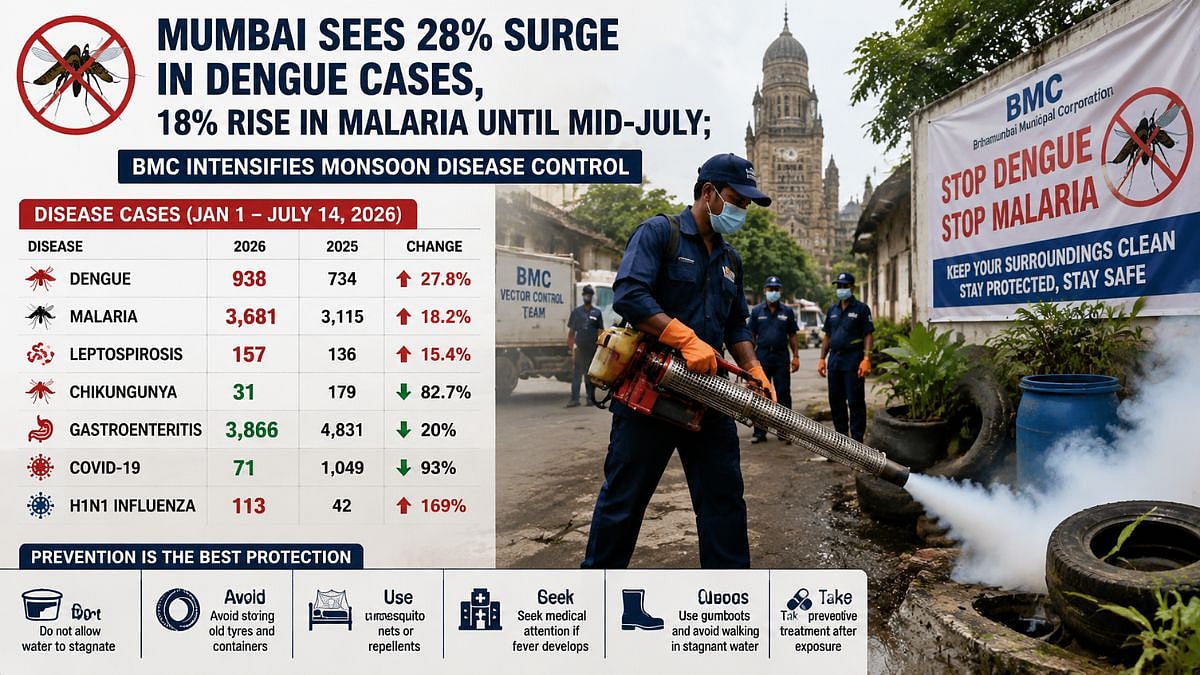
BMC has stepped up surveillance and mosquito-control measures as dengue and malaria cases rise during the monsoon in Mumbai | AI Generated Representational Image
Mumbai, July 15, 2026: Mumbai has witnessed a significant rise in mosquito- and water-borne diseases during the first six-and-a-half months of 2026, with dengue cases increasing by 27.8% and malaria by 18.2% compared to the same period last year, according to the Brihanmumbai Municipal Corporation's (BMC) Public Health Department's monsoon disease surveillance report released on Tuesday.
Monsoon Diseases On Rise
From January 1 to July 14, 2026, the city recorded 3,681 malaria cases, up from 3,115 during the corresponding period in 2025, while dengue cases rose from 734 to 938. Leptospirosis cases also increased by 15.4%, rising from 136 to 157, largely due to prolonged heavy rainfall and waterlogging across several parts of the city.
In contrast, chikungunya cases declined sharply by 82.7%, dropping from 179 to 31, while gastroenteritis cases fell by 20%, from 4,831 to 3,866. COVID-19 infections dropped by over 93%, from 1,049 to 71, although H1N1 influenza cases nearly tripled, increasing from 42 to 113.
BMC Intensifies Surveillance
To curb the spread of monsoon-related diseases, the BMC has intensified surveillance and vector-control measures. Between June 1 and July 14, civic teams surveyed 10.69 lakh houses, covering 36.81 lakh residents, collected 1,00,472 blood samples, conducted 96 health camps, and provided leptospirosis prophylactic medicines to 90,728 people.
The civic body also inspected 3,000 construction sites, screened 54,763 workers for malaria, and detected 37 positive cases, all of whom were treated.
Anti-mosquito operations included the inspection of 49,599 breeding sources, identification of 5,341 Anopheles and 22,041 Aedes breeding spots, removal of 66,595 discarded tyres and scrap items, and fogging of 51,937 buildings and 7.94 lakh slum structures.
Also Watch:
ALSO READ
Public Health Advisory
The BMC has advised residents to prevent water stagnation in and around their homes to curb mosquito breeding and reduce the risk of dengue, malaria, and chikungunya.
Avoid storing old tyres, plastic containers, and other items that can collect rainwater, use mosquito nets or repellents, and seek immediate medical attention at the nearest BMC-run Aapla Dawakhana or municipal hospital if fever develops.
To prevent leptospirosis, avoid walking through stagnant rainwater or barefoot during heavy rains, wear gumboots whenever possible, and seek preventive treatment after exposure to contaminated water.
To get details on exclusive and budget-friendly property deals in Mumbai & surrounding regions, do visit: https://budgetproperties.in/
RECENT STORIES
-
-
-
-
-