Mumbai: IWSA Opens Learning Garden Living Museum With Over 450 Plant Species To Promote Urban Biodiversity And Sustainability
The Indian Women Scientists’ Association has opened its Learning Garden Living Museum to citizens, students and institutions. The IWSA campus garden features more than 450 plant species, butterfly habitats, sensory gardens and pollinator-friendly landscapes, along with solar power, rainwater harvesting, composting and efficient water management.

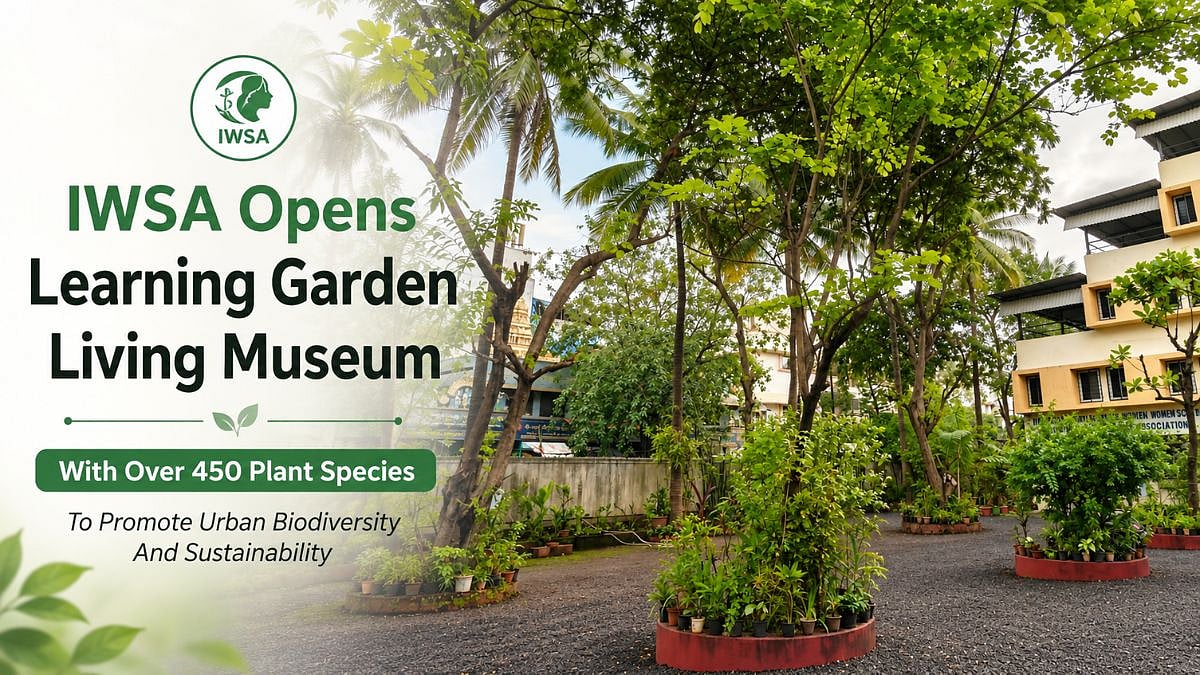
The IWSA Learning Garden Living Museum combines diverse plant species with sustainable practices to promote hands-on environmental education | AI Generated File Image
Navi Mumbai, September 2: The Indian Women Scientists’ Association (IWSA) has opened its Learning Garden Living Museum (LGLM) to citizens, students and educational institutions, offering a hands-on experience of biodiversity conservation and sustainable urban landscaping.
The initiative is being supported by the NatConnect Foundation as an outreach partner, with the collaboration aimed at taking the concept of learning gardens to schools, colleges, housing societies, resident associations, architects, real estate developers and nature enthusiasts.
Garden Features 450 Plant Species
Located within the IWSA campus, the Learning Garden houses more than 450 plant species, including medicinal, edible, aromatic and ornamental plants. It also features fruit trees, butterfly-supporting habitats, sensory gardens, sacred groves and pollinator-friendly landscapes.
The garden incorporates sustainable practices such as solar power, rainwater harvesting, composting and efficient water management, making it a working example of how urban spaces can support biodiversity while conserving natural resources.
“Our Learning Garden is much more than a collection of plants. It is a living museum where biodiversity, science, conservation and education come together. We want children and citizens to experience nature, not merely read about it,” said Dr Nootan Bhakal, president, IWSA.
She said the objective was to promote environmental awareness through direct observation and hands-on learning, while making sustainability more practical and relevant to everyday life.
Focus On Environmental Awareness
Priya Jacob, secretary, IWSA, said the garden was intended to help create a generation of citizens who understand their role in protecting natural habitats.
“The Learning Garden Living Museum has inspired countless young minds to ask questions, explore answers and develop a deeper understanding of ecosystems,” Jacob said. “It fosters a sense of shared responsibility for protecting natural habitats and helps shape an environmentally conscious society through sustainable practices.”
B. N. Kumar, director of NatConnect Foundation, said the garden demonstrated how biodiversity-rich spaces could be created even within limited urban areas.
“I was deeply impressed by the remarkable diversity of plants, trees and ecological themes that IWSA has created within its limited campus and resources. It demonstrates what scientific planning and commitment can achieve,” Kumar said.
He said the garden could serve as a reference centre for architects, educational institutions and developers looking to incorporate scientifically planned green spaces into their projects.
“Whether it is a window planter, balcony, terrace, rooftop garden or township landscape, IWSA can guide people in creating biodiversity-friendly greenery suited to the space available,” he said.
Promoting Ecologically Functional Spaces
The initiative also seeks to shift the focus from purely ornamental landscaping towards ecologically functional green spaces that can support pollinators, conserve water and provide habitats for biodiversity.
IWSA has published a reference book titled Creating Learning Gardens & Living Museums: Biodiversity, Conservation & Sustainability. Edited by Vijaya Chakravarty, Sweedle Cerejo-Shivkar, Rita Mukhopadhyaya, Paramjit Anthappan, Seema Das and Yojana Singh, the publication documents the concept, biodiversity, scientific methodology and educational significance of learning gardens and provides a practical reference for institutions and communities seeking to replicate the model.
Also Watch:
ALSO READ
The Learning Garden is open for organised visits by prior appointment. Schools, colleges, housing societies, resident welfare associations, nature groups, architects, developers and other interested groups can contact the IWSA office at 8657865475 between 3 pm and 5.30 pm or email iwsahq@gmail.com. NatConnect Foundation can be contacted at 98201 28332 or thenatureconnect@gmail.com.
To get details on exclusive and budget-friendly property deals in Mumbai & surrounding regions, do visit: https://budgetproperties.in/
RECENT STORIES
-
-
-
-
-