Mumbai: BMC Plans To Use Treated Sewage Water For Road Washing Amid 10 Per Cent Water Cut
Mumbai's BMC plans to use treated sewage and other non-potable water for road washing across seven civic zones after its Rs 8.25-crore tanker-fed proposal was rejected. The revised plan targets 150 days of washing annually and adds AI monitoring of nearly 3,000 air-quality sensors as part of the city's 2026 winter pollution-control drive.

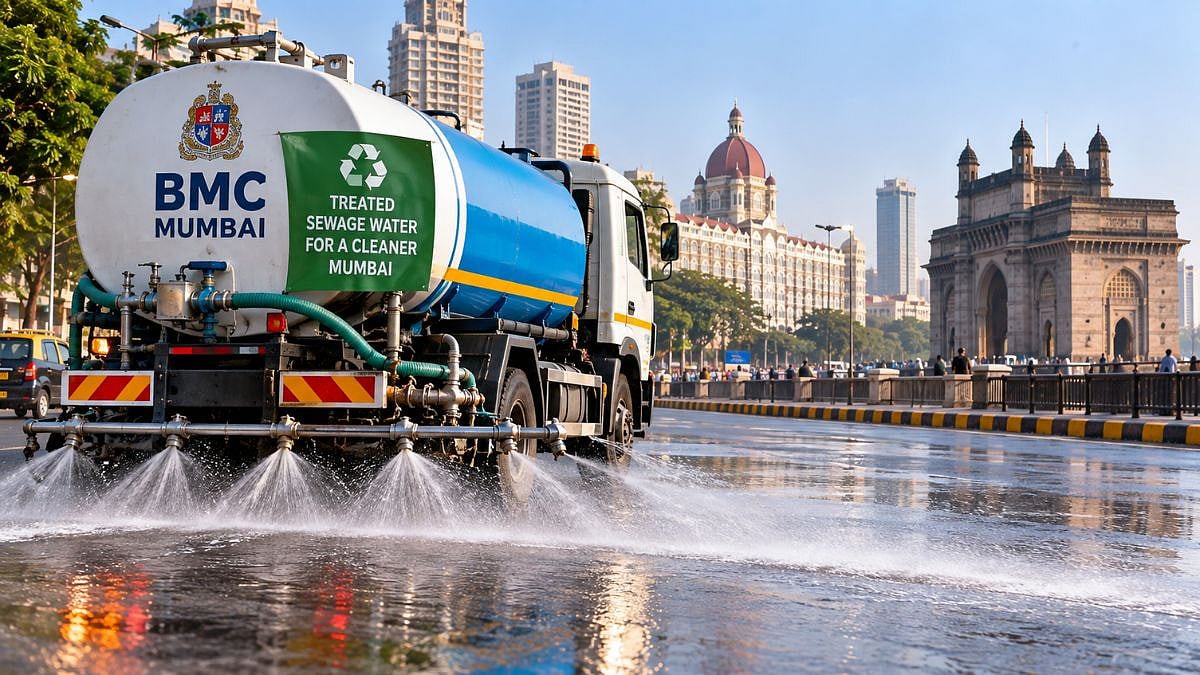
The BMC plans to use non-potable water for road washing and AI-powered monitoring to tackle dust and pollution across Mumbai | AI Generated Representational Image
Mumbai, October 22: The Brihanmumbai Municipal Corporation (BMC) is looking to use treated sewage water for road washing as it steps up dust-control measures amid 10% water cuts. The move follows the Standing Committee’s rejection of a proposal to use tanker-fed water for the exercise.
BMC Revises Road-Washing Proposal
Rejected by the Standing Committee, the BMC’s Rs 8.25-crore proposal to wash roads across all seven civic zones using jet-equipped tankers is set to return with a key change: the use of non-potable water. The plan envisages 150 days of road washing annually, excluding the monsoon.
Additional Municipal Commissioner Avinash Dhakane said, “Wards have been directed to identify local sources of non-potable water, including wells and lakes. We plan to use non-potable water from wells, lakes to wash roads.”
AI To Monitor Construction-Site Pollution
The BMC conducts annual deep-cleaning drives to remove accumulated road dust, alongside routine sweeping using 29 multipurpose vehicles. Developers and contractors are also required to clean roads adjoining their construction sites, based on the size of the project.
The BMC plans to deploy AI-powered analytics to monitor nearly 3,000 air-quality sensors at construction and infrastructure sites, identify pollution hotspots and alert officials to violations for swift action.
“We plan to make use of AI-enabled analytics as it’s manually not possible to keep a check on these monitoring sensors at these construction sites and check which of them have breached the limits,” Dhakane said.
AI-driven sensor data will help the BMC pinpoint pollution hotspots, trigger alerts at construction sites and ensure timely corrective action. The insights will also guide targeted interventions, including road washing, to curb dust pollution, officials said.
BMC Cites Improvement In Air Quality
Mumbai has recorded 231 good and satisfactory Air Quality Index (AQI) days so far this year, up from 222 last year and 216 the year before, Dhakane said.
He further said that the Sameer app of the Central Pollution Control Board (CPCB) was the only reliable source for monitoring AQI, adding that other apps might not use standardised devices of the kind used by the CPCB.
Bakeries Remain A Source Of Emissions
Bakeries account for around 3.5% of Mumbai’s particulate matter (PM) emissions. Of the city’s 593 bakeries, 384 have switched to cleaner fuels, 69 are undergoing conversion, 87 remain non-compliant and eight have shut down.
The BMC mandates the use of green fuel for all new bakery licences.
Also Watch:
ALSO READ
Winter Pollution Mitigation Measures Intensified
The civic body is also installing air-pollution control devices at 10 crematoria, monitoring open-burning hotspots and enforcing curbs on firecrackers in public spaces.
Its Winter Air Pollution Mitigation and Enforcement Action Plan 2026 targets pollution hotspots, construction sites, road dust and vehicular emissions.
To get details on exclusive and budget-friendly property deals in Mumbai & surrounding regions, do visit: https://budgetproperties.in/
RECENT STORIES
-
-
-
-
-