Mumbai ATC Controllers Allege Physical Discomfort & Flight Safety Hazard From New Display System
Mumbai ATC officers have raised concerns over 42-inch commercial screens installed under the INDRA air traffic automation system, the Air Traffic Controllers’ Guild said. The guild claimed the displays caused eye strain and other discomfort during testing. It urged AAI to replace them with specialised radar monitors before commissioning, citing potential flight safety risks in busy airspace.

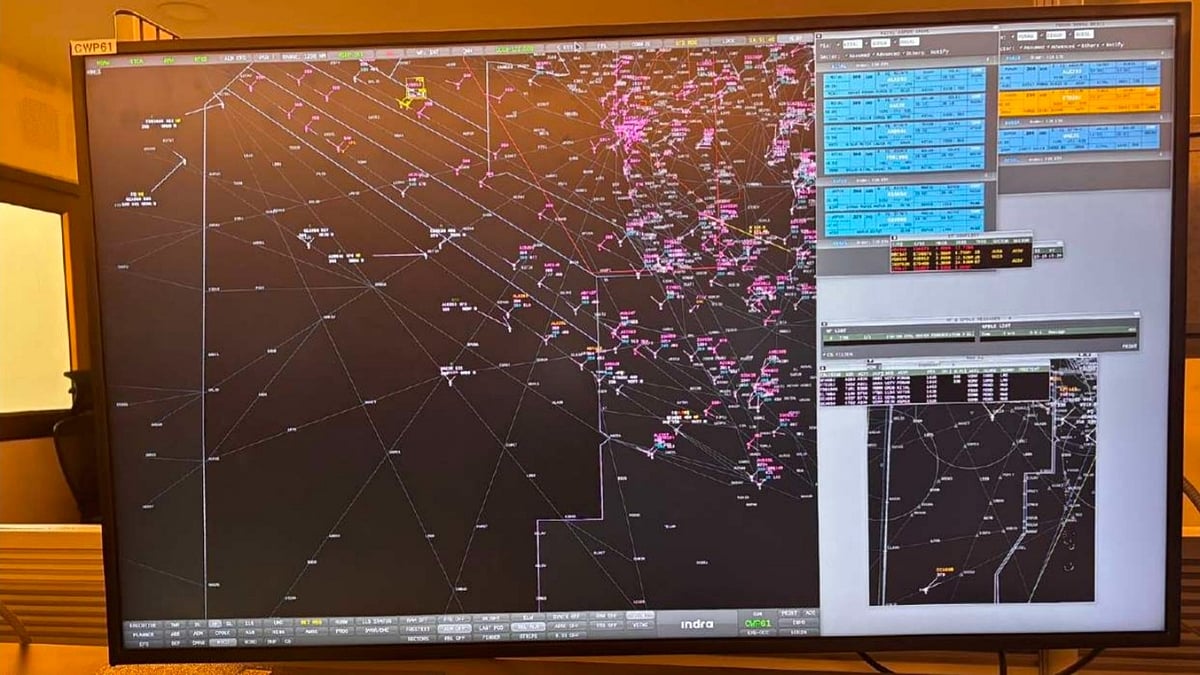
Mumbai ATC Controllers Allege Physical Discomfort & Flight Safety Hazard From New Display System |
Mumbai: Air traffic control (ATC) personnel at Mumbai, managing one of the country’s most congested airspaces, have voiced strong concerns regarding the display equipment installed under the newly upgraded air traffic automation system. The air traffic control officers (ATCO) have claimed that extended close-range viewing of these commercial TV screens have been causing physical discomfort to the controllers and presents a flight safety hazard.
Guild Seeks Replacement Of Commercial Screens
In formal representations submitted to top officials, the Air Traffic Controllers’ Guild (India) has urged the Airports Authority of India (AAI) to replace the commercial 42-inch television monitors installed at operational control desks with standard, high-precision radar displays before the system goes live.
The issue centers on the ongoing rollout of the INDRA air traffic management (ATM) automation system. The software system is currently undergoing critical "shadow operations" and testing – a phase where controllers run tests alongside live operational traffic – prior to its final commissioning.
Mumbai Workstations Equipped With TV Displays
The concerns were initially highlighted in a regional letter sent on August 10, 2026, by the ATC Guild's regional secretary Mukesh, to the Guild's national leadership. This was followed by a formal escalation on August 28 by the union's national general secretary Prabhakar Prabhat, to the AAI Chairman.
According to the documents, approximately 70 workstations across Mumbai’s Area Control Center (ACC), Oceanic Control Center (OCC), and Approach Control have been equipped with 42-inch Samsung commercial display screens. The Guild points out that while major centers like Delhi and Kolkata – and even internal maintenance sections like Mumbai’s Development & Maintenance Section (DMS) – were equipped with specialised ATC automation monitors, active radar control positions in Mumbai received commercial TV panels instead.
Display Latency Raises Flight Safety Concerns
According to ATCOs, the automation monitors are used for precision close-range radar monitoring with high pixel density whereas commercial TV Displays are for distant viewing with lower text sharpness. They also claimed that the specialised monitors have Instantaneous, zero-delay tracking whereas TV monitors have variable refresh rates and display latency.
During continuous monitoring, controllers must constantly scan aircraft labels, flight paths, warnings, and safety alerts. Controllers participating in shadow operations have reported physical symptoms such as visual fatigue, eye strain, dry eyes, and headaches, along with musculoskeletal discomfort, including neck strain, caused by excessive head movement across large 42-inch screens at close range.
Mumbai airspace handles intricate, high-density traffic spanning area, approach, aerodrome, and oceanic sectors. The Guild stressed that display latency and unclear visual cues increase cognitive workload. During peak traffic or bad weather, delayed readability of aircraft tags or separation indicators can increase the risk of human error, creating a potential flight safety hazard.
The Guild has emphasised that its intervention is not a rejection of modern technology, but rather crucial feedback gathered during the testing window when corrections can still be made. The union has requested the AAI for an immediate on-site evaluation of the operations and swapping the 42-inch commercial screens at operational positions with purpose-built, ergonomic, low-blue-light, low-glare ATC surveillance monitors benchmarked against Delhi and Kolkata facilities. They have also urged the aviation authority to get the system reconfigured or replaced directly with the system supplier or initiate a separate procurement process prior to final commissioning.
The Free Press Journal contacted AAI but did not receive any reply until the report went for press.
To get details on exclusive and budget-friendly property deals in Mumbai & surrounding regions, do visit: https://budgetproperties.in/
RECENT STORIES
-
-
-
-
-