Maharashtra Cyber Fraud: Nashik Powerloom Businessman Loses ₹6 Lakh In Fake ‘mParivahan’ APK E-Challan Scam; Case Registered
A Nashik powerloom businessman allegedly lost Rs 6 lakh after downloading a fake ‘NextGen_mParivahan.apk’ file sent through an e-challan message. Police said the malicious app enabled call forwarding and unauthorised transactions from his linked bank account. Mumbai Police have registered a cyber fraud case and begun an investigation.

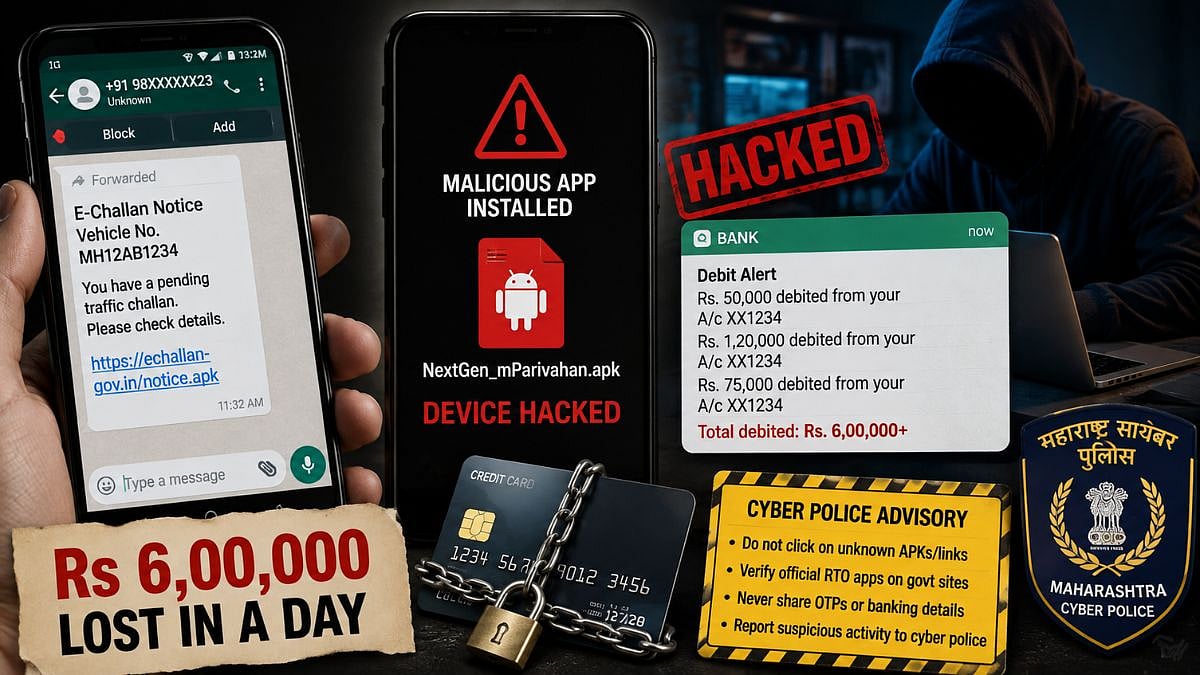
Mumbai Police registered a cyber fraud case after a Nashik businessman allegedly lost ₹6 lakh by downloading a fake ‘mParivahan’ APK from an e-challan message | AI Generated Representational Image
Mumbai, August 7, 2026: Clicking a malicious app proved costly for a 28-year-old man. The victim had received an e-challan-related APK file, and after clicking the file, his mobile phone was hacked and money was debited from his account in multiple transactions.
According to the police, the victim is involved in the powerloom business and hails from Nashik. On July 31, he received a message on his mobile number from an unknown sender. The message contained a vehicle number and included a link.
How The Fraud Occurred
Even though the victim did not own any vehicle with the number mentioned in the message, he clicked on the link out of curiosity. Following this, an app named NextGen_mParivahan.apk was downloaded onto his mobile phone.
Immediately afterwards, calls from his mobile number were allegedly forwarded to another number, and money started getting deducted from his bank card linked to the mobile number. In a single day, more than Rs 6 lakh was debited from his account in over a dozen transactions, police said.
He then contacted the bank, got his cards blocked, and approached the police to register an offence in the matter. A case has been registered under Sections 318 (cheating) and 319 (cheating by personation) of the Bharatiya Nyaya Sanhita, along with Sections 66C (identity theft) and 66D (cheating by personation using a computer resource) of the Information Technology Act.
Also Watch:
ALSO READ
Cyber Police Advisory On Fake E-Challan APKs
The Maharashtra Cyber Police had also issued an advisory for citizens regarding fake RTO e-challan APK file frauds. The advisory stated:
“Victims receive fake traffic challan messages containing APK files, links, or PDFs. This is a very common trick used by scammers to sneak harmful apps past normal security checks. Once the APK file is clicked, the fraudster gains access to the SMS and OTPs on the infected phone and may enable auto-debits from bank accounts, UPI, cards, or wallets even without the victim sharing OTPs. The scam may also compromise WhatsApp accounts, trigger auto-forwarding of fraudulent messages to contacts, and facilitate unauthorised transactions. Citizens should avoid downloading unknown APK files or clicking suspicious links received through WhatsApp or SMS, verify official RTO applications only through government websites, and report suspicious activity to the cyber police immediately.”
To get details on exclusive and budget-friendly property deals in Mumbai & surrounding regions, do visit: https://budgetproperties.in/
RECENT STORIES
-
-
-
-
-