Khavda Power Project: Bhiwandi Farmers Demand Higher Compensation Across 20 Villages
Farmers in 20 Bhiwandi villages are demanding higher compensation for agricultural land and trees affected by Khavda Power Transmission Ltd's 400-kV line project. MP Suresh Mhatre has sought at least Rs 2.5 lakh per guntha for affected land and up to Rs 2 lakh for trees, citing unequal rates and potential livelihood losses.

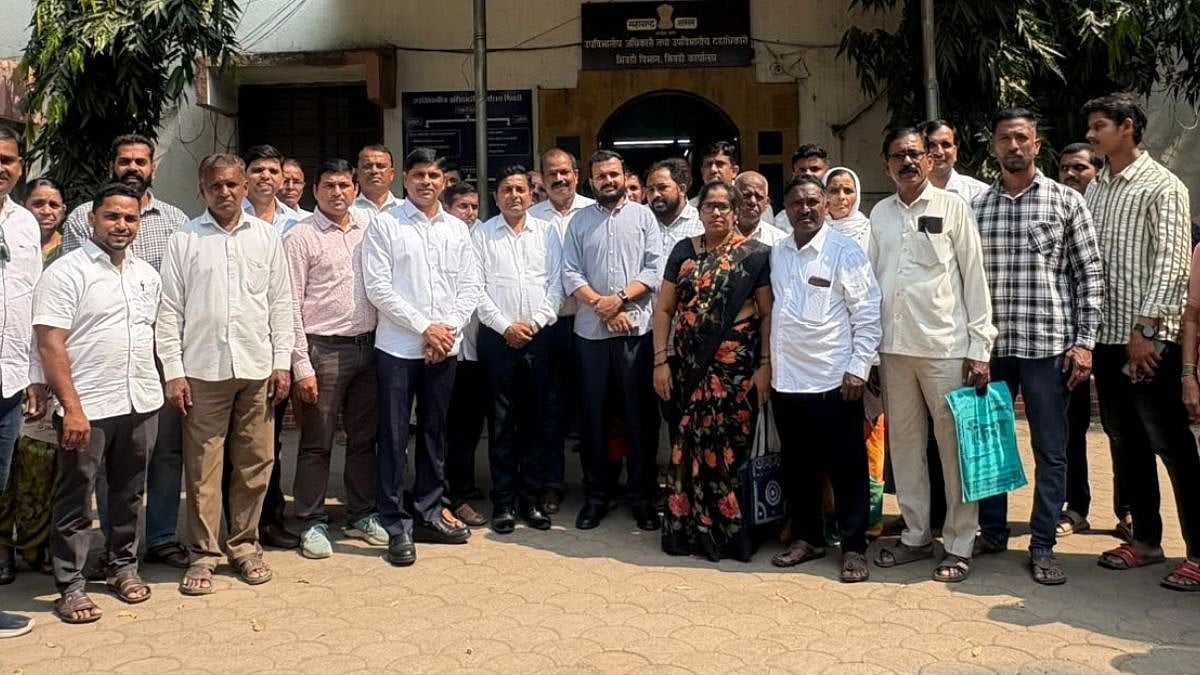
Farmers in Bhiwandi are seeking revised compensation rates for agricultural land and trees affected by the Khavda Power Transmission project's 400-kV line | File Photo
Bhiwandi, October 23, 2026: Farmers affected by high-voltage electricity transmission lines and tower installations in 20 villages of Bhiwandi taluka have stepped up their demand for higher compensation, citing a significant disparity in payments for land and inadequate valuation of trees affected by the project.
Bhiwandi Lok Sabha MP Suresh Mhatre, popularly known as Balya Mama, has called for urgent intervention to ensure fair compensation, while NCP (Sharadchandra Pawar) youth leader Sumit Mhatre met Bhiwandi Sub-Divisional Officer Amit Sanap on Thursday to raise the concerns of affected farmers.
The issue relates to Khavda Power Transmission Ltd’s 400-kV double-circuit (DC) transmission line project, known as the LILO of Babhaleshwar–Padghe (M) line, associated with Boisar-II. Around 20 villages in Bhiwandi taluka are reportedly affected by the project.
With rapid industrialisation and urbanisation in the region, driven by infrastructure projects involving the Mumbai Metropolitan Region Development Authority (MMRDA) and the Maharashtra State Road Development Corporation (MSRDC), farmers say the acquisition and restriction of agricultural land for power infrastructure are adding to their financial concerns.
Farmers Question Compensation Disparity
According to the figures cited by the affected farmers, compensation for land occupied by electricity towers is approximately Rs 6.60 lakh per guntha, while land falling beneath or along the transmission line corridor attracts compensation of only Rs 99,000 per guntha.
Farmers have questioned the substantial difference between the two rates, arguing that land affected by the transmission corridor also suffers restrictions on its use and can cause financial losses.
Tree Valuation Becomes Major Concern
The compensation offered for trees affected by the transmission line has also emerged as a major point of contention. Farmers said compensation for a palm tree is approximately Rs 72,000, despite claims that such a tree can generate a daily income of around Rs 1,200 to Rs 1,500.
They have demanded that compensation be assessed on the basis of the trees’ actual economic value and the income lost by cultivators.
Farmers have also sought simplification of procedures relating to cultivation, agricultural activities and access roads on affected land. They have called for necessary amendments to the Unified Development Control and Promotion Regulations (UDCPR) to address difficulties arising from the project.
MP Seeks Higher Compensation Rates
Demanding a revision of the compensation structure, MP Suresh Mhatre said, “Agricultural land affected by electricity transmission lines should receive compensation of at least Rs 2.50 lakh per guntha. Compensation of up to Rs 2 lakh should also be provided for affected trees.”
Also Watch:
ALSO READ
Farmers are now seeking an early decision from the administration, maintaining that compensation must adequately reflect the impact of the project on agricultural land, tree-based livelihoods and farming activities across the 20 affected villages.
To get details on exclusive and budget-friendly property deals in Mumbai & surrounding regions, do visit: https://budgetproperties.in/
RECENT STORIES
-
-
-
-
-