FPJ Exclusive: 'India Must Become Knowledge Producer,' Says World Hindu Congress Organiser Swami Vigyananand | VIDEO
World Hindu Congress organiser Swami Vigyananand says India should become a knowledge producer rather than a consumer, outlining the conference’s economic and cultural agenda ahead of its December 18-20 Mumbai edition. He discusses Hindu identity, education, global finance, economic reforms and closer cooperation among Hindu- and Buddhist-influenced Asian societies.

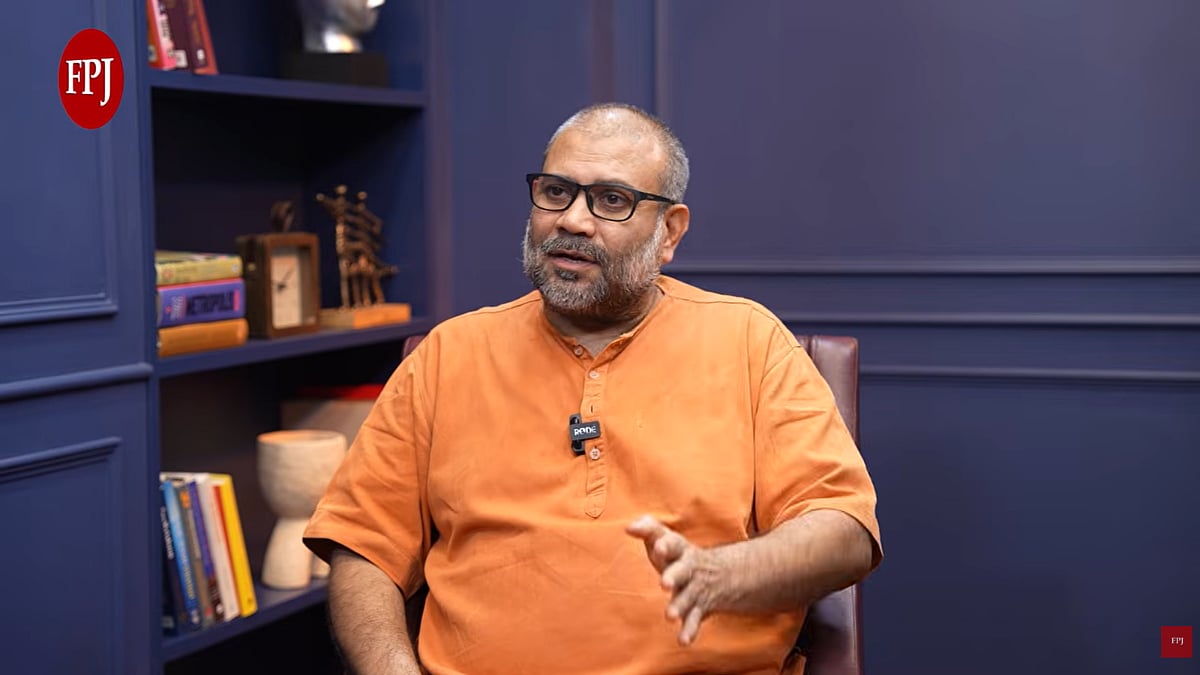
Swami Vigyananand outlines the World Hindu Congress’s economic, educational and cultural agenda ahead of its Mumbai edition | FPJ
Mumbai, November 27, 2026: The World Hindu Congress will be held at the Jio World Convention Centre between December 18 and 20. Organiser Swami Vigyananand expects about 4,000 delegates from roughly 60 countries.
In an exclusive interview with The Free Press Journal, he described the event’s goals, his views on India’s economic history, and why he frames the agenda around Hindu identity rather than Indian identity.
What is the World Hindu Congress, and what will it cover?
The Congress was first held in Delhi in 2014, followed by Chicago in 2018. It is organised around seven areas: economy, education, academia, media, politics, youth, women and Hindu organisations.
This year’s theme is shared commitment and collectivism. New sessions will cover language, Hindu institutions, skilled labour and a proposed ‘One Asia’ alliance. A World Hindu Expo will run alongside.
Why did you start it?
Hindus lack a unified global identity, and regional cultural festivals alone do not bring influence. Communities that are absent from economic, educational, media and political decision-making are overlooked. Hindus in Canada and Africa are examples of communities that gained or lost influence depending on their place at the decision-making table.
What is your concern about education?
About 1.8 million Indian students go abroad each year, spending roughly $80 billion on fees. That much money could build 100 IITs in India. Marxist ideology dominates educational institutions. Our team runs Hindu studies programmes at several universities. I believe that India should become a knowledge producer rather than a consumer.
What is the ‘One Asia’ idea?
There is scope for closer co-operation among Buddhist and Hindu-influenced societies such as Japan, Korea, Taiwan, Thailand and Cambodia. Together, they represent half the world’s population and much of its manufacturing base. Conferences were held in Sarnath and Malaysia in 2006-07. They showed interest among Asian leaders. These communities are often more fragmented than Hindus.
The term Hindu Growth Rate was once used to mock India’s slow economy. How do you respond?
The blame for the slow growth of the post-Independence decades goes to the policies of the first Prime Minister, Jawaharlal Nehru. Nehru suffocated industry and strangulated industrial growth. The growth of around 9.5 per cent after the 1991 liberalisation demonstrates the real growth. Growth follows when people are given freedom. For that, more reforms of the bureaucracy and the judiciary are needed.
How can Hindus gain influence in global finance?
Hindus have succeeded in Silicon Valley and global banks when given space. But India has not built lasting institutions at home. We need to turn the ‘brain drain’ into ‘brain gain’. IndiGo is the best example of an economic turnaround under Rakesh Gangwal. He previously worked in the US airline industry and then returned to India to lead IndiGo.
Can traditional values and modern education be combined?
Knowledge is neither traditional nor modern, but education should build character and values as well as impart information. India’s mathematics standing has declined after copying Western models. A country of 1.4 billion needs its own solutions.
Also Watch:
Could focusing on Hindu economics be seen as communal?
Other groups are already focusing on the Indian economy. Our work targets Hindu communities worldwide, including Nepal, Bali, Africa and South America, which are Hindu but not Indian. Hindu identity is transnational. It is not communal. In contrast to capitalism’s accumulation of wealth, a Hindu emphasises creating wealth and sharing it.
Level up your brain the fun way. Play daily games and quizzes on FPJ Smart!
To get details on exclusive and budget-friendly property deals in Mumbai & surrounding regions, do visit: https://budgetproperties.in/
RECENT STORIES
-
-
-
-
-