Dormant TB Bacteria’s Defence Mechanism Decoded In IIT Bombay: Monash Study
Tuberculosis remains one of the world’s most serious infectious diseases. In 2023, an estimated 10.8 million people were infected and 1.25 million died. India carries the highest burden, with over 2.6 million cases in 2024. A major reason TB treatment takes months is that the bacteria can switch into a dormant state where they become inactive but survive for long periods.

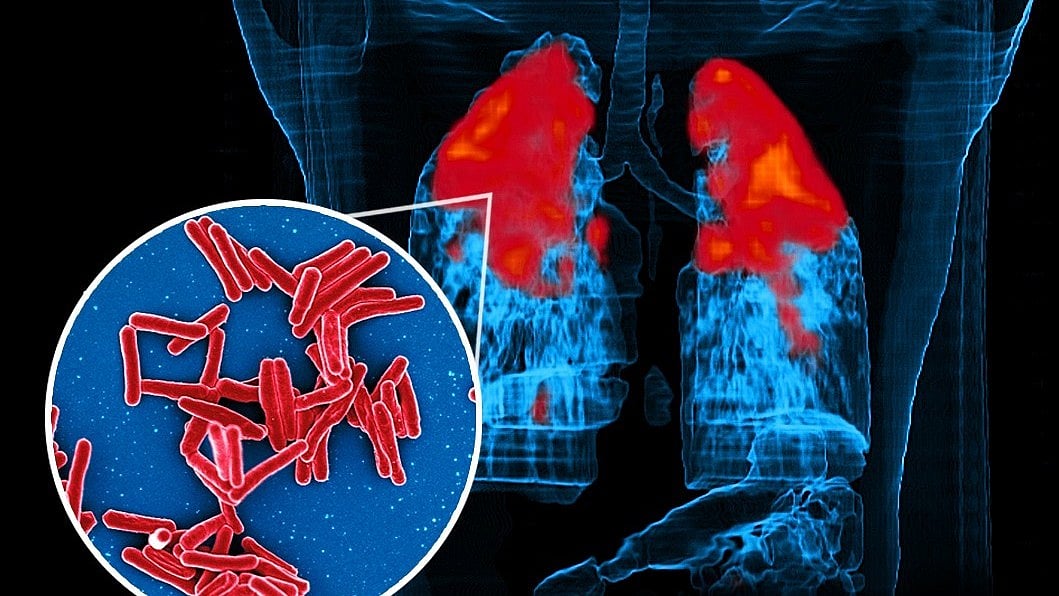
Dormant TB Bacteria’s Defence Mechanism Decoded In IIT Bombay: Monash Study |
Mumbai: Researchers from the Indian Institute of Technology (IIT) Bombay and Monash University have uncovered how dormant TB bacteria protect themselves from antibiotics — a finding that could help develop treatments that work better against hard-to-kill TB cells. The study, published in Chemical Science, shows that bacteria in their dormant phase form an extra-rigid outer membrane that blocks antibiotics from entering, pointing to new ways to make TB drugs more effective in the future.
Tuberculosis remains one of the world’s most serious infectious diseases. In 2023, an estimated 10.8 million people were infected and 1.25 million died. India carries the highest burden, with over 2.6 million cases in 2024. A major reason TB treatment takes months is that the bacteria can switch into a dormant state where they become inactive but survive for long periods. Since antibiotics work best on fast-growing bacteria, dormant TB cells often escape treatment — and the new findings explain why. The discovery also shows how weakening this rigid membrane could help future therapies kill these dormant cells faster.
To study this behaviour safely, researchers used Mycobacterium smegmatis, a harmless bacterium that behaves like TB. They grew it in both active and dormant conditions. When exposed to TB drugs such as rifabutin, moxifloxacin, amikacin and clarithromycin, dormant bacteria needed two to ten times higher doses to stop their growth. This tolerance was not due to genetic resistance but due to physical changes in the bacteria.
Using advanced mass spectrometry, the team mapped more than 270 lipid molecules in the bacterial membranes. Active bacteria had membranes rich in lipids that kept them soft and flexible. Dormant bacteria, however, accumulated long, waxy fatty layers that made the membrane stiff and tightly packed. Levels of cardiolipin — a lipid that keeps membranes flexible — fell sharply in dormant cells. As a result, antibiotics could easily pass into active cells but struggled to penetrate dormant ones.
According to Prof. Shobhna Kapoor of IIT Bombay, who led the research, this hardened membrane acts as the bacteria’s strongest shield. The team is now studying antimicrobial peptides, small proteins that can make bacterial membranes slightly leaky. These peptides don’t kill TB on their own, but they may help antibiotics enter dormant cells more easily, offering a promising direction for shorter and more effective TB treatments.
The next step is to confirm these findings using the actual TB bacterium in high-security labs. Scientists say this discovery opens the door to improving existing TB therapies by directly targeting the membrane armour of dormant bacteria.
To get details on exclusive and budget-friendly property deals in Mumbai & surrounding regions, do visit: https://budgetproperties.in/
RECENT STORIES
-
-
-
-
-