Deputy CM Eknath Shinde Unveils Mumbai Vision 2047 At Republic Summit, Focuses On ‘Mumbai In Minutes’, 35 Lakh Homes And Global Growth
Deputy Chief Minister Eknath Shinde outlined Maharashtra’s vision for Mumbai’s transformation at Republic Summit 2026, focusing on faster connectivity, integrated infrastructure, affordable housing and environmental sustainability. He highlighted projects such as Metro expansion, Third Mumbai, fintech growth and plans to construct 35 lakh houses by 2030 to support inclusive development.

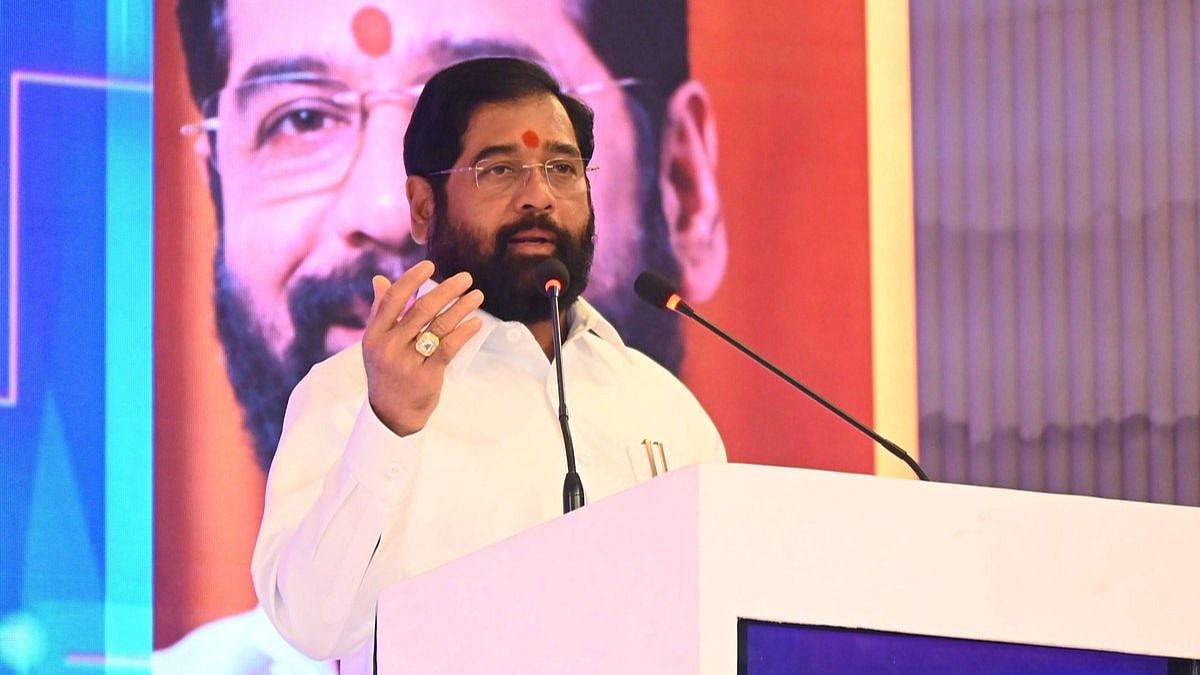
Deputy Chief Minister Eknath Shinde | X @mieknathshinde
Mumbai: Development should not be measured merely by the creation of infrastructure or economic indicators, but by how effectively it improves the lives of ordinary citizens, Deputy Chief Minister Eknath Shinde said at the Republic Summit 2026 on Tuesday.
Speaking on “Mumbai Rising: Building the Infrastructure of a Great Power”, Shinde presented the government’s broad vision for Mumbai’s future and said the transformation of Mumbai was closely linked to the development of Maharashtra and India.
Focus on reducing travel time
Shinde said the government was working towards the concept of ‘Mumbai in Minutes’, with an objective of enabling people to travel between different parts of the Mumbai Metropolitan Region in ideally no more than 59 minutes.
He said the completion of the Thane-Borivali twin tunnel would provide a boost to business and employment opportunities. The Metro network was emerging as the backbone of Mumbai’s future, he said, adding that Metro Line 3 had provided relief to lakhs of commuters.
He said infrastructure projects such as the Atal Setu, Navi Mumbai International Airport, JNPT and the Delhi-Mumbai Industrial Corridor were improving connectivity with emerging growth centres in the Mumbai Metropolitan Region.
‘Third Mumbai’ taking shape
Shinde said the process of creating a ‘Third Mumbai’ was underway around the Atal Setu area and Mumbai’s future growth would not remain confined to South, West or East Mumbai.
Roads, Metro, airports, ports, freight systems, housing, commercial centres and employment hubs should be planned as components of an integrated development strategy rather than as independent projects, he said.
He said the government’s objective was to ensure that foreign investment coming into Maharashtra generated industries and employment opportunities across the state rather than being concentrated only in Mumbai.
According to Shinde, Mumbai was being developed as a global centre for financial and service-sector activities, Pune as a major technology and manufacturing hub, Navi Mumbai as a logistics and aviation centre, and Thane and Kalyan-Dombivli as emerging growth centres. Development of new industries and employment opportunities in Vidarbha, Marathwada, North Maharashtra and Konkan would contribute to balanced development, he said.
Mumbai as global fintech hub
Shinde said Maharashtra continued to attract significant foreign investment and had strengths including skilled manpower, technology, infrastructure, financial services, ports, airports and a strong industrial network.
He said the MMRDA and the World Economic Forum had signed an MoU for a ‘World Economy Hub’ around two years ago. Mumbai was being positioned as a major global financial technology centre and the government aimed to develop it as one of the world’s leading fintech capitals and among the top 10 global financial centres.
Mumbai has more than 1,000 startups, with emerging ventures in areas such as fintech, e-commerce, healthtech, edtech and deep tech, he said. The city was also developing as a centre for healthcare, medical innovation and medical tourism.
Balancing development with environment
Shinde said environmental protection would remain an integral part of infrastructure development. The government was considering Green TDR to prevent encroachment on mangrove land and promote mangrove conservation.
He said a world-class Central Park was being developed at the Mahalaxmi Racecourse, while the Namo Central Park had been developed in Thane. Sewage treatment projects in Mumbai were also underway to reduce marine pollution.
Flood prevention measures, conservation of green spaces, expansion of public transport and cleaner transportation systems were among the priorities, he said. Infrastructure being developed today should take into account Mumbai’s requirements over the next 20 to 30 years, he added.
Open spaces to nearly double
Shinde said Mumbai currently had around 453 hectares of open spaces, while another 479 hectares were proposed under the new development plan. This would take the city’s open-space area close to double, he said.
35 lakh houses by 2030
Shinde said Mumbai’s transformation into a world-class city should not come at the cost of its identity or its relationship with ordinary citizens.
The infrastructure policy should make life easier for taxi drivers, BEST bus conductors, dabbawalas, small shopkeepers, young entrepreneurs, factory workers, office employees and students, he said.
Under the ‘My Home – My Right’ concept, a new housing policy had been formulated. The government was also implementing the Hinduhṛidaysamrat Balasaheb Thackeray Nagari Lok Kalyan Abhiyan towards making Mumbai slum-free.
The government has set an objective of constructing 35 lakh houses by 2030 for low-income groups and citizens in need, Shinde said.
ALSO READ
He criticised the previous Maha Vikas Aghadi government, alleging that Mumbai’s development had slowed during its tenure. He said the present government was accelerating infrastructure development.
Mumbai’s role in ‘Viksit Bharat’
Shinde said Mumbai and the Mumbai Metropolitan Region would have an important role in achieving Prime Minister Narendra Modi’s vision of ‘Viksit Bharat 2047’.
He said the government’s focus was on accelerating development, creating an investment-friendly environment, building global-standard infrastructure and ensuring that the benefits of development reached all sections of society.
“Mumbai has always been a city of dreams,” Shinde said, adding that the government was seeking to turn those aspirations into reality through modern infrastructure, a stronger economy and improved quality of life.
To get details on exclusive and budget-friendly property deals in Mumbai & surrounding regions, do visit: https://budgetproperties.in/
RECENT STORIES
-
-
-
-
-