BMC Elections Results 2026: 5 Reasons Why 'Thackeray Brand' Failed To Retain Mumbai, Ending Nearly 3-Decade Long Civic Body Rule
The much-hyped reunion of Uddhav and Raj Thackeray failed to stop the BJP-led Mahayuti from crossing the majority mark in the BMC Elections 2026. Fragmented Marathi votes, a development-focused BJP campaign, lack of policy cohesion between Sena (UBT) and MNS, Congress going solo and weak organisational strength are seen as key reasons behind their defeat.

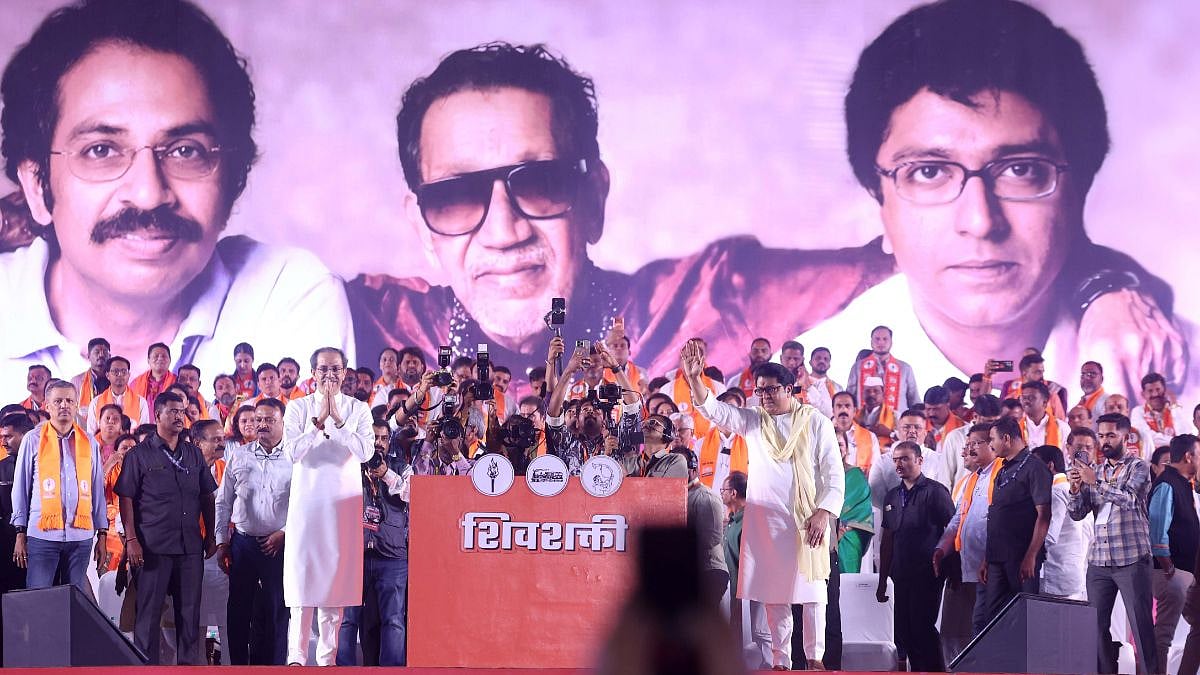
BMC Elections Results 2026: 5 Reasons Why 'Thackeray Brand' Failed To Retain Mumbai Ending Nearly 3-Decade Long Civic Body Rule | Vijay Gohil FPJ
Mumbai: The 2026 Brihanmumbai Municipal Corporation (BMC) elections were touted as the ultimate litmus test for the 'Thackeray Brand.' After years of estrangement, the reunion of cousins Uddhav and Raj Thackeray was expected to create a unified Maratha front.
However, the results told a different story. The BJP-led Mahayuti surged past the majority mark with 118 wins combined, ending the Thackerays' three-decade-old grip on India’s richest civic body.
Here are five reasons why the much-hyped Thackeray reunion failed to make its mark:
1. Fragmentation Of The 'Marathi Manoos' Vote
While the cousins united under the banner of Marathi pride, the ground reality had shifted. The split in the original Shiv Sena meant that Eknath Shinde’s faction successfully carved out a major portion of the traditional Marathi vote bank. By framing themselves as the 'true' executors of Balasaheb Thackeray’s legacy through development and Hindutva, the Shinde Sena diluted the emotional monopoly the cousins hoped to wield.
2. The 'Development vs Emotion' Gap
The Mahayuti campaign, led by Devendra Fadnavis and Eknath Shinde, focused heavily on 'Double Engine' growth, infrastructure and the transformation of Mumbai’s skyline. In contrast, the Thackeray combine leaned heavily on emotional appeals and the 'Save Marathi identity' narrative. For the modern Mumbai voter, concerned with crumbling infrastructure, the metro expansion and ease of living, the Mahayuti’s promise of convenience over sentiment proved more persuasive.
ALSO READ
3. Lack Of Oneness In Policies, Ideology
Beyond the optics of a family reunion, the alliance between Shiv Sena (UBT) and the MNS lacked a shared, actionable manifesto. Raj Thackeray’s past aggressive anti-outsider stance often clashed with Uddhav’s more inclusive, 'Maha Vikas Aghadi' style of politics.
The recent attacks on non-Marathi traders by MNS added fuel to the displeasure for the Thackeray alliance. However, both Uddhav and Raj expressed confidence in winning non-Marathi hearts during their election campaign. This ideological inconsistency created confusion among voters, particularly the cosmopolitan and non-Marathi communities, who view Raj’s brand of politics with skepticism.
4. The 'Solo' Congress Factor
The Thackeray reunion inadvertently alienated the Congress, which decided to go solo in the 2026 civic polls. In previous elections, the MVA coalition (UBT, NCP-SP and Congress) had shown that a consolidated anti-BJP vote could be formidable. By pivoting toward the MNS, Uddhav lost the crucial support of Muslim and Dalit areas that the Congress traditionally commands, leading to a split in the opposition vote that directly benefited the BJP.
Uddhav Thackeray, in his recent interview, stated that he had no issues with the MVA allies contesting solo. "The Shiv Sena fought the 2017 elections alone. BJP wasn't our ally at that time. Now we have the MNS and NCP-SP with us and the people of Mumbai who witnessed our work in the COVID era," said Uddhav. The remarks came after Congress and VBA joined hands, after expressing their displeasure over Uddhav allying with his cousin, Raj.
ALSO READ
5. Organisational Decay & Resource Crunch
The BJP’s Booth-level management and vast resources majorly outmatched the Sena UBT-MNS combine. Years of legal battles over party symbols and properties had drained the Sena UBT’s organisational strength. Meanwhile, the MNS, which has struggled for electoral relevance for over a decade, failed to provide the muscle required to counter the BJP’s high-octane, tech-driven campaign.
The Bharatiya Janata Party (BJP) emerged as the single largest party in the 2026 Brihanmumbai Municipal Corporation elections, securing 89 of the 227 wards, according to the State Election Commission. Shiv Sena (UBT) came in second with 65 seats, followed by the Eknath Shinde–led Shiv Sena with 29 seats, while the Maharashtra Navnirman Sena (MNS) won six.
The 2026 BMC election marks a historic shift in Mumbai’s power dynamics, suggesting that while the Thackeray name still carries weight, it is no longer a guaranteed ticket to the Mayor’s bungalow.
To get details on exclusive and budget-friendly property deals in Mumbai & surrounding regions, do visit: https://budgetproperties.in/
RECENT STORIES
-
-
-
-
-