World Physiotherapy Day: Beyond Injury, The Expanding Role Of Specialised Physiotherapy
A profession that is widening its scope, with specialised care now addressing prevention, recovery, development and long-term mobility.

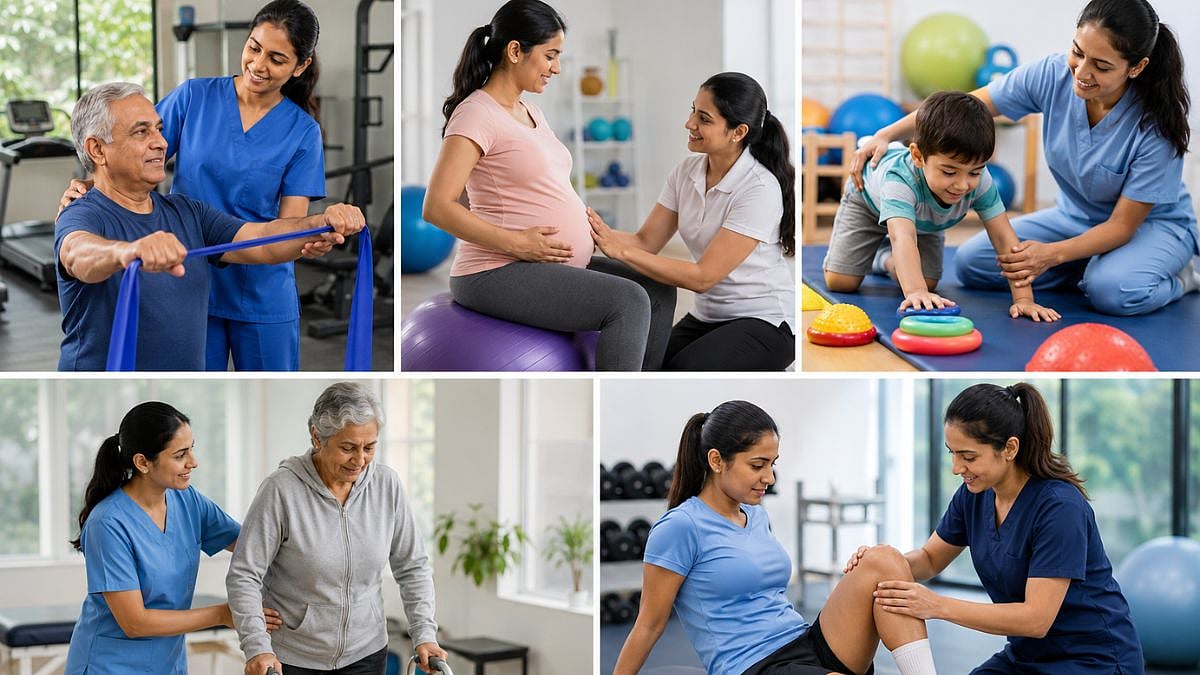
Physiotherapists are increasingly working across cardiac rehabilitation, women’s health, child development, senior mobility and sports injury prevention | File Photo
Physiotherapy is increasingly moving beyond treating injuries and restoring movement. Ahead of World Physiotherapy Day marked on September 8, the focus is on the growing role of physiotherapists in preventive care and rehabilitation. As the field becomes more specialised, physiotherapists are working across different stages of life, from supporting patients after cardiac events and helping women prepare for pregnancy and recover after childbirth, to identifying developmental concerns in children, preventing sports injuries and helping older adults maintain mobility and independence.
Rebuilding strength after cardiac events
Cardiovascular and pulmonary physiotherapist Dr Shraddha Patel, who has been practising for the past 3 years, said the heart and lungs need to be trained like other parts of the body.
“Your heart is also a muscle. So, as other body muscles need exercise and endurance training, your heart also needs strength training and endurance training,” she said.
After heart surgery, patients may experience reduced lung capacity, endurance and stamina, along with restricted upper-body movement. Post-accident trauma can also lead to reduced lung capacity and pressure on the heart. One is advised cardio-physiotherapy in these circumstances as well.
“If a person could walk 10 steps easily, now after the surgery, he takes five steps, and he’s tired,” Shraddha said, adding that rehabilitation focuses on cardiac strength, lung capacity and upper-body strength.
Fear of exertion can also make recovery difficult. Shraddha said education and supervised rehabilitation are important in helping patients regain confidence.
“It is a physio’s responsibility to communicate with the patient, and then the patient also understands what is happening with him or her,” she said.
Supporting women through pregnancy
Women’s health physiotherapist Dr Sanjana Venkataraman, who has been practising for the past one year, said physiotherapy can begin before pregnancy and continue through pregnancy and after childbirth.
Lack of awareness remains a hurdle because pregnancy is often treated as a period when women should avoid activity. “Here, people focus more on the child rather than the mother’s health,” she said.
Pregnancy and childbirth bring physical and hormonal changes, while women may experience problems such as incontinence and changes in abdominal muscles after delivery. Physiotherapy can help women maintain fitness and manage these difficulties.
“It’s not only postpartum or prepartum. It’s a journey. So right from day one to childbirth and post-childbirth, physiotherapy can play a major role,” she said.
Sanjana said women can seek guidance from the time they plan to conceive, though exercise should depend on their condition and complications.
Awareness of women’s health physiotherapy remains limited, even within the profession. Sanjana said she had “come across physiotherapists who were not aware of this particular field”. However, awareness has grown over the past three to four years, particularly in Mumbai, Bengaluru and Delhi.
Early intervention for children
Paediatric Neuro physiotherapist Dr Aishwarya Talgeri, who has been practising for six years, said parents can sometimes overlook developmental signs such as delayed milestones, missed crawling or head lag, hoping the child will catch up later.
Early intervention is important because some disorders can progress and cause further complications. Unlike adults, children often receive physiotherapy through play-based activities.
Talgeri said awareness among parents has improved, with many children coming for treatment at around two to three years of age. She attributed this partly to social media and telephysiotherapy, though rural areas still face gaps.
“Now the parents are quite aware of all these things. So they want to take action quite quickly,” she said.
Cerebral palsy is among the conditions she commonly encounters, while ADHD and autism are also seen in her practice. She said some children require treatment for longer than six months or a year, making patience and continuity important.
Supporting mobility in older age
Geriatric physiotherapy focuses on helping older adults maintain mobility, strength and independence. Physiotherapists work on balance, muscle weakness, joint stiffness and recovery after falls or surgeries. The aim is not only rehabilitation but also preventing falls and helping seniors continue everyday activities safely and confidently.
From rehabilitation to prevention
Sports physiotherapist Dr Vaibhavi Pathade, who has been working with athletes for around four years, said more young people are now seeking physiotherapy before an injury rather than only after one.
Prevention involves strength, mobility, stability, balance, proprioception, movement quality, fatigue management and adequate recovery. Previous injuries can also increase the risk of recurrence if rehabilitation is incomplete.
Pathade also highlighted the female athlete triad, involving low energy availability, menstrual disturbances and low bone mass. It can occur among athletes such as gymnasts who face pressure to maintain a certain body shape and may restrict food intake.
Across these specialities, physiotherapists say the field is moving beyond its old image of massage or post-injury exercise towards specialised care focused on function, recovery and long-term physical health.
Also Watch:
Types of specialised physiotherapy
Women’s health
Cardiopulmonary
Neurological
Geriatric
Sports
Orthopaedic
Paediatric
RECENT STORIES
-
-
-
-
-