Why Is Ravana's Effigy Burnt Around Sunset On Dussehra? Know The Significance Of Pradosh Kaal
Dussehra 2026 is being celebrated on October 20, with Ravana Dahan marking the victory of good over evil. The ritual is traditionally performed during Pradosh Kaal, the period around sunset considered auspicious in Hindu belief. Burning Ravana’s effigy symbolises the triumph of righteousness over wrongdoing and serves as a reminder to overcome arrogance, greed and other negative qualities.

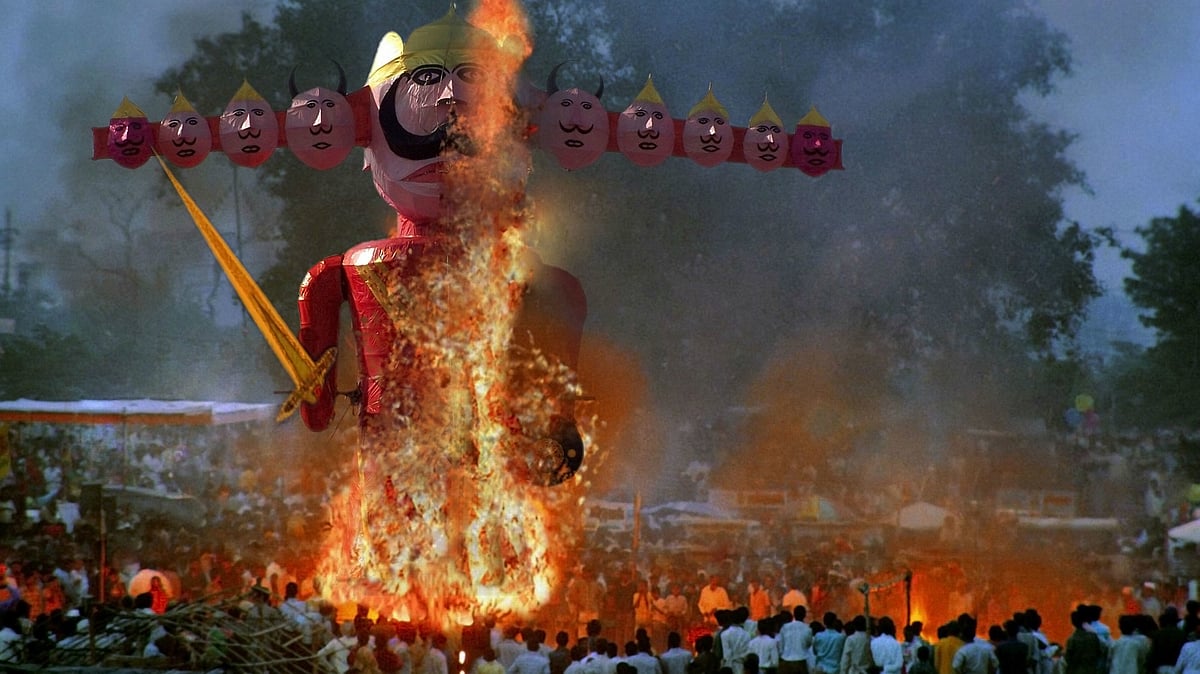
As Dussehra celebrations light up the country, one ritual takes centre stage every year: the burning of Ravana’s effigy. While the spectacle marks the triumph of good over evil, the timing of Ravana Dahan is equally significant in Hindu tradition. The ritual is generally performed around sunset, during a period known as Pradosh Kaal. But why is this particular time considered auspicious for the ceremony? Here is what the religious beliefs behind the tradition say.
Why is Ravana Dahan performed during Pradosh Kaal?
Dussehra, also known as Vijayadashami, falls on the tenth day of the bright fortnight of the Hindu month of Ashwin. In 2026, the festival is being celebrated on October 20. According to the Ramayana, Lord Rama defeated Ravana, the king of Lanka, to rescue Sita. The burning of Ravana’s effigy symbolises the victory of righteousness over wrongdoing.
ALSO READ
The timing of the ritual is linked to Pradosh Kaal, the period around sunset when daylight gradually gives way to darkness. In Hindu religious tradition, this transitional phase is considered auspicious for certain ceremonies and spiritual practices. Ravana Dahan is traditionally scheduled during this period to mark the symbolic destruction of evil and the restoration of dharma.
The significance of Pradosh Kaal
Pradosh Kaal refers to the time around dusk, when day transitions into night. It holds religious significance in Hinduism, with certain rituals and prayers performed during this period. The exact timing varies according to the local sunset and the Hindu calendar.
ALSO READ
According to traditional beliefs, performing auspicious activities during this period is considered beneficial. On Dussehra, burning Ravana’s effigy during Pradosh Kaal represents the end of negative influences and the triumph of truth and virtue. The ritual also serves as a reminder to overcome qualities such as arrogance, anger and greed.
While customs and timings can differ across regions, Pradosh Kaal remains an important consideration in many traditional observances of Ravana Dahan.
RECENT STORIES
-
-
-
-
-